
What Happened
AI coding at home has become genuinely viable for solo developers, indie hackers, and small teams — but only if you know how to structure your spending. Developer and writer Stephen Bochinski recently broke down three distinct approaches to running serious AI-assisted development workflows without a corporate budget. The core insight: a blended strategy combining frontier model subscriptions with pay-as-you-go open-source API access can replicate the output of a 20-person engineering team for roughly $1,000 a month. That number is striking enough to stop anyone mid-scroll.
The conversation matters because AI coding tools have quietly crossed a threshold. They are no longer toys for hobbyists. They are production-grade instruments — and the pricing models around them are evolving just as fast as the models themselves. Knowing which lever to pull, and when, is now a legitimate competitive skill.
The Three Paths Bochinski Outlines
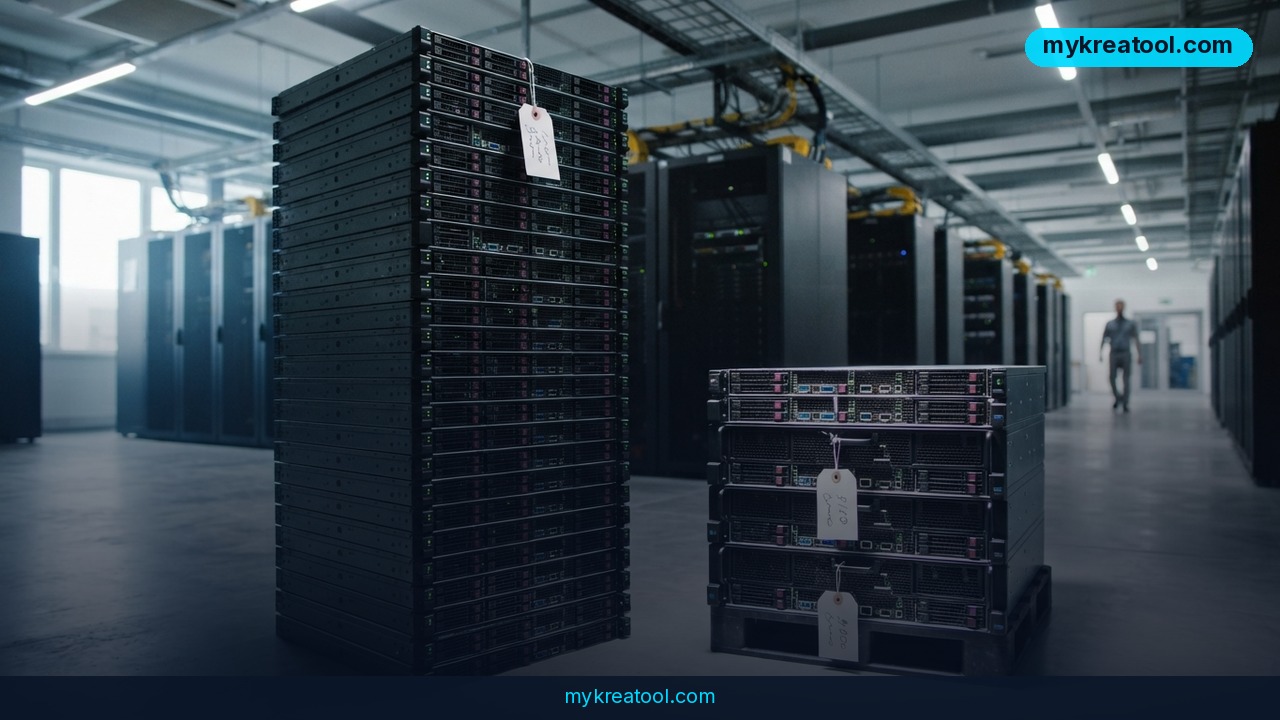
The first option is full self-hosting: buy the hardware, run open-source models locally, pay zero per token after day one. The upfront investment is steep — a capable GPU rig can easily run $3,000 to $8,000 — and the models you can realistically run at home are still a tier below what OpenAI or Anthropic ship. This approach only makes financial sense if you can keep the machine running long, grinding overnight tasks. For most solo builders, that utilization rate is hard to sustain.
Why It Matters
The GPU hardware market is also moving fast enough that a machine purchased today could look like a poor bet within 12 months. That risk alone pushes most independent developers toward the second option: renting open-source models through an API provider rather than owning the iron.
Services like OpenRouter let you access the same open-source models you would self-host — Mistral, LLaMA variants, Qwen, and others — at per-token API rates, with no capital expenditure. You skip the setup headaches, avoid the resale problem when better hardware arrives, and can switch models with what amounts to a one-line code change. For most people building AI-assisted workflows in 2024 and 2025, this is the pragmatic default.
Why Frontier Subscriptions Still Have a Role
The third path is aggressively min-maxing the subscription plans from OpenAI and Anthropic. Here the math is genuinely compelling: approximately $400 per month in combined subscription costs buys the equivalent of roughly $2,800 worth of API usage at standard list prices. That is a 7x leverage ratio on your spend — but it comes with a hard ceiling. Frontier subscriptions are metered. Any automated or agent-based workflow will burn through the included token allowance faster than you expect. These plans reward hands-on, thoughtful work. They punish always-on automation.
How to Use It Today
The strategy that Bochinski reports actually working in practice is a deliberate blend of options two and three. Keep one or two frontier subscriptions — think ChatGPT Plus and Claude Pro — for the cognitively heavy lifting: architectural decisions, writing technical specifications, debugging complex logic, and reviewing output. Then route the repetitive, mechanical, high-volume tasks to open-source models accessed via API, where costs are a fraction of frontier rates.
The glue that holds this together is spec-driven development. You use the expensive frontier model to produce a detailed, structured plan — essentially a blueprint the cheaper model can execute. The frontier model thinks; the open-source model fills in the blanks. Done well, this division of labor means you are only paying premium rates for premium reasoning, and commodity rates for commodity work.
Tools That Make This Practical
If you want to experiment with this workflow without committing to a full setup, free and low-cost AI tools can help you prototype the approach quickly. MyKreaTool offers a suite of free AI utilities that let creators and developers test prompting strategies, spec templates, and model outputs before locking in any paid infrastructure. Starting there costs nothing and gives you a feel for where the real bottlenecks in your workflow actually live.
For routing between models, OpenRouter remains the most developer-friendly option — a single API key, a unified interface, and access to dozens of models priced by the token. Pair that with a frontier subscription for your planning layer and you have the full architecture running for well under $1,500 a month even at moderate scale.
Who Benefits
This three-layer approach is most valuable for a specific profile: solo developers and small founding teams who are building AI-native products, automations, or content pipelines and cannot justify enterprise API contracts. Freelance developers charging clients for AI-assisted work also benefit significantly — the margin between what you spend on inference and what you bill can be substantial when your cost structure is optimized.
Creators and Marketers Are Included
It is not only engineers who gain from this framework. Marketers running AI-assisted content operations, newsletter writers using AI to research and draft at scale, and no-code builders automating client workflows all face the same fundamental tradeoff: frontier quality versus frontier cost. The same logic applies — use the smart model to set strategy and structure, use the cheaper model to execute volume. A content team producing 50 pieces a month can cut inference costs by 60 to 80 percent without a measurable drop in output quality if the spec layer is tight.
Risks
The obvious risk is model quality drift. Open-source models improve rapidly, but there are still categories of reasoning — nuanced debugging, ambiguous requirements, multi-step planning — where frontier models are meaningfully better. If your spec-writing layer is weak, the cheap execution model will produce cheap-looking results regardless of how clever your routing is.
Hardware and Pricing Volatility
For anyone still considering self-hosting, the hardware risk is real. The GPU market in 2025 is not stable. Nvidia's next generation, AMD's competitive push, and the emergence of purpose-built inference chips from startups mean that a $5,000 rig purchased today may be outclassed by a $2,000 alternative within 18 months. Renting compute through an API provider transfers that depreciation risk to someone else — which is exactly why most independent developers should default to that model unless they have a very specific, very consistent workload that justifies ownership.
Subscription plan changes are another variable. OpenAI and Anthropic have both adjusted their plan structures multiple times. The $400-buys-$2,800 ratio is accurate today but is not guaranteed tomorrow. Build your workflow so that the subscription layer is a bonus, not a dependency.
Conclusion
AI coding at home is no longer a hobbyist experiment — it is a legitimate production strategy for anyone willing to be deliberate about cost architecture. The winning formula is clear: use frontier subscriptions for high-value reasoning and spec creation, use open-source models via API for volume execution, and let spec-driven development bridge the two. Executed well, this approach delivers the throughput of a small engineering team for around $1,000 a month — a number that would have been unthinkable three years ago. The developers and creators who internalize this framework now will have a durable cost advantage as AI tooling continues to mature.


Comments 0