What Happened: Amazon Mechanical Turk Shutdown Explained
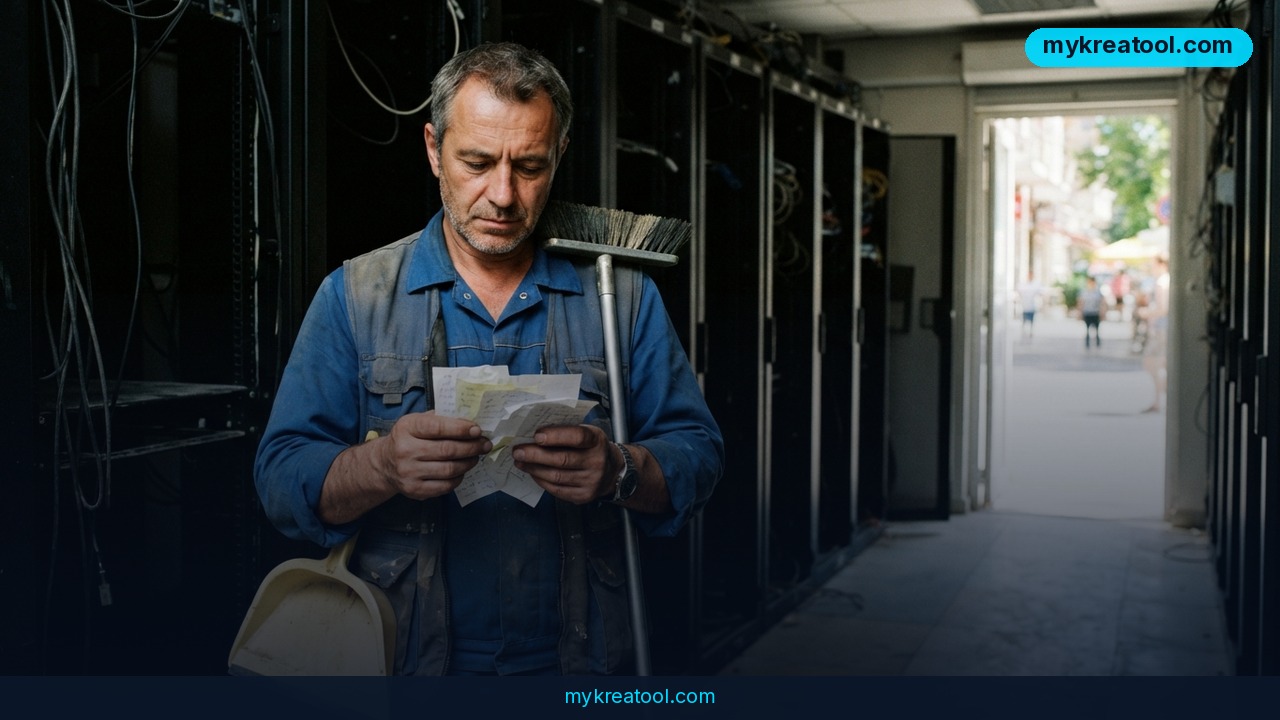
Amazon is shutting down Mechanical Turk, and the shutdown is the clearest sign yet of how AI is quietly replacing human work behind the scenes. The platform, launched in 2005 and once home to roughly 500,000 workers doing small paid tasks like labeling images and transcribing audio, closes for good on September 30. Amazon founder Jeff Bezos originally nicknamed it "artificial artificial intelligence" — a joke about humans filling in for computers that weren't smart enough yet.
The irony is that the joke became the plot. Millions of human-labeled data points from Mechanical Turk helped train the very AI models that eventually made the platform obsolete. A 2023 EPFL study estimated that somewhere between a third and half of Mechanical Turk workers were already using large language models to complete the "human" tasks they were paid for. By the end, the platform built to prove humans could do what machines couldn't was full of humans quietly using machines to do it.
The numbers behind the closure
21 years in operation, 500,000 workers at peak, task pay measured in cents, and a closure date of September 30 — after a slow decline as AI models absorbed the exact capabilities the platform was built to supply. Companies paying for "human judgment" on Mechanical Turk were, by some estimates, getting AI output roughly a third to a half of the time without knowing it.
Why It Matters: AI Is Replacing Gig Workers Across Platforms
This isn't just an Amazon story — it's a preview of what's happening across freelance and gig platforms that sell human labor as a service. When the underlying task (labeling, transcribing, writing short descriptions, basic research) can be done by a language model, the economic pressure to quietly substitute AI is enormous, especially at a few cents per task. Workers who switched to AI weren't cheating in isolation; they were responding rationally to pay rates that no longer reflected the actual difficulty of the work.
The deeper issue is disclosure, not the technology itself. Buyers thought they were purchasing human judgment. Workers were often selling model output labeled as human judgment. Multiply that gap across content platforms, customer service, video production, and virtual assistant work, and you get a market where nobody quite knows what they're actually paying for.
A Pattern Beyond Gig Work: Video Production and AI Avatars
The same substitution is happening in video production, where AI avatars from tools like Argil and Seedance now replace filmed talking-head footage entirely. The honest pitch there is simple: what used to require a filming day now doesn't, and everyone involved knows it. Mechanical Turk ran the identical trade without the disclosure — which is the actual lesson for any business relying on outsourced digital labor right now.
How to Use AI Tools Directly Instead of Gig Platforms
For businesses and creators, the practical takeaway isn't to avoid AI-assisted labor — it's to stop pretending it isn't already there and start using it deliberately.
1. Audit what you're actually paying for. If you're buying data labeling, transcription, content writing, or virtual assistant services, ask directly whether AI tools are part of the workflow. Build that into your pricing expectations instead of discovering it later.
2. Move routine tasks to AI directly rather than paying gig-platform rates for work a model can already do in seconds — image labeling, transcription, first-draft copy, and basic research are prime candidates.
3. Test free tools before committing budget. Sites like mykreatool.com offer free AI tools for exactly this kind of task — content generation, image work, and quick automation — so you can see what a model handles well before paying anyone, human or platform, to do it.
4. Reserve human review for judgment calls AI still gets wrong: nuance, context, brand voice, and anything with legal or reputational risk.
Where AI Disclosure Becomes a Competitive Selling Point
Businesses that state plainly "this task is AI-assisted, here's what that means for cost and turnaround" are starting to out-compete those still selling AI output as manual human work. Clients increasingly ask, and a straight answer builds more trust than a vague one.
Who Benefits and Who Loses When AI Replaces Crowdsourcing
The clearest winners are businesses and freelancers who adopt AI tools openly and reprice their services around speed. A transcription service that goes from a 48-hour turnaround to same-day, and says why, wins the client who needed it fast. Small teams and solo creators benefit most, since they can now do labeling, transcription, and first-pass content work in-house instead of routing it through a marketplace and its fees.
Data labeling companies that already shifted to human-in-the-loop AI review — where people check and correct model output rather than generating everything from scratch — are also positioned well, since that hybrid model reflects how the work is actually being done now anyway.
Losers in the shift
Gig platforms charging per-task rates for work AI can now do directly lose their reason to exist unless they add real value on top — quality control, specialized judgment, or domain expertise a general model lacks. Middlemen who don't disclose how work is actually produced face the same trust problem Mechanical Turk quietly had for years.
Risks: Why Undisclosed AI Use Erodes Client Trust
The biggest risk isn't AI doing the work — it's doing it without telling anyone. That erodes trust with clients and end users the moment it's discovered, and it usually is. A second risk is quality drift: AI output presented as human judgment skips the review step a genuinely human process would normally include, so errors compound silently.
There's also a labor risk worth naming directly. Workers who relied on Mechanical Turk-style income lose that option as platforms shut down, and the transition to AI-assisted work isn't automatic or guaranteed — it requires new skills and new tools, not just a closed account.
Conclusion
Mechanical Turk's shutdown after 21 years isn't really about one Amazon platform disappearing — it's proof that the gap between "human-labeled" and "AI-labeled" work has effectively closed, and pretending otherwise is no longer viable. The businesses and creators who come out ahead will be the ones who name what AI is already doing in their workflow, price accordingly, and use disclosure as a trust signal instead of a liability.


Comments 0