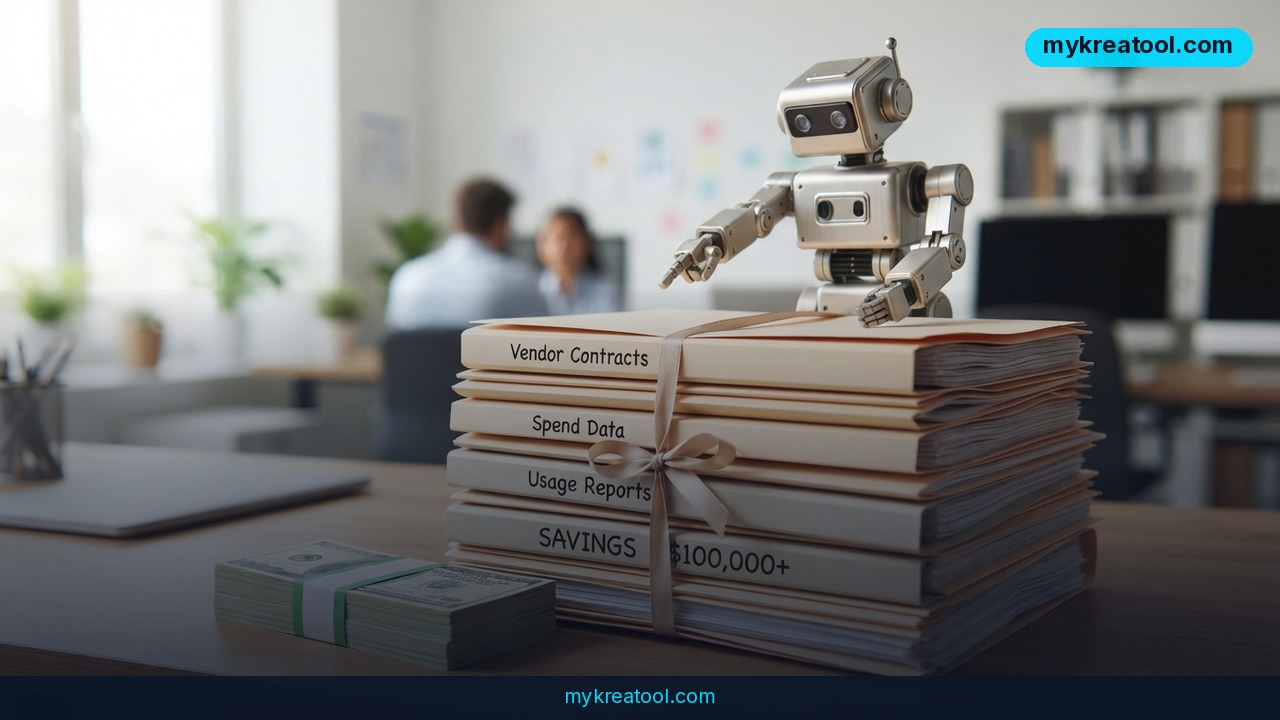
What happened
A company handed an AI agent access to its vendor spending, contracts, and software usage logs — and asked it to find ways to save money. The AI procurement bot, nicknamed "Haggle Bot," found more than $100,000 in direct savings by spotting unused software subscriptions, renewals that no longer matched actual usage, and recurring purchases that were never renegotiated.
Think of it like hiring a very patient assistant whose only job is to read every bill you get, notice when you're paying for something you don't use, and go check if you could get a better price elsewhere. Most businesses never do this work by hand because it's tedious and doesn't feel urgent — until the AI does it in days instead of months.
The setup was simple. The bot was told where the company's spending data lived (tools like Ramp, Brex, or NetSuite), where contracts were stored, and where to check who was actually using each paid tool. It then compared prices against the market, drafted negotiation points, and flagged decisions for a human to approve. It never signed anything or spent money on its own — a person made every final call.
The bigger idea here isn't the specific dollar figure. It's that a plain-language instruction ("find savings and back them up with evidence") plus access to the right data let the bot keep working on its own, without a human writing out every step. That's a meaningful shift from older procurement software, which mostly just stores contracts and tracks vendors — it doesn't ask "why do we still pay for this?"
What it means for you
You don't need a company with a procurement department to benefit from this idea. The pattern — point an AI at your real data and let it hunt for waste or opportunity — applies far beyond corporate vendor management.
Home: Feed an AI your monthly bank and subscription statements (with sensitive numbers removed) and ask it to list every recurring charge, flag ones you forgot about, and suggest which streaming, app, or gym subscriptions to cancel. Many households carry $200–$500 a month in subscriptions nobody actively uses.
Work: If you manage a team budget, ask an AI to review your department's software licenses and usage reports. It's common to find that a company bought 50 seats for a tool but only 30 people ever log in — that's pure waste sitting in plain sight.
Business: A small business owner can use the same approach on supplier invoices — office supplies, shipping, insurance — comparing what you're paying against current market rates instead of just reordering the same thing every quarter.
Study: Students managing a tight budget can have an AI review recurring subscriptions (streaming, software, textbook rentals) and identify which ones overlap or aren't worth the cost during the semester.
Creativity: Freelancers and creators juggling multiple paid tools (design apps, stock photo sites, hosting) can ask an AI to audit which subscriptions actually get used in their monthly output versus which quietly renew unused.
Income: If you consult or freelance, offering a one-time "subscription and vendor audit" using AI tools is itself a service people will pay for — since most business owners know they're overspending somewhere but don't have time to find it.
How to try it right now
You don't need enterprise software to start. Here's a step-by-step way to test this yourself, free option first.
1. Start free: Go to mykreatool.com and use one of its free AI tools to organize and summarize a spreadsheet or list of your expenses — a good first step before trusting an AI with anything financial.
2. Gather your data: Export a spending report — a bank statement, a list of subscriptions, or a vendor invoice list. Remove account numbers and passwords first.
3. Ask a clear question: Paste the data into an AI chat tool (such as Grok, the assistant behind this experiment) and ask: "Review this spending list. Flag anything unused, duplicated, or overpriced compared to typical market rates."
4. Review, don't auto-approve: Read the AI's suggestions like a first draft. Verify any specific price claims yourself before cancelling or renegotiating anything.
5. Take one action: Cancel one subscription or renegotiate one bill this week based on what it finds. Small, real actions beat a long list you never act on.
6. Repeat monthly: Set a recurring reminder to run the same check — spending creeps back up as new subscriptions get added.
Upsides and what changes
The clear upside is time. Reviewing every vendor contract and usage log by hand is the kind of task that's "worth doing but hard to justify" — exactly the phrase used to describe why this work usually gets skipped. An AI doesn't get bored reading the fortieth invoice, so waste that would normally hide for years gets caught in days.
It also changes who does this kind of work. Previously, only large companies with dedicated procurement teams could afford to chase down every unused license. Now a small business owner or even an individual managing household bills can run a similar check for free or nearly free, in an afternoon.
Limitations
This isn't magic, and it isn't fully automatic. The AI is only as good as the data you give it — if your spending records are messy or incomplete, it will miss things or make wrong assumptions. It also can't verify real-world facts on its own, like whether a vendor's quoted "market rate" is actually accurate right now, so treat its output as a strong first draft, not a final answer. And critically, in the original case a human still approved every real decision — the AI found opportunities and prepared the case, but never signed a contract, approved a charge, or spent money by itself. Keep that same rule for yourself: let AI suggest, but a human decides.
Conclusion and one action for today
The lesson isn't that AI replaced a procurement department — it's that a clear instruction plus access to real data lets AI do hours of tedious financial review in minutes, for a business or a household. Today's action: pull up one recurring bill — a subscription, a utility, or a vendor invoice — and ask an AI to check if you're overpaying. You'll likely find your first savings before the day is out.
Comments 0