What happened
AI video actors are no longer a novelty in China's entertainment industry — they're the default. In the first quarter of 2026 alone, about 128,000 short dramas were published across Chinese platforms, roughly three times the total output of all of 2025 combined. According to the China Netcasting Services Association, 95 percent of those productions were AI-generated, meaning human actors, cameras, and sets were barely involved.
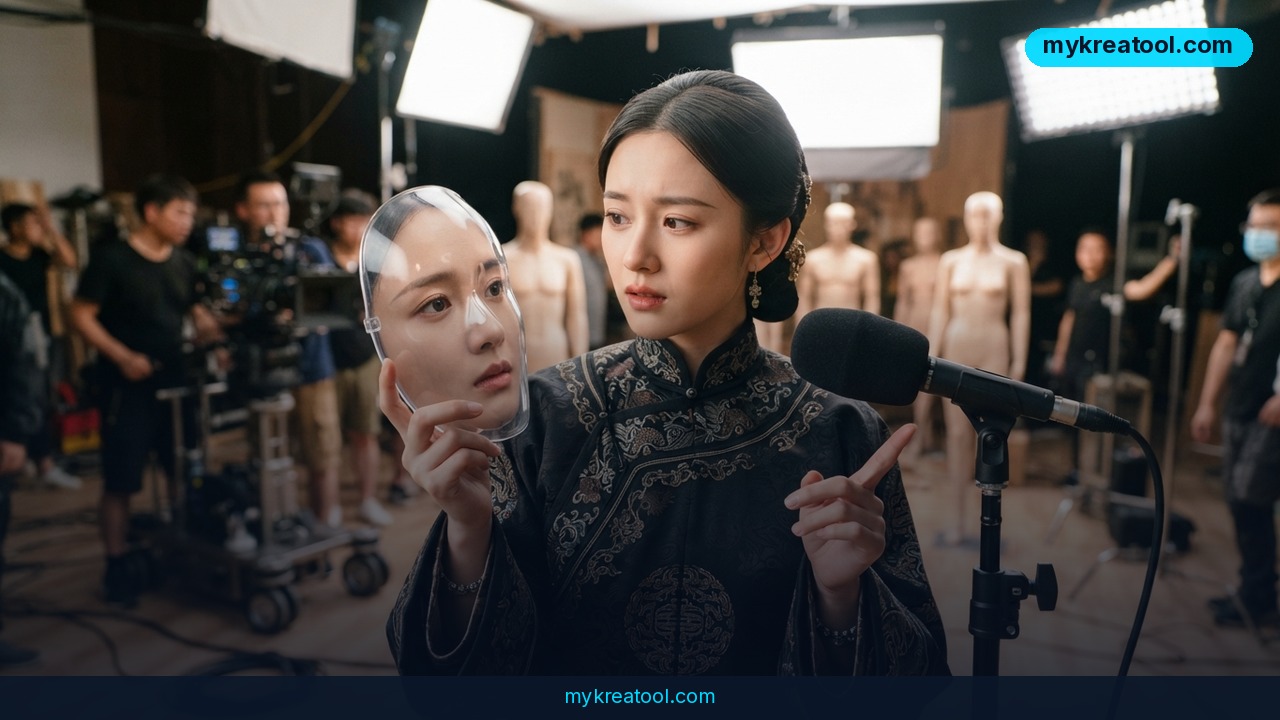
The shift accelerated sharply after ByteDance released Seedance 2.0, a video generation model that lets studios produce polished, broadcast-ready footage faster and cheaper than hiring a human cast. Since then, newer models — Seedance 2.5 and Wan 3.0 — have pushed quality even higher, closing the visual gap between AI-generated performers and real ones. A widely circulated example (via Hubei Daily) shows just how convincing these synthetic performances have become, and more realistic demo reels have followed since.
The economics behind the shift
The number driving adoption is cost. Tsinghua University professor Shen Yang told the Financial Times that one minute of AI-generated video now costs between $90 and $120 — about 10 percent of what a traditional production with human actors used to cost. For an industry built on high-volume, low-budget short dramas, that math is impossible to ignore.
Why it matters
China's short-drama and livestreaming sector isn't a niche corner of the internet — it directly employs 690,000 people, and another 15 million list livestreaming as their primary source of income. When 95 percent of new content in a fast-growing format is AI-made, the disruption isn't theoretical; it's already showing up in contracts, casting calls, and layoffs.
Lawyers tracking the industry report that AI-related labor disputes have risen steadily over the past two to three years. In some documented cases, performers have been asked to "distil" their voice and likeness into an AI tool — effectively training a digital replica of themselves — shortly before their contracts end. That pattern, more than any single statistic, is what's alarming labor advocates: the technology isn't just replacing actors, it's sometimes being trained on the very people it displaces.
A signal for markets beyond China
While the numbers are specific to China's short-drama boom, the underlying trend — AI video reaching a quality and price point that undercuts human production — isn't confined to one market. Studios, marketing teams, and content creators everywhere are watching the same cost curve, and many are already testing AI video tools for ads, explainer content, and social clips.
How to use it today
You don't need a studio budget or a Seedance-level model to start experimenting with AI video production. Marketers and creators can already use accessible AI video and image tools to prototype ad creative, generate product demo footage, or produce social content at a fraction of traditional costs. For teams that want to test this workflow without committing to expensive enterprise platforms, free tools like those at mykreatool.com offer a practical starting point for generating and editing AI visuals before scaling up.
Where AI video fits right now
Realistically, AI-generated video is strongest today for high-volume, formulaic content: short-form social clips, product showcases, explainer voiceovers, and A/B-testable ad variants. It's less reliable for anything requiring nuanced human performance or brand-critical storytelling — at least until the next model generation closes that remaining gap.
Who benefits
The clearest winners are production companies and platforms that operate at scale. Cutting a minute of video from roughly $1,000 down to $90–$120 changes the entire unit economics of short-form content, letting studios greenlight far more projects with the same budget. Independent creators and small marketing teams benefit too — AI video tools lower the barrier to producing professional-looking content without a crew, actors, or studio time.
Platforms themselves benefit from the sheer volume increase: more content published faster means more engagement opportunities, even if a growing share of that content is synthetic rather than human-performed.
Risks
The flip side is real and already measurable. Hundreds of thousands of jobs in acting, livestreaming, and production support are exposed, and the rise in AI-related labor disputes suggests the transition isn't happening smoothly or fairly. Performers pressured to license their likeness before being let go raises serious consent and compensation questions that regulators haven't fully addressed yet.
There's also a quality-and-trust risk for audiences: as AI-generated performers become harder to distinguish from real ones, transparency about what's synthetic versus human-made becomes a bigger issue for platforms and advertisers alike.
Conclusion
China's short-drama industry offers an early, concrete look at what happens when AI video crosses a cost and quality threshold: adoption doesn't creep in gradually, it happens in a single quarter. With 95 percent of new short dramas now AI-generated and production costs down 90 percent, the pressure on human actors, livestreamers, and production crews is no longer a future concern — it's a current one. For marketers and creators elsewhere, the lesson isn't to panic but to get hands-on with AI video tools now, understand their real limits, and figure out where they fit into your workflow before the cost curve forces the decision for you.
Comments 0