What happened
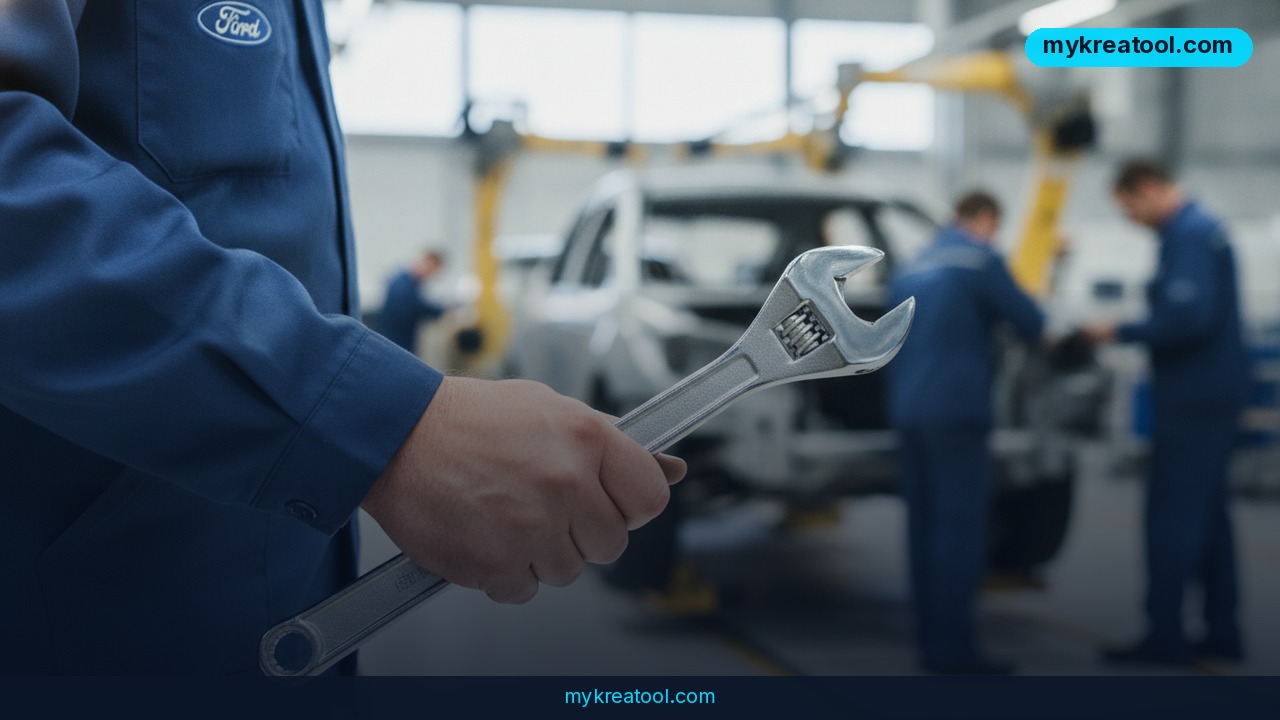
AI layoffs are having a quiet, embarrassing sequel: the rehire. Ford let go of engineers to lean on AI tools, then brought back 350 of them within months. Klarna, the buy-now-pay-later company that became the poster child for AI replacing customer service, cut roughly 700 support reps and later admitted it needed humans back on the phones. Neither company announced the reversal with a press release. The layoffs made headlines; the rehiring happened in the background, through recruiters and LinkedIn messages, because reversing a public AI-efficiency story is not a good look.
Both cases hit the same wall. Leadership assumed AI could absorb the work once the people were gone, and both underestimated how much undocumented knowledge was sitting in employees' heads after years on the job — the exceptions, the edge cases, the context nobody wrote down because nobody thought to. AI is only as good as the information you feed it. Take away the people who held that information, and the system quality drops even when the AI tool itself works exactly as advertised.
What makes this notable is the scale of the companies involved. Ford and Klarna have real documentation, dedicated process teams, and far more resources than a typical small business. If sophisticated organizations like these couldn't hold service quality steady after cutting staff for AI, it's a warning sign for anyone assuming AI adoption is primarily a headcount-reduction play.
Why it matters
The pattern matters because "replace people with AI" and "arm people with AI" produce very different outcomes, and most public narratives only celebrate the first one. Layoff announcements are easy content: a founder cuts 60% of a team, credits AI, and gets a viral post. Rehiring is not content — it's an admission that the first move was wrong. So the internet hears a lopsided story where AI-driven cuts look like unambiguous wins, when the reality includes a steady stream of quiet reversals.
The deeper issue is that AI amplifies whatever is already there. Feed it good judgment, strong institutional knowledge, and a person who actually cares about the outcome, and AI becomes a force multiplier. Feed it a vacuum left by departed staff, and it just automates the gaps faster. Ford and Klarna didn't prove AI doesn't work; they proved that AI without the right human context underperforms, sometimes badly enough to justify undoing a very public layoff.
For smaller teams, this is actually good news. You don't need Ford-scale documentation to get this right — you need to be honest about which employees are worth building around, and hand them the tools before you touch headcount.
How to use it today
Here's the practical version you can run this week, no consultants required. Write out your team, and next to each name answer four yes/no questions:
• Do they solve problems without being asked?
• Do they actually care whether the outcome is good, not just whether the ticket got closed?
• Will they learn something new even when it's uncomfortable?
• Do they show good judgment?
Whoever scores four yeses is who you hand AI to first. That person doesn't get 10% better with AI in the loop — they become a different category of employee, because AI amplifies judgment rather than replacing it. The people who score fewer yeses were probably drifting toward the door anyway; AI adoption just makes the gap visible sooner.
On the tooling side, you don't need an enterprise AI budget to start this experiment. A useful first step is giving your best person a free AI tool for a real task — drafting customer responses, summarizing meeting notes, or generating first-pass copy — and comparing the output against what a contractor or junior hire would produce. Sites like mykreatool.com offer free AI tools that are good enough for exactly this kind of test run before you commit budget to anything more elaborate.
Run the four-question audit before you run any AI rollout, not after. Companies that reverse the order — cut first, evaluate later — are the ones ending up in the next Klarna-style rehire story.
Who benefits
The employees who benefit most are the ones already scoring four yeses on the audit: high-judgment generalists, people who own outcomes rather than tasks, and anyone whose value was never really about typing speed or ticket volume. Give this person AI and they can suddenly cover work that used to require two or three additional hires, without the quality collapse Ford and Klarna experienced.
Managers and founders benefit because the framework replaces vague AI strategy debates with a concrete, five-minute audit. Instead of asking "should we use AI," the question becomes "who on this team should be first," which is a much easier decision to make and defend.
Small agencies and solo operators benefit too. One example: an agency owner cut contractors after noticing her own AI prompts consistently beat their output — a case where the audit worked in reverse, revealing that the contractors weren't adding judgment AI couldn't replicate. That's a legitimate outcome of the same test; it just cuts the other way when the human isn't clearing the bar.
Risks
The main risk is copying the headline instead of the lesson. "AI replaced 60% of my team" is a viral post, not a strategy, and following it without Ford's or Klarna's resources is asking for a rougher version of the same rehire cycle — except a smaller company may not survive the service-quality dip long enough to reverse course quietly.
A second risk is losing tacit knowledge permanently. Ford and Klarna could rehire because the people they cut were still reachable and willing to come back. That option disappears if departing staff take jobs elsewhere, get discouraged, or simply move on. Once that context is gone, no AI tool can reconstruct it from scratch.
There's also a morale risk on the flip side: running the four-question audit and being transparent about it can feel like a performance review with extra steps. Handle it as a resourcing decision about who gets new tools first, not as a public ranking, or you'll create the exact flight risk you're trying to avoid.
Conclusion
The real story behind AI layoffs isn't that AI failed at Ford or Klarna — it's that cutting people before understanding what they actually knew was the mistake, and both companies quietly walked it back. The better sequence is arm your best people with AI first, using the four-question test to find out who that is, and only then make headcount calls. Do the audit, try a free AI tool on a real task, and let the results — not the LinkedIn post — decide what happens next.

Comments 0