What Happened
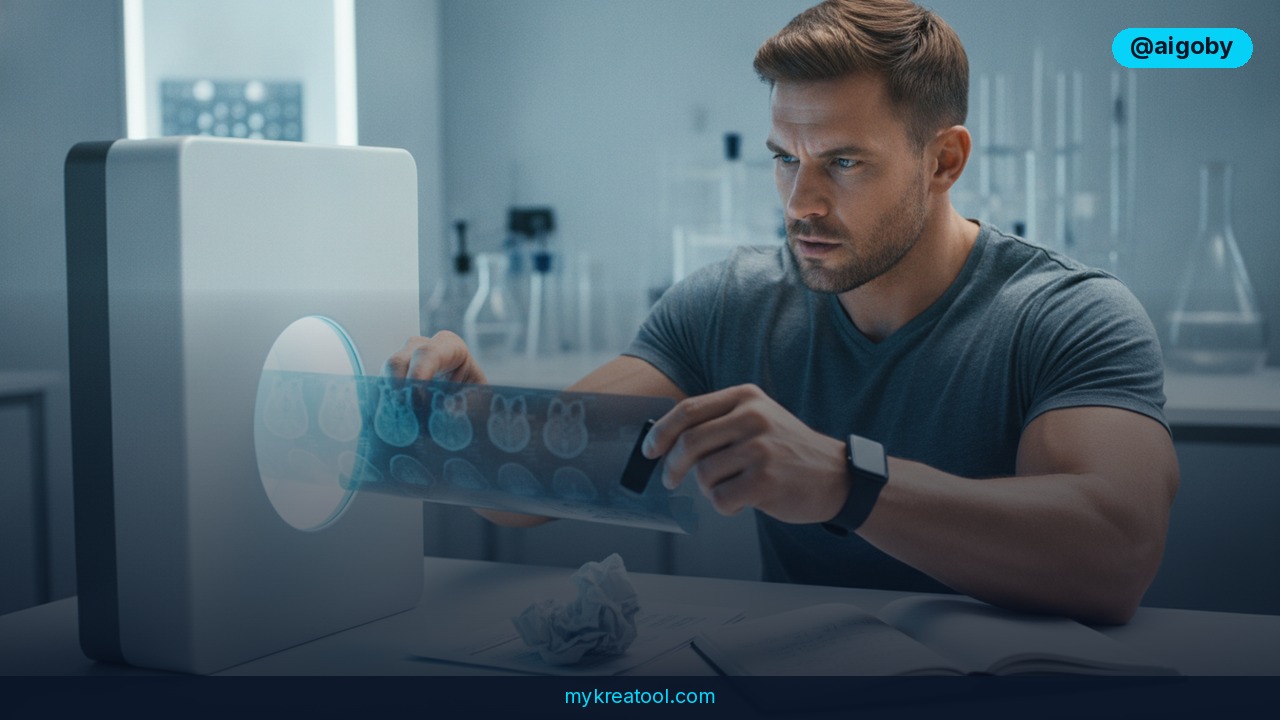
When a health-obsessed founder used AI and data-driven research to navigate a rare cancer diagnosis, he turned one of the worst moments of his life into a masterclass in patient advocacy. Conno Christou, 35, was building his second company and tracking nearly 100 biomarkers every year. He wore a Whoop band, cross-referenced it with an Oura ring, and followed the protocols of longevity researchers like Peter Attia and Rhonda Patrick. His 2025 annual bloodwork came back cleaner than ever.
Then his arm swelled after a workout. A week later, doctors found two blood clots — and then, during pre-op exams, something far more serious: an 11-by-11-by-8 centimeter mass sitting behind his sternum. A biopsy confirmed an aggressive, fast-growing form of non-Hodgkin's lymphoma. It's a rare diagnosis, affecting roughly one in 420,000 people, caused by a random genetic mutation with zero connection to lifestyle, diet, or stress. The tumor had existed for only about three months. Three more weeks and it would have reached stage four.
Caught by Accident, Treated by Design
"Lucky in my unluckiness," Christou said from his home in Athens. The mass was only discovered because he went in for something else entirely. What followed was a crash course in the limits of conventional medicine — and in what a determined, data-literate patient can accomplish when they refuse to be passive.
Why It Matters
Christou's first oncologist — a renowned specialist — recommended the lighter of two available chemotherapy regimens and scheduled his first infusion three days out. The night before, Christou sought a second opinion. That doctor recommended the complete opposite: a harder regimen involving continuous in-hospital infusion, cycling every three weeks over six months. The lighter treatment carried roughly a 60% success rate for his specific pathology. The aggressive one pushed that number to around 85%.
Two world-class doctors. Two completely opposite recommendations. This is the part of the story that should make every entrepreneur — and every patient — pay attention.
The Data-Driven Patient
Christou didn't stop at two opinions. Over the next 48 hours, he gathered 12 opinions in total, reaching out to hematologists and oncologists in the US and internationally, calling in every professional favor he had. Eleven out of twelve voted for the harder path. He took it — not out of bravery, he says, but out of logic. He was already a data-driven person. Now the stakes were existential.
This is the same instinct that drives the best founders: never ship on one data point. Validate, iterate, and make decisions based on the weight of evidence. The medical system, it turns out, responds to exactly this kind of pressure.
How to Use It Today
Christou's approach offers a repeatable framework that goes well beyond cancer. Whether you're navigating a health crisis, a major business decision, or a complex research problem, AI tools now make it possible to move faster and smarter than ever before.
Here's how to apply his method:
1. Aggregate opinions fast. Christou used his network aggressively. Today, AI tools can help you identify the right specialists, draft outreach emails, summarize medical literature, and cross-reference treatment protocols in hours rather than weeks.
2. Use AI to decode complexity. Large language models can translate dense oncology papers into plain English, flag contradictions between studies, and help you formulate sharper questions for your doctors. This doesn't replace medical expertise — it makes you a better-informed patient or decision-maker.
3. Track everything. Christou treated each three-week chemotherapy cycle like a sprint, logging data points throughout. Founders can apply the same discipline to any high-stakes project: define your metrics, track them obsessively, and adjust based on what the numbers say.
Tools That Can Help Right Now
If you want to build this kind of research and decision-making muscle, start with the right toolkit. Platforms like Kreatool offer free AI tools that help entrepreneurs, marketers, and creators research faster, write more clearly, and synthesize complex information — exactly the kind of capability Christou was leveraging during his treatment. The goal isn't to replace experts. It's to arrive at every conversation better prepared than anyone expects.
Who Benefits
Christou's story resonates far beyond the oncology ward. The underlying skill set — rapid information gathering, multi-source validation, data tracking, and disciplined decision-making — is directly transferable to anyone running a business or managing a complex project.
Founders and Operators
Founders already live in high-stakes environments where bad information or a single unchallenged assumption can cost everything. Christou's instinct to collect 12 opinions before committing to a treatment mirrors what the best operators do before a major hire, a pivot, or a fundraising round. The lesson: never let urgency collapse your decision-making process.
Marketers and Researchers
For marketers and content creators, AI-assisted research is already changing how strategies are built. The ability to synthesize dozens of sources, identify consensus, and spot outliers in minutes is a competitive advantage — whether you're analyzing a market or a medical chart.
Risks
Christou's story is inspiring, but it carries important caveats that are worth naming clearly.
AI Is Not a Doctor
Using AI to research a medical condition can surface genuinely useful information, but it can also surface outdated studies, misapplied statistics, or confident-sounding errors. Christou's approach worked because he used AI and research tools to prepare better questions — not to replace the judgment of trained oncologists. That distinction matters enormously.
Information Overload Is Real
Gathering 12 opinions in 48 hours is impressive. It's also exhausting, and not everyone has the professional network or the cognitive bandwidth to do it under extreme stress. For most people, two to three expert opinions combined with solid AI-assisted research is a more realistic and still highly effective approach.
Privilege and Access
Christou had advantages that not every patient has: a strong professional network, financial resources, and the health literacy to navigate complex medical information quickly. The broader promise of AI in healthcare is that it can help close some of these gaps — but that promise is still unevenly distributed.
Conclusion
Conno Christou's cancer diagnosis was random, aggressive, and nearly fatal. His response was methodical, data-driven, and almost certainly life-saving. He collected 12 medical opinions in 48 hours, chose the harder treatment path backed by an 11-to-1 expert consensus, and approached six months of chemotherapy the way he approaches building a company — as a series of measurable sprints with clear data points at every stage.
The tools that helped him move that fast — AI research assistants, network leverage, rigorous self-tracking — are available to anyone right now. The mindset that made them effective is the same one that separates good founders from great ones: never accept the first answer, validate everything, and hold the wheel.
For entrepreneurs, marketers, and creators, the takeaway isn't just about health. It's about what's possible when you treat information as a competitive advantage and refuse to be a passive participant in any high-stakes decision.


Comments 0