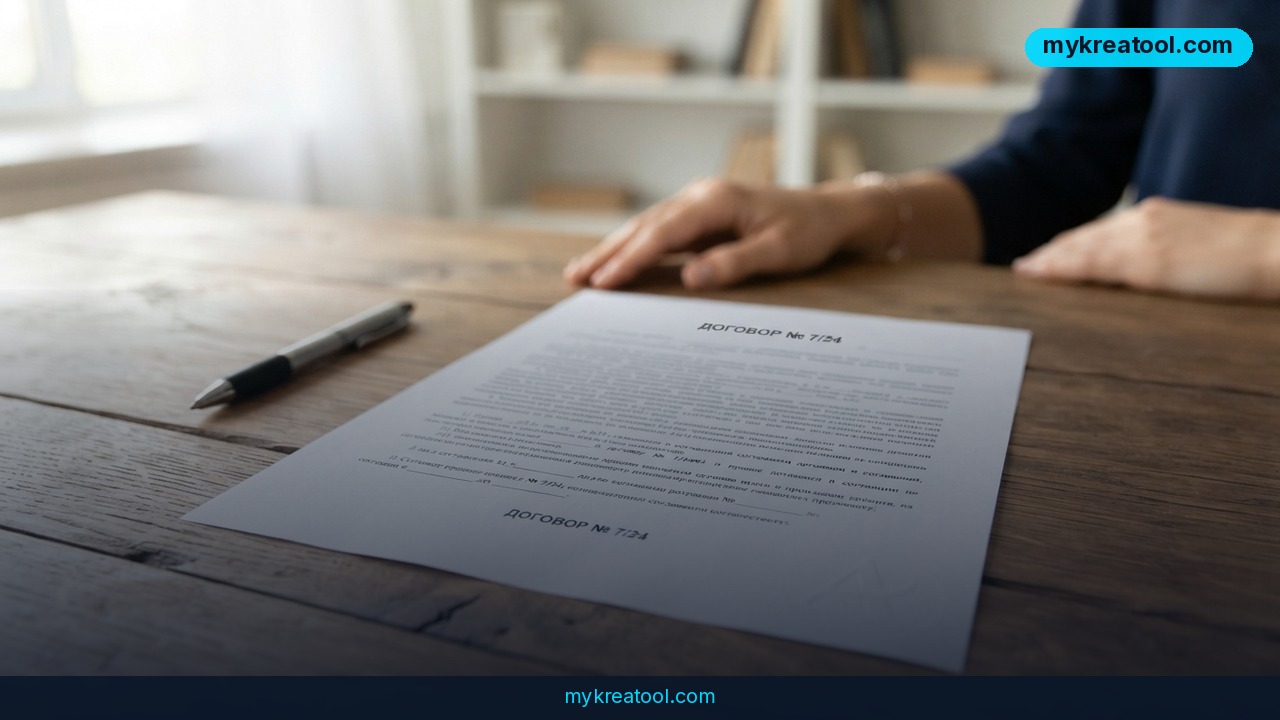
What happened
Anthropic just switched on an invisible watermark AI text system across every Claude model — and it applies far more broadly than most users expect. According to a support article published by the company, Claude now embeds machine-readable watermarks not only in text it generates from scratch, but in anything it edits, from a full rewrite down to a single grammar fix. The trigger is the European Union's AI Act, which requires AI providers to mark AI-generated or manipulated audio, image, text, and video content. The rule applies to any AI model released after August 2, with a grace period running until December 2026 for providers to update older models already on the market.
Anthropic isn't limiting the change to EU users. The company confirmed that every new Claude model released globally will carry watermarks "from day one," no matter where the request originates. Text outputs get an embedded, invisible signal baked into word choices; other file types — images, audio, video — get C2PA-style provenance metadata attached wherever the platform supports it. C2PA is the same industry provenance standard already used by Adobe, Google, and several camera makers, so Claude's non-text watermarking slots into infrastructure that already exists.
Why it matters
The EU AI Act actually carves out an exception for "assistive" edits — grammar correction, light polishing, anything that doesn't substantially change the user's meaning. Anthropic chose to skip that carve-out entirely. Because a watermark is applied at the model level, Claude can't reliably tell a full AI-written essay from a single corrected typo, so it stamps both. That's a deliberate "better safe than sorry" call, but it means casual users asking Claude to tighten a sentence or two may end up with the same invisible mark as someone who generated an entire article with a one-line prompt.
The practical effect: an invisible watermark AI text signal could now sit inside a huge share of everyday Claude output, well beyond what most people would call "AI-generated content." Anthropic itself admits the mark isn't very informative — a detected watermark means only that "the content may have been processed by Claude," not that it was written by Claude, and the company acknowledges marks could even show up on text Claude never touched. No public detection tool exists yet, so none of this is independently verifiable at the moment.
How to use it today
If you use Claude for drafting, editing, or brainstorming, nothing changes in your day-to-day workflow — you won't see or feel the watermark, and Anthropic says it can survive copy-paste into other apps and some further editing. What's worth knowing:
• There's no detection tool available yet, so you currently can't check whether a specific piece of text carries a mark.
• Pasting Claude output into another AI tool that rewrites it can destroy the watermark entirely, since the signal depends on the model's original word-choice pattern.
• For quick, low-stakes edits where you'd rather not worry about provenance metadata at all, lightweight, free AI tools like the ones at https://mykreatool.com can be a useful complement for one-off tasks that don't need to run through a flagship model.
• If your business publishes AI-assisted content and cares about disclosure or compliance, start documenting which tools touch which drafts now, before Anthropic's detection tool ships and outside parties start checking.
Who benefits
EU regulators get a provider that's arguably over-complying rather than under-complying with the AI Act, which reduces enforcement risk for Anthropic itself. Publishers, platforms, and marketplaces that need to verify content provenance — think stock media sites, journalism outlets, or ad networks — gain an early, if imperfect, signal to build policies around. Anthropic also benefits reputationally: being first to ship watermarking broadly, not just in the EU, positions Claude as the "responsible" choice for enterprise and regulated industries ahead of competitors who may only comply where legally forced to.
Risks
The approach has real gaps. Text watermarks work by subtly biasing word choices across a document — detectable only in aggregate by a purpose-built tool, and only once Anthropic reveals how detection works. That same disclosure will hand bad actors a blueprint for building removal tools. Non-text watermarking is even weaker: a screenshot, a re-recording, or any standard metadata stripper defeats C2PA provenance data in seconds.
There's also a labeling problem. Because Claude watermarks both wholesale AI generation and minor human edits identically, the mark can't distinguish "I wrote this and Claude fixed two commas" from "Claude wrote this entirely." If the general public — or an algorithm, employer, or platform — treats any detected mark as proof of AI authorship, human-written work that merely passed through Claude for a light edit could get flagged, penalized, or distrusted unfairly. And Anthropic's own language undercuts confidence further: a missing watermark doesn't mean the content wasn't AI-processed either, since not all platforms and features support marking yet.
Conclusion
Anthropic's rollout of an invisible watermark AI text system marks a genuine first for the industry — global by default, not just EU-compliant, and covering edits as well as generation. But the technology ships ahead of its own safety net: no public detection tool, trivially bypassed non-text metadata, and a signal so broad it risks conflating a comma fix with a fully generated essay. For entrepreneurs, marketers, and creators using Claude today, the sensible move is to keep working as usual while staying alert — once detection tools go live in the coming months, understanding exactly what "processed by Claude" does and doesn't prove will matter for anyone publishing AI-assisted content.

Comments 0