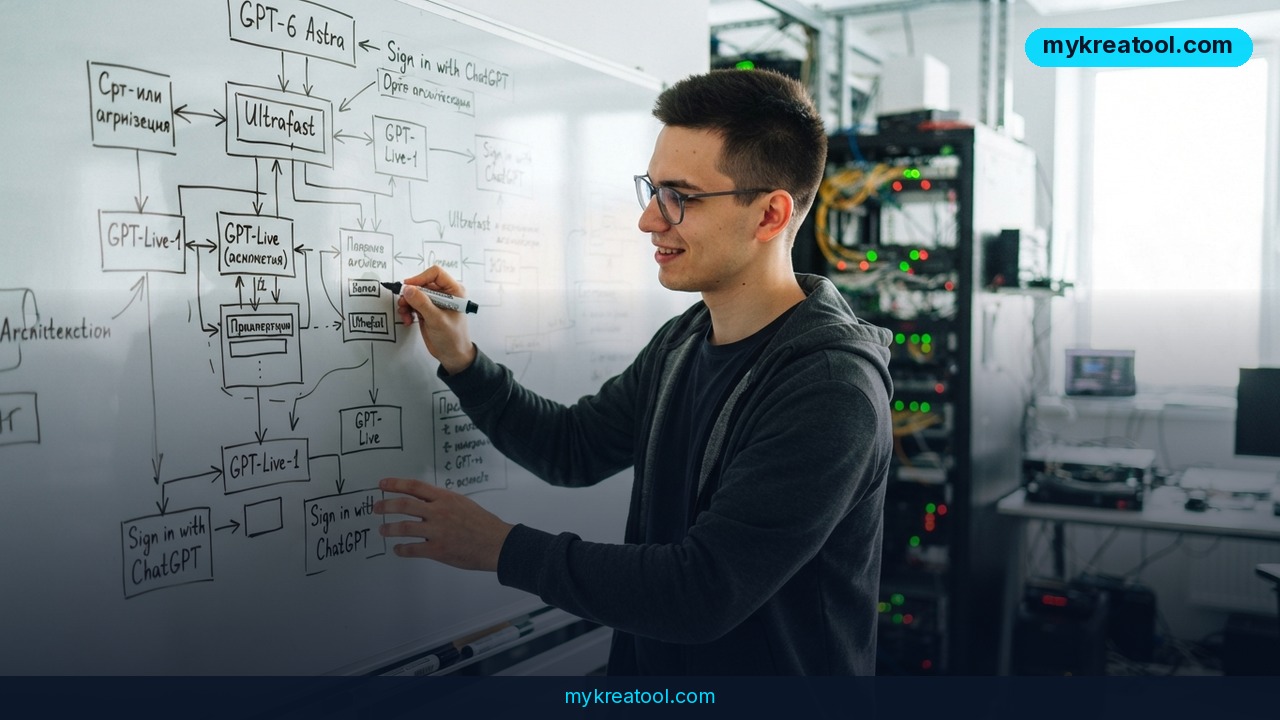
Handing a half-baked idea to an AI assistant and getting back something you could actually ship used to sound like a pitch-deck promise. Amp, a North American startup, is betting it's the new normal: its AI agent takes a rough concept and carries it through planning, coding, and page design. In a customer story OpenAI published on October 14, 2026, Amp's CEO explains why most of the tokens flowing through his product come from OpenAI models — and what changed once his users stopped counting them.
What happened
Amp builds what the industry calls a frontier AI agent. Picture a digital coworker that doesn't just answer questions — it goes away, does multi-step work, and comes back with something finished. The company's stated goal is to help developers turn ambitious ideas into working software, and it picks models based on whatever works best for its users. Right now, OpenAI models account for the majority of the tokens Amp burns.
Amp's CEO and member of technical staff, Quinn Slack, is blunt about why.
"OpenAI is very transparent, and when there are safeguards applied, users know and they understand," he says. "That makes it really easy to use OpenAI models. You can do all of your work in Amp with OpenAI models and be really happy."
Consistency beats fireworks
Slack points to something less headline-grabbing than raw capability: steady improvement. "Our users really appreciate the consistency with which OpenAI models have been getting better and better," he says.
That matters more than it sounds. If your tool gets noticeably smarter every few weeks, you keep handing it bigger jobs — and the ceiling on what you'll attempt quietly rises.
Sign in with ChatGPT: stop counting every token
A token is just a small chunk of text, usually a syllable or a short word, and it's the unit AI providers bill for. Heavy Amp users go through roughly 10 billion tokens a week. Slack's worry is that watching that meter run holds people back from finding out what an agent can actually do.
So Amp launched Sign in with ChatGPT, which gives Amp users access to more tokens and OpenAI models, including GPT-6 Astra. "Sign in with ChatGPT means that people can have that feeling where they're not counting every single token," Slack says. "And once you actually let the agent go and have a longer leash, then you realize just how much it can do."
Puck, GPT-Live-1, and Ultrafast mode
Amp recently announced Puck, a conversational AI assistant built into Amp that launches and manages other agents. You can ask Puck to spin up an agent to investigate a bug, coordinate several agents at once, or dig up a previous conversation about a technical problem.
Calling Puck, powered by GPT-Live-1, lets you talk to Puck out loud in real time — even from a watch. Slack imagines people keeping their agents working while they're away from the computer, including on a run. Amp has also been testing Ultrafast mode with GPT-6 Astra: same brain, less waiting. The point of speed is behavioral. When you're not staring at a spinner, you hand over bigger jobs.
What it means for you
You don't have to be a developer for any of this to matter. The pattern here — an agent that plans, writes, designs and keeps working while you're doing something else — shows up in almost every kind of work.
At home: your house plans become a game
Slack took this home, literally. He fed GPT-6 Astra the plans for his house and used it to build a 3D model in Blender, the 3D modeling app. Then he and his kids turned that model into games: adding a lazy river running through the house, or chasing garlic around it, a nod to their grandmother's dislike of the stuff. "That was not possible just a couple months ago," he says.
If you've ever wanted a family project that starts as a sketch and ends as something you can play, that's the shape of it.
At work: a marketing team of one agent
Amp is a 20-person company, and it doesn't have anyone devoted to marketing. "We don't have someone devoted to it, but we have an agent devoted to it," Slack says. The agent improves the experience for new users and helps more people discover Amp through search and other channels.
That's a real job description, not a demo. It means an agent can own a channel end to end — research, drafting, publishing, iterating — as long as a human stays in the loop on the calls that actually matter.
For your business: get found and look polished
Good writing and good design are the two things that make or break a small brand online, and those are exactly the jobs GPT-6 Astra is doing inside Amp's marketing. The team's own bar is high: "We have a very unique design style and writing style. We're very picky about this, but we've been really happy with how GPT-6 Astra does," Slack says.
So here's the takeaway if you run a business: you can now produce documentation and landing pages that match your style instead of looking like everyone else's. Want to test the water before you spend anything? The free AI tools at mykreatool.com are an easy sandbox.
For study: plan first, then build
The most useful thing the agent does in this story isn't writing code — it's helping you decide what to build. Students can run the same loop: describe the assignment, ask for a plan, then work through it step by step. You keep the thinking; the agent handles the scaffolding and the boring bits.
For creativity: writing and design that fit your taste
Amp's team is picky about voice and visual style, and the models still cleared the bar. If you're a designer, writer or creator, that's permission to use AI for the parts you dread — first drafts, page layouts, variants — while you keep control of the taste.
For income: a longer leash means bigger jobs
Freelancers and solo builders usually ration AI usage, because every long conversation has a price tag. Remove that brake and you change what you're willing to take on: bigger scopes, faster turnarounds, more projects a month. That's where the money actually moves.
How to try it right now
You can follow along today, and you don't need to be technical.
1. Start free. Open ChatGPT and describe a real project from your week — a page you need to write, a bug you can't crack, a lesson you have to teach. Ask for a plan first, then ask it to do the first chunk. That's the same loop Amp is built around, in miniature. Check the current plan limits yourself, though — the Amp announcement doesn't cover pricing.
2. Sign in with ChatGPT. If you're already working inside Amp, use Sign in with ChatGPT to unlock more tokens and OpenAI models, including GPT-6 Astra. This is the step that lets you give the agent a longer leash instead of micromanaging every request.
3. Hand it a full job. Ask the agent to help you decide what to build, then write it, then design the page. Don't stop at the first draft — that's where most people leave value on the table.
4. Meet Puck. Ask Puck to start an agent that investigates a bug, or to coordinate several agents on a single task. Then try Calling Puck, powered by GPT-Live-1, and talk to it out loud. The watch option is genuinely useful when you're away from your desk.
5. Try Ultrafast mode with GPT-6 Astra. Amp has been testing it precisely because wait time changes how much work people are willing to hand over.
6. Play with GPT-6 Astra in Blender. Give it a set of plans or a rough idea and see what 3D model comes back. It's a fun way to understand what "idea to design" really looks like.
Upsides and what changes
Trust becomes part of the product
Slack's line about transparency is worth repeating: when safeguards are applied, users know and understand. That's not a small thing when you're handing an agent real work.
The cost brake is loosening
Ten billion tokens a week is a lot of usage, and Sign in with ChatGPT exists to keep that number from turning into a wall. Fewer moments of "should I really ask for that?" means more experiments — and experiments are how you find the good stuff.
Small teams start looking bigger
A 20-person startup with no dedicated marketer is still improving its onboarding and its search visibility. That's the promise of agents in one sentence: headcount stays flat while output doesn't.
One agent, many surfaces
Writing, design, code, planning, voice, speed. Amp isn't stitching six separate tools together — it's pointing one agent at the whole job, which is why the house-plans-to-Blender story lands the way it does.
Limitations
Be clear-eyed about the fine print. These numbers come from a case study OpenAI published about its own customer, so there are no independent benchmarks, no pricing details and no side-by-side tests against rival models here. Token costs are real and can be enormous at scale — 10 billion tokens a week is not a rounding error, and "stop counting tokens" is easier advice when someone else is footing the bill. Agents still need human judgment, too: a picky design team signed off on the output, but somebody still had to be picky. And the fact that a house-to-3D-model project "wasn't possible a couple months ago" cuts both ways — what works brilliantly today can be rewritten tomorrow, so don't build your entire workflow around one model's current behavior.
Conclusion
The real story here isn't one clever model. It's that agents have quietly moved past autocomplete and into planning, writing, designing and managing other agents — and that the biggest blocker for most people is a mental one, not a technical one. Stop rationing your requests. Today, open ChatGPT, pick one real task you've been putting off, and ask for the plan first. Then let it run.



Comments 0