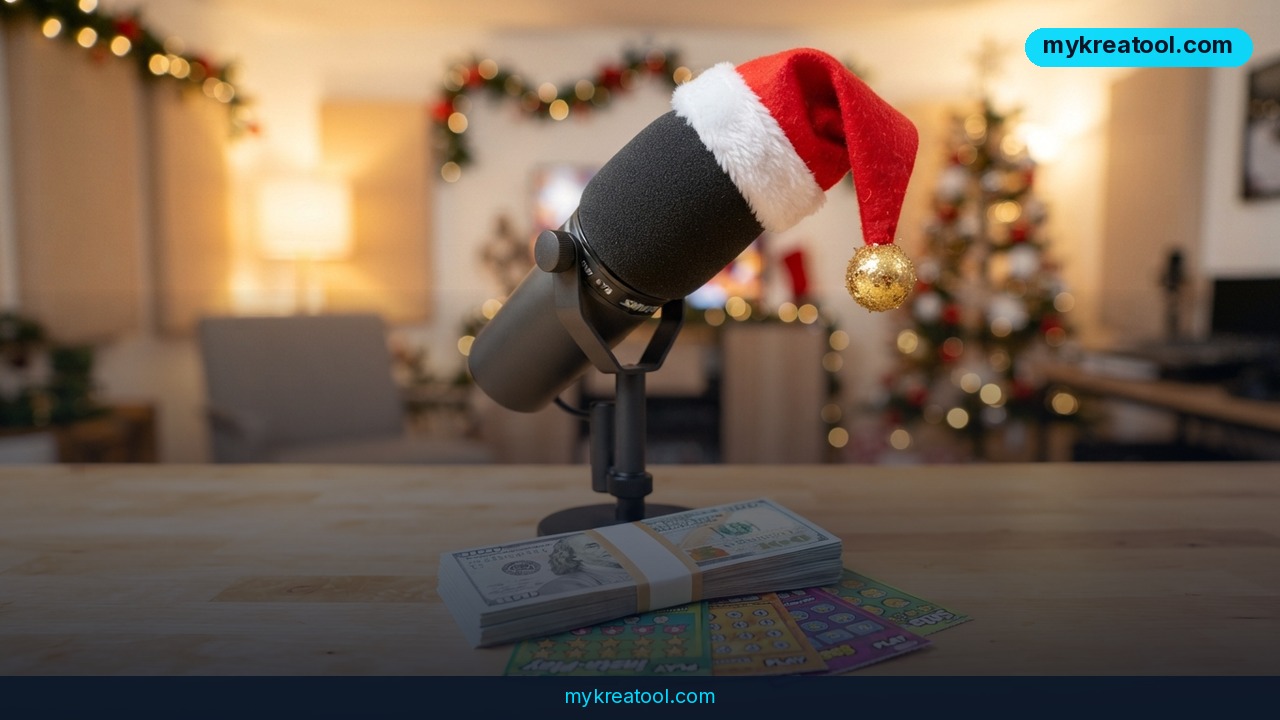
An AI music contest just opened where the prize is actual money — and the only skill you need is the ability to describe what you want. Stoloto, the company behind Russia's "New Year's Billion" lottery, is asking anyone with a laptop to build a New Year's jingle with AI, send it in, and then let the public pick the winner.
What happened
The casting call is officially open. Stoloto — the operator of the "New Year's Billion" draw — wants a festive jingle created with artificial intelligence, and it's taking submissions through October 25 inclusive. No singing. No music school diploma. No studio.
After the inbox closes, it turns into a popularity contest: from October 26 to November 1, anyone can listen to the entries and vote for their favorite. It's a talent show where the audience is the judge and the auditions happen in a browser tab. Stoloto's own how-to guide walks through the mechanics, and the contest's VK community is where updates land.
The winner collects 100,000 rubles, and the jingle gets played across the country. For a lottery, that's a rounding error in the marketing budget. For a bedroom producer, it's a credit you can't buy.
The prize is 100,000 rubles — not $100,000
Worth flagging, because the number got mangled in the retelling: some viral posts put the prize at $100,000. Stoloto's own rules page says 100,000 rubles, and those are the numbers that match the official dates. Same contest, much smaller cheque. If you're deciding whether this deserves your weekend, plan around the ruble figure, not the dollar one. ISRC.by covered the launch under the headline "Suno AI versus humans," which tells you most of what you need to know about the competition.
The tool has a name: Suno AI
Stoloto's guide points entrants at Suno — a text-to-song generator. You describe the track you want (genre, mood, instruments, tempo, maybe a line or two of lyrics) and it hands back a finished song with vocals and backing already mixed. Think of it as a session band that works at the speed of a web page and never needs a coffee break.
What it means for you
Even if you never enter this contest, events like it are a weather report for audio production. Here's where the same trick pays off in ordinary life.
At home
School projects, family slideshows, a birthday montage, a goofy song for a group chat. A jingle is 15–30 seconds long, which is exactly the length where AI music sounds genuinely finished rather than almost-there. You'll spend more time picking a title than making the track.
At work
Any team that ships video needs stingers: the five-second intro before an all-hands recording, the outro on an onboarding clip, the music under a recruiting ad. This used to mean a stock library and a licensing headache. Now it's a text box and three generations.
For your business
A local shop, a coffee roaster, a two-person agency — nobody in that world budgets for a composer. Custom audio is suddenly on the table for the price of an afternoon. A jingle that repeats your brand name is the single cheapest way to make a small business sound bigger than it is.
For students
This is the fastest feedback loop you'll find for learning how to write a prompt. You describe the mood, you hear the result, you notice what you left out, you try again. That skill — saying precisely what you want — transfers to writing, design and just about everything else.
For creators
Podcasters, YouTubers and streamers burn through intro music. Being able to generate five variations of a channel sting in an hour, in your own style, solves a problem that used to cost a few hundred dollars per track. Not sure where to start? mykreatool.com keeps a free directory of AI tools you can test before you spend anything.
As a side income
Short-form audio is a real freelance niche: bumpers for local radio, music beds for small brands, hold music, event intros. Contests like this one are also a cheap portfolio play — you get a finished track, a deadline, and a lottery ticket in one go.
How to try it right now
1. Open Suno and sign up. Go to Suno and create a free account. There's a free tier — check what your plan includes before you generate dozens of tracks, since limits vary by tier and region.
2. Write the brief, not the song. Type something like: "upbeat festive pop jingle, bells and brass, female vocal, 20 seconds, cheerful, sings the brand name twice." Plain language works better than technical jargon.
3. Keep it short. A jingle isn't a song. Aim for 15–30 seconds and say so in the prompt — otherwise you'll get a three-minute track you have to chop up.
4. Generate in batches. Run four or five versions of the same prompt. The differences are large and unpredictable, and the fifth take is often the one.
5. Download and trim. Pick the winner, download the audio, and cut it to length in any free editor if the tail runs long.
6. If you're entering Stoloto's contest, read their rules first. Submission closes October 25, voting runs October 26 to November 1, and the entry has to follow the operator's format requirements — including the language of the jingle. Don't spend a weekend on a track that gets disqualified on a technicality.
Upsides and what changes
The barrier to making music has basically collapsed. Ten years ago, "write me a jingle" meant booking a studio, hiring a singer and waiting a week. Now it's a sentence and a coffee. What that changes is where the value sits: the idea, the brief and the taste are the scarce parts, not the recording.
Contests are starting to accept AI entries openly, which is a bigger shift than it looks. When a national lottery puts AI-made audio in front of its entire audience, "made with AI" stops being a caveat and starts being a category. For freelancers, the practical effect is speed — you can pitch three concepts instead of one, because generating them costs almost nothing.
Limitations
Be clear-eyed about this one. The contest is run in Russian by a Russian operator, the jingle is for a Russian lottery, and the rules live on Russian-language pages — so read the eligibility and format requirements before you invest time, and don't assume an English-language track will fly. The prize is 100,000 rubles, not the $100,000 that went viral, which changes the math on how much effort is worth it. The winner is chosen by public vote, so it's partly a popularity contest and a networking exercise, not a pure merit ranking. And AI music still raises unresolved questions about ownership and commercial rights: check Suno's terms for what you can do with a generated track, and don't assume a contest entry gives you the same rights as a paid subscription. You're also up against thousands of people using the exact same tool, which means the prompt and the hook matter more than the production polish.
Conclusion
A national lottery is paying 100,000 rubles for a jingle you can make in an afternoon with a free AI tool — that's the whole story, and it's a useful signal about where audio production is heading. Submissions close October 25, public voting runs October 26 to November 1, and the winner's track gets heard across the country.
Here's your one action for today: open Suno, type a single sentence describing a jingle for something you actually care about — your shop, your podcast, your kid's birthday — and hit generate. It takes ten minutes, it costs nothing on the free tier, and you'll know immediately whether this is a tool you want in your kit.

Comments 0