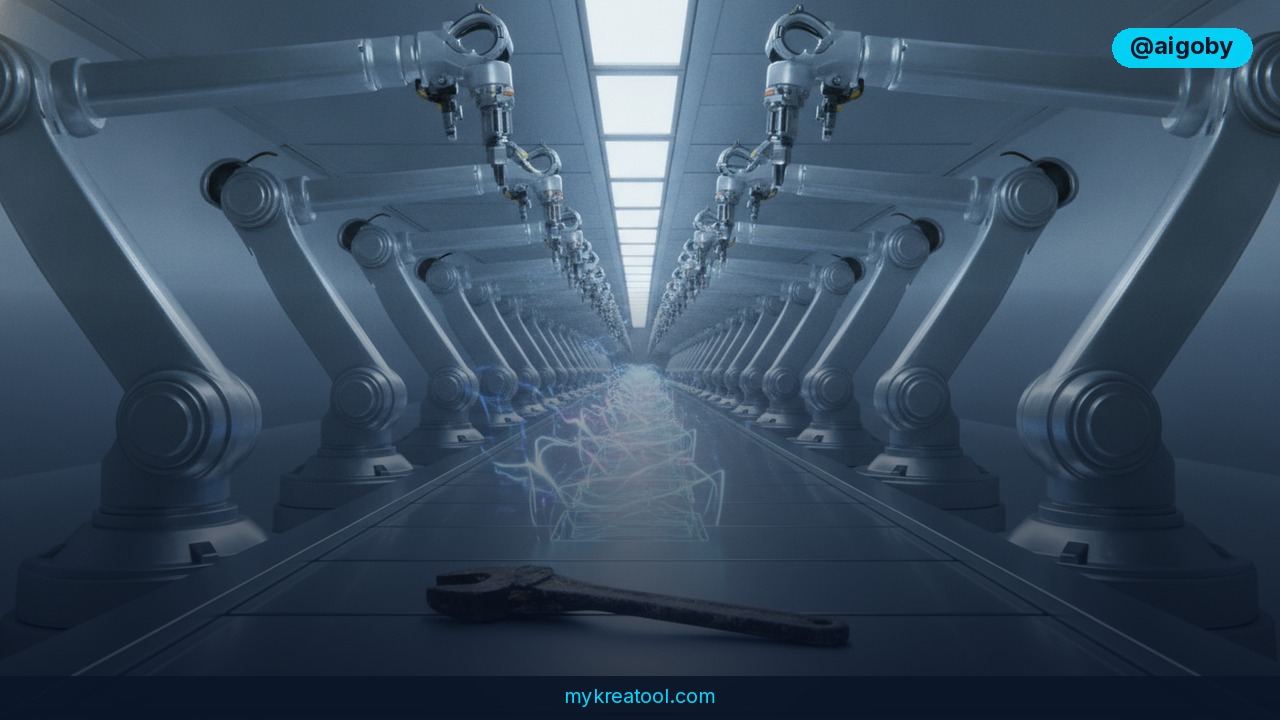
What Happened
Anthropic, one of the world's most influential AI companies, has quietly stopped prioritizing junior engineer hires — and co-founder Jack Clark is warning that the rest of the economy could soon follow. In a candid interview with Reason, Clark explained that AI is fundamentally reshaping who companies need to hire, and why the economic consequences could be more severe than anything we have seen in modern history.
"We're hiring more people with lots and lots of experience than we did before, because the returns on intuition are much greater than before," Clark said. In plain terms: Anthropic's AI model Claude now handles the experimental scaling and repetitive research tasks that used to require entire teams of entry-level workers. What remains irreplaceable — for now — is the seasoned judgment that only comes from years of hard-won experience.
This is not a minor internal HR decision. It is a signal of a structural shift that could ripple across every knowledge-based industry on the planet.
Why It Matters
The End of the Entry-Level Ladder
For decades, the career path in tech, finance, law, and consulting followed a predictable arc: start junior, learn on the job, climb the ladder. That model depended on experienced professionals needing large support teams to execute their ideas. AI has severed that dependency.
Claude and tools like it can now run experiments, synthesize research, draft documents, and iterate on outputs at a speed and scale that no junior team could match. The result is that companies are hunting specifically for what Clark calls "senior intuition" — the ability to ask the right question, spot the flaw in a model, or sense when data is misleading — while automating everything below that threshold.
A GDP Boom With a Recession-Level Unemployment Spike
Clark's economic warning is striking precisely because it pairs two outcomes that have historically never appeared together. "AI might yield far above-trend GDP growth," he said, "and that GDP growth might be accompanied by a spike in unemployment that you typically only see during a recession."
Think about what that means in practice. Productivity soars. Corporate profits climb. The economy looks healthy on paper. But millions of workers — particularly those in the early stages of their careers — find the door to entry-level roles has quietly closed. No government, Clark argues, is prepared for that combination.
How to Use It Today
Audit Your Own Skill Stack
If you are an entrepreneur, marketer, or creator reading this, the immediate question is: where do you sit on the intuition spectrum? AI tools are extraordinarily good at execution. They are still weak at genuine strategic judgment, creative taste, and contextual pattern recognition built from real-world experience.
Start by mapping your daily work into two columns: tasks that require judgment and tasks that require execution. Any execution-heavy task is a candidate for AI automation right now. Any judgment-heavy task is where you should be doubling down.
For practical experimentation with free AI tools that can help you automate the execution layer of your workflow, visit mykreatool.com — it offers a curated set of tools designed specifically for entrepreneurs and creators who want to move faster without hiring large teams.
Invest in Depth, Not Breadth
The Anthropic model rewards deep expertise over generalist knowledge. If you are building a personal brand, a consultancy, or a content business, this is the moment to go narrower and deeper. Become the person whose intuition in your specific domain is genuinely hard to replicate. That is the asset AI cannot yet commoditize.
Build AI-Augmented Workflows Now
Do not wait for your industry to force the shift. Companies that integrate AI into their workflows today will have a 12-to-24-month head start on competitors who adopt reactively. Use this period to experiment, fail cheaply, and develop institutional knowledge about what AI does well in your specific context.
Who Benefits
Senior Professionals and Deep Specialists
The clearest winners in this transition are experienced professionals whose value was always rooted in judgment rather than volume of output. A senior researcher who previously needed a team of 10 to run experiments can now operate with the leverage of 50. Their compensation and market value should rise accordingly.
Founders and Lean Operators
Small teams with access to powerful AI tools can now compete with organizations that previously required 10 times the headcount. A solo founder or a 3-person startup can produce research, marketing content, software prototypes, and customer analysis at a scale that was simply impossible 3 years ago. This is a genuine democratization of capability — for those willing to learn the tools.
AI-Native Businesses
Companies built from the ground up around AI workflows — rather than retrofitting AI onto legacy processes — will have structural cost and speed advantages that compound over time.
Risks
The Entry-Level Trap
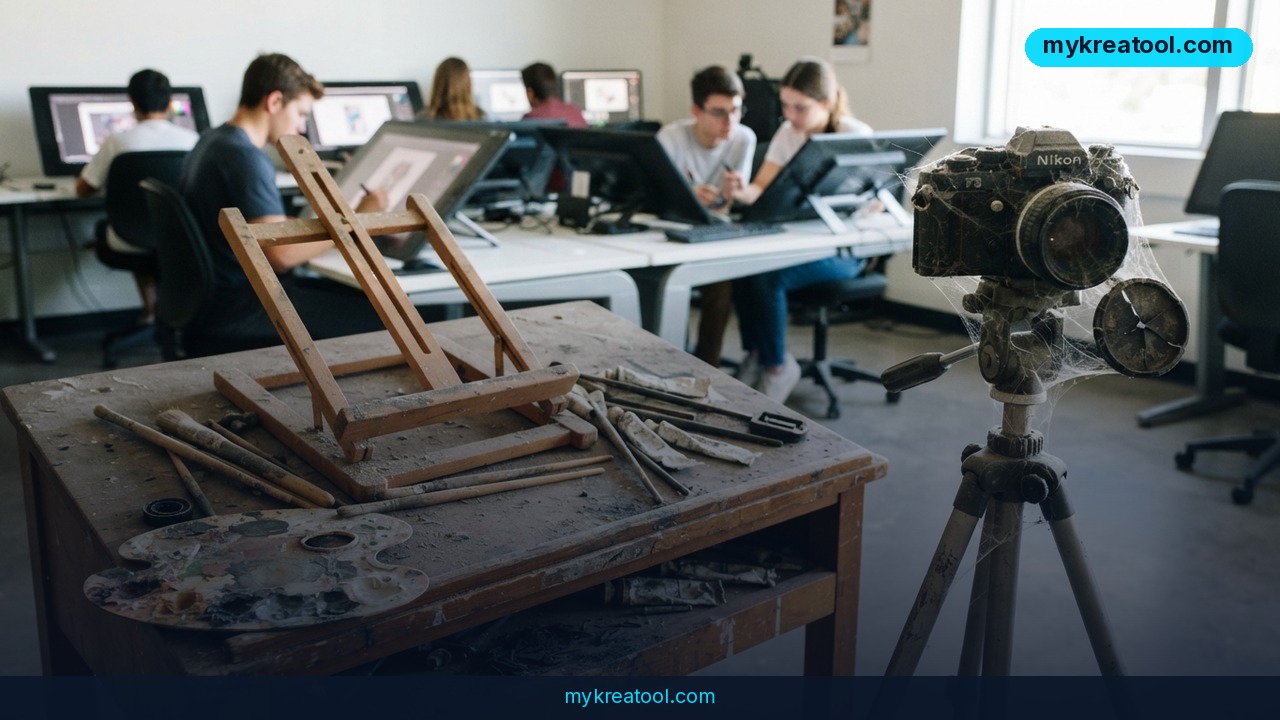
The most serious risk is generational. Entry-level jobs are not just about output — they are how people develop the intuition that makes them valuable later. If AI eliminates the junior layer, it also eliminates the training ground for the next generation of senior talent. In 10 to 15 years, there may be a severe shortage of experienced professionals precisely because the pipeline was cut off.
Unequal Distribution of Gains
If GDP grows rapidly but unemployment spikes simultaneously, the gains will almost certainly flow disproportionately to capital owners and top-tier knowledge workers. Without serious policy intervention — retraining programs, updated social safety nets, new models of income distribution — the social and political consequences could be significant.
No Government Is Ready
Clark's bluntest warning is institutional: no government is currently equipped to handle a scenario where the economy is booming and unemployment is rising at the same time. Traditional policy tools — stimulus, interest rate adjustments, job creation programs — were designed for a world where GDP growth and employment moved together. That assumption may no longer hold.
Skill Obsolescence at Speed
Even experienced professionals are not immune. The half-life of specific technical skills is shrinking. A data scientist whose expertise is in a methodology that Claude can now replicate in minutes faces the same displacement risk as a junior analyst. Continuous learning is no longer optional — it is the baseline requirement for staying relevant.
Conclusion
Anthropic's decision to stop prioritizing junior engineer hires is not an isolated corporate quirk — it is an early and unusually honest signal of where the entire knowledge economy is heading. AI is not replacing all workers. It is replacing the entry-level layer while dramatically amplifying the output of experienced, intuition-driven professionals.
For entrepreneurs, marketers, and creators, the strategic response is clear: automate your execution, deepen your expertise, and build AI-augmented workflows before your competitors do. The economic shock Jack Clark is warning about may not arrive tomorrow, but the companies and individuals who treat it as a real and near-term risk will be far better positioned than those who dismiss it as distant speculation.
The window to adapt is open. Use it.


Comments 0