What Happened
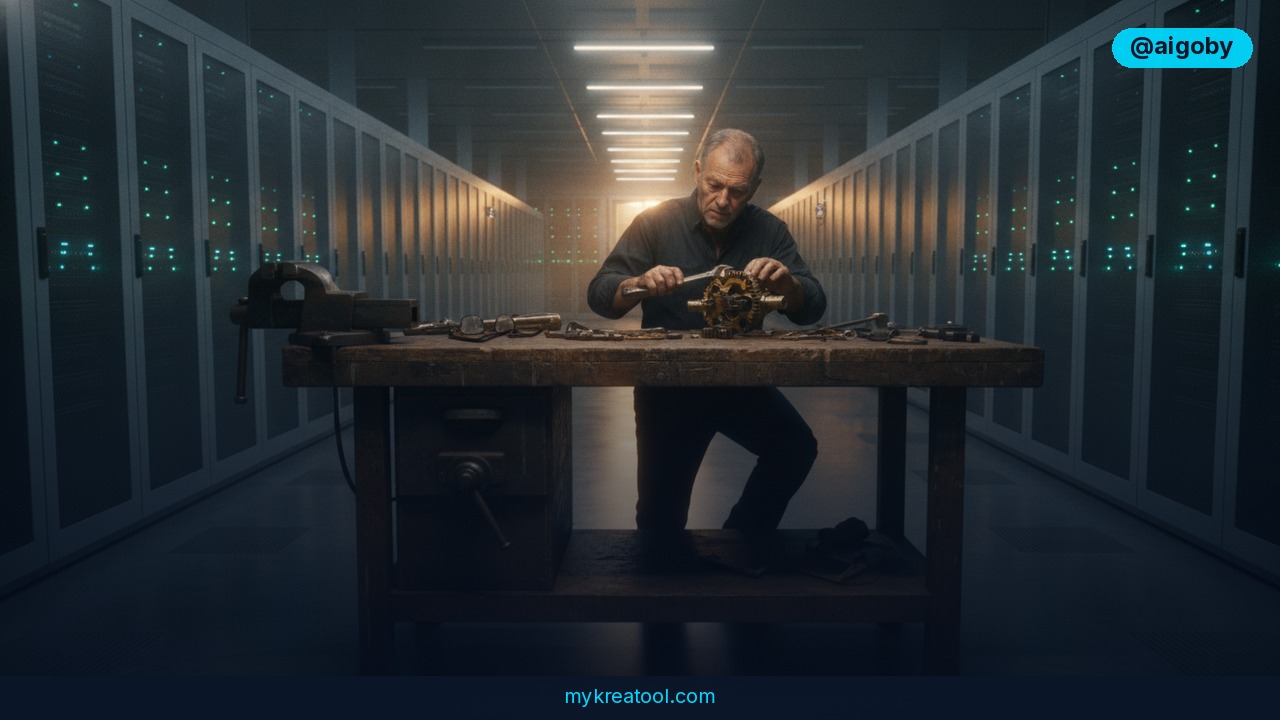
Ford's AI quality control failure is one of the most concrete examples yet of artificial intelligence hitting a hard wall in a real industrial setting. According to a Bloomberg report published in June 2026, Ford Motor Company has been quietly rehiring hundreds of human quality inspectors — approximately 350 engineers — after the AI systems deployed to replace them simply didn't perform well enough. The automated inspection tools were expected to catch manufacturing defects on the production line, reducing the need for human oversight. Instead, defect rates apparently climbed, costs mounted, and Ford made the pragmatic call to bring experienced people back.
This wasn't a small pilot program gone wrong. Ford is one of the largest manufacturers in the world, and a decision to reverse course on AI automation at this scale carries enormous financial and strategic weight. The story broke with 308 upvotes on Hacker News and sparked 149 comments — a strong signal that the tech and business community considers this a significant moment worth examining closely.
Why It Matters
AI Hype Meets Industrial Reality
For the past three years, the dominant narrative around AI in manufacturing has been relentlessly optimistic: machines will see more, catch more, and cost less than human workers. Ford's experience punches a hole in that story. Quality inspection on a car assembly line is not a simple image-recognition task. It involves nuanced judgment — understanding context, recognizing novel defect patterns that weren't in the training data, and making calls that have downstream consequences worth thousands of dollars per vehicle.
The AI systems Ford deployed were likely trained on historical defect images. But manufacturing environments are dynamic. Lighting shifts, materials change slightly between suppliers, and new model variants introduce edge cases the model has never seen. Human inspectors adapt. Trained models, without continuous retraining pipelines and human-in-the-loop validation, often don't.
The Cost of Getting It Wrong
Rehiring 350 engineers is not cheap. It signals that the cost of AI-driven errors — in recalls, rework, and reputational damage — exceeded the cost of human labor. That's a critical data point for any business leader evaluating AI automation investments right now.
How to Use It Today
Audit Your AI Deployments Before They Fail Publicly
If you're an entrepreneur, marketer, or creator who has integrated AI tools into your workflow, Ford's story is a useful stress test prompt. Ask yourself: where in my process am I relying on AI output without a human check? Which tasks involve edge cases, novel inputs, or high-stakes consequences if the AI gets it wrong?
The answer isn't to abandon AI — it's to be surgical about where you deploy it unsupervised. Repetitive, well-defined tasks with low error costs are excellent candidates for full automation. Complex judgment calls, customer-facing quality decisions, and anything with significant financial or reputational downside should keep a human in the loop.
Build a Hybrid Workflow, Not a Replacement Workflow
The smartest operators right now aren't replacing humans with AI — they're using AI to make humans faster and more effective. A quality inspector augmented with an AI pre-screening tool can review twice as many parts in the same time. A marketer using AI drafting tools can produce more content without sacrificing brand voice. If you want practical AI tools that support this kind of hybrid approach rather than overpromising full automation, mykreatool.com offers a free suite worth exploring for content creators and small business owners.
Set Clear Performance Benchmarks Before You Scale
Ford's mistake — if there was one — was likely scaling the AI deployment before validating it thoroughly against real-world variance. Before you expand any AI system in your business, define a minimum acceptable performance threshold, run it in parallel with your existing process for a meaningful period, and only cut over when the numbers are solid.
Who Benefits
Human Workers With Specialized Skills
The most immediate beneficiaries of stories like this are skilled workers in industries where AI replacement was treated as inevitable. Quality engineers, inspectors, and technicians with deep domain knowledge are demonstrating irreplaceable value. If you're in a skilled trade or technical field, this is validation that investing in hands-on expertise remains worthwhile.
Realistic AI Vendors
Vendors who have been honest about AI limitations — who sell augmentation tools rather than full-replacement promises — are going to look very credible in the next 12 to 24 months. Buyers burned by overpromising will gravitate toward partners who set realistic expectations and build in human oversight from the start.
Businesses That Moved Carefully
Companies that adopted a measured, test-and-validate approach to AI automation rather than racing to eliminate headcount are now in a strong competitive position. They avoided the rehiring costs, the quality dips, and the PR exposure that comes with a public reversal.
Risks
Overcorrecting Into AI Skepticism
The risk of high-profile AI failures is that they trigger overcorrection. Ford's situation doesn't mean AI doesn't work in manufacturing — it means this specific deployment, in this specific context, at this specific maturity level, fell short. Businesses that respond by pulling back all AI investment will cede ground to competitors who learn from Ford's experience and implement more carefully.
Assuming Your Industry Is Different
Every sector has its own version of the Ford problem waiting to happen. Marketing teams assuming AI-generated content always meets brand standards without review, e-commerce operators assuming AI pricing tools always optimize correctly, SaaS companies assuming AI customer support resolves tickets accurately — all of these carry the same underlying risk. Overconfidence in AI reliability, without ongoing monitoring, creates fragility.
The Talent Pipeline Problem
Ford could rehire 350 engineers because those people existed and were available. In some industries, if you let specialized human expertise atrophy for two or three years while betting on AI, you may not be able to rebuild it quickly when you need it. Protecting institutional knowledge and keeping experienced people engaged — even in reduced or advisory roles — is a form of operational insurance.
Conclusion
Ford rehiring 350 quality engineers after AI fell short is not a story about AI failing — it's a story about deployment strategy failing. The technology may have been capable in controlled conditions but wasn't robust enough for the full complexity of a live manufacturing environment. For entrepreneurs, marketers, and creators, the lesson is actionable and immediate: audit where AI is running unsupervised in your business, build hybrid workflows that keep human judgment in the loop for high-stakes decisions, and set hard performance benchmarks before you scale. The companies that will win with AI over the next five years aren't the ones who automated the fastest — they're the ones who automated the smartest.


Comments 0