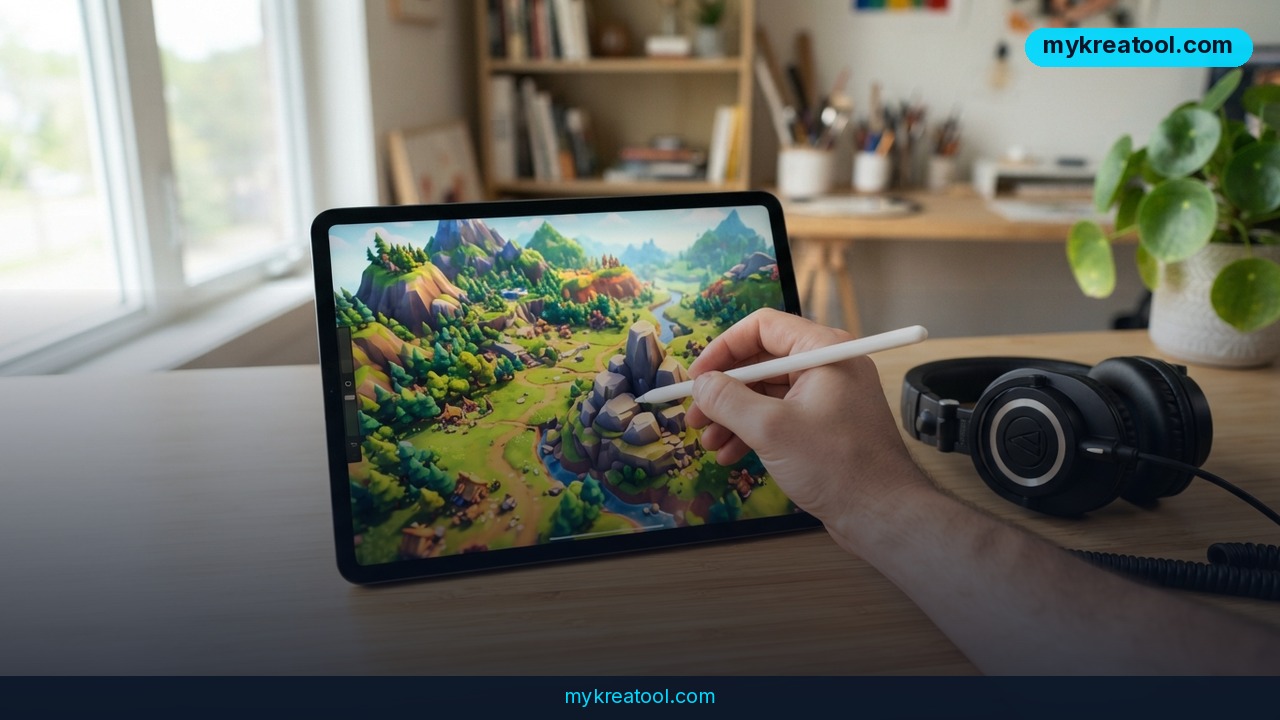
Google DeepMind's Genie 4 is out of the lab. On November 18, 2026, the company moved its newest AI world model — a system that turns a sentence into a 3D place you can actually walk around in — from research preview to a live product inside Project Genie. Access is now open to Google AI Ultra subscribers, and Google AI Pro members can join a waitlist.
What happened
Start with the plain-English version, because "world model" sounds scarier than it is. It isn't a video generator that spits out a clip you sit and watch. It builds a space that holds together while you move through it: walk past a red door, turn around, and the red door is still there. That's the difference between watching a movie and playing one.
Genie 4 takes that and adds a conversation. You reshape the world by typing at it in real time instead of regenerating everything from scratch.
Type it, and the world changes
Ask for rain and the sky turns. Swap a character and someone new walks in. Nudge the storyline and the scene follows — no rebuilding the level. Genie 4 also generates sound natively and in real time, so the audio shifts with what's happening on screen instead of getting glued on afterward in post.
Genie 3 isn't left behind
The previous model picked up three upgrades worth knowing about. Sessions now stretch to three minutes, it handles 360-degree panoramas (look up, look down, no seams), and it supports "chainable" worlds. Chaining is the fun one — link two worlds together and the edge of a forest opens onto a city street instead of a wall.
There's also a new AI agent that builds worlds from spoken descriptions, so you can talk your way through a scene instead of typing it, plus a community gallery where you can publish your creations and remix everyone else's. Every output carries a SynthID watermark — an invisible tag baked into the pixels and audio that lets tools flag content as AI-made — and everything passes through safety checks first.
What it means for you
You don't need Blender, a gaming PC or a 3D artist on retainer. You need a sentence and the patience to keep typing until the scene looks right. Here's where that actually lands in ordinary life.
At home: see the room before you buy the paint
Describe your living room, then keep talking: "evening light, warm grey walls, the sofa under the window." You'll know if the idea works before you spend a weekend shoving furniture around. Same trick for a garden layout or a kitchen remodel — a cheap way to talk yourself out of an expensive mistake.
At work: walk a client through a space that doesn't exist yet
If you design stores, events or offices, you can go from a written brief to a walkable walkthrough in one sitting. Clients understand a space they can move through far better than a floor plan with arrows on it. Rehearse a trade-show booth layout before you pay a contractor to build it.
In business: prototypes without a 3D team
Small shops and solo founders can mock up a product demo or a shop floor and chain a short journey out of it — entrance, aisle, checkout. That used to mean hiring a specialist for a week. Now it's an afternoon of describing what you want.
In study: history you can stand inside
A teacher can describe a Roman street or a village in monsoon season and let the class wander through it. Change the weather mid-scene and a geography lesson stops being a diagram. The spoken-description agent matters here — a teacher can talk the scene into existence while the class watches.
For creative work: moving storyboards
Illustrators, filmmakers and set designers get a rough blocking pass in minutes instead of a weekend. You're not replacing the final artwork; you're testing whether the mood holds up when the camera moves.
As an income stream: learn it early, sell the skill later
Let's be clear-eyed about this. DeepMind hasn't announced any payouts from the gallery, so remixing isn't a paycheck. What it is, is a portfolio. Freelancers who can turn a client's paragraph into a walkable scene will have a head start, and early familiarity with world models is a resume line that's about to get a lot more common.
How to try it right now
Seven steps, free options first.
1. Start free while you wait. You can't fake an Ultra subscription, but you can get good at describing scenes. Use free AI tools at mykreatool.com to draft prompts and turn them into mood boards — those skills transfer straight into Genie 4.
2. Check which Google plan you're on. Genie 4 is live now for Google AI Ultra subscribers. If you're on Google AI Pro instead, join the waitlist — that's the only route DeepMind has opened so far.
3. Open Project Genie and write a first description. Be specific: what's there, what time of day it is, what the weather is doing, what mood you want. Vague prompts get vague worlds.
4. Iterate by typing, not restarting. This is the whole point of Genie 4. Change the weather, swap a character, redirect the story — one line at a time.
5. Try the voice agent. Describe the scene out loud and let it build. It's faster than typing and surprisingly good at picking up tone.
6. Chain two worlds. Use Genie 3's chainable worlds to link scenes, and remember sessions run up to three minutes — plan a short walk, not an epic.
7. Publish to the gallery and remix something. Remixing someone else's world is the fastest way to learn what the model responds to.
Upsides and what changes
No 3D skills required
The barrier used to be software. Now it's vocabulary. Anyone who can describe a place can build one, which puts a lot of people in the game who were locked out before.
Sound comes included
Native, real-time audio is the quiet upgrade. Half of what makes a space feel real is what you hear in it, and you no longer need a separate tool to get there.
Remixing beats starting from zero
A public gallery turns every creation into a starting point. That's how 3D engines built their communities, and it's how people learn fast.
Provenance is handled
SynthID watermarks mean you can use this in client work without pretending it came out of a camera. That matters more than it sounds — it's the reason agencies will allow it at all.
Limitations
Be honest about the edges. Access is gated behind Google AI Ultra, the top subscription tier, and everyone else is on a waitlist with no date attached. Genie 3 sessions top out at three minutes, and DeepMind hasn't published session limits for Genie 4. Safety filters can refuse prompts, which is fine until it isn't, and the SynthID watermark is baked in, so you can't hand a client a clean file. There are no independent benchmarks yet, no word on pricing beyond the Ultra tier, and nothing published about hardware requirements. Treat what you make as a demo, not a shippable game asset — one person's world model is another person's rough draft.
Conclusion
Genie 4 is a world model you can argue with. You describe a place, it builds it, you keep talking, and it changes — with sound, with chained scenes, and with a gallery full of other people's work to pull apart. That's a real shift from "generate and wait" to "generate and direct," and it's available to Ultra subscribers today.
Your one action for today: open a notes app and write three sentences describing a place you know by heart — your street, your old classroom, the shop you want to open. Keep it specific. That's your first Genie 4 prompt, ready for the moment you get access.

Comments 0