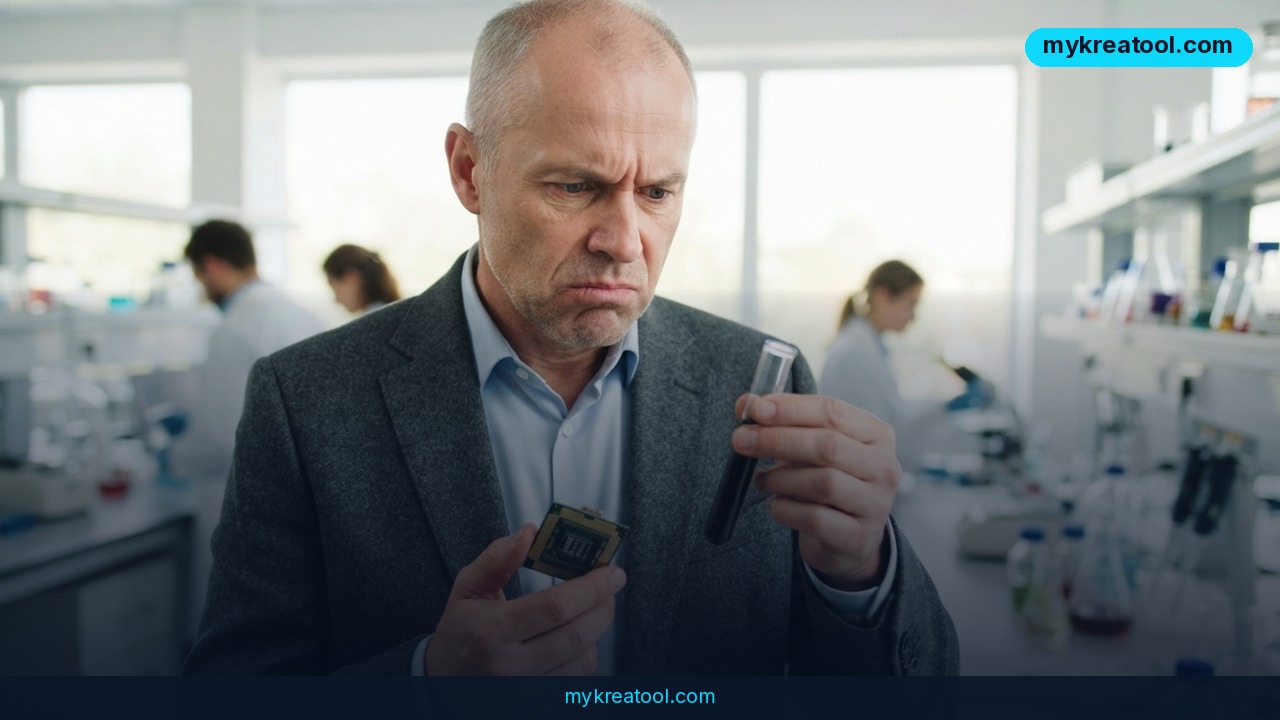
What happened
The AI bioweapon risk has moved from science-fiction speculation to a documented concern among the people building the most powerful AI systems on the planet. According to reporting on discussions inside leading AI labs, the executives and researchers who ship today's frontier models are not most worried about job losses, misinformation, or even a rogue superintelligence taking over the world. Their biggest private fear, several insiders say, is that AI could meaningfully help a bad actor design or produce a biological weapon capable of mass casualties.
This isn't a new theme, but it's becoming more concrete. Over the past two years, companies like Anthropic, OpenAI, and Google DeepMind have quietly built internal 'high-risk' classifications specifically for chemical, biological, radiological, and nuclear (CBRN) misuse. Models that cross certain capability thresholds trigger extra safeguards, stricter access controls, and mandatory red-teaming by biosecurity experts before release. The fact that labs now treat this as a standing operational category — not a hypothetical thought experiment — is the real story here.
Why bioweapons, specifically
Unlike cyberattacks or disinformation, a biological weapon has almost no upper bound on damage and can be replicated and spread uncontrollably once released. Historically, the biggest bottleneck for a would-be attacker wasn't motivation — it was tacit knowledge: knowing which lab techniques work, which don't, and how to troubleshoot failures. That's exactly the kind of step-by-step reasoning modern language models are good at, which is why safety teams treat this scenario differently from other AI harms.
Why it matters
This matters because it reframes how seriously AI governance should be taken, both by regulators and by ordinary businesses building on top of these models. If the companies with the deepest visibility into their own systems' capabilities are prioritizing bioweapon risk over almost every other harm, that's a strong signal about where real-world danger concentrates — and it explains why frontier labs have started shipping models with built-in refusal behavior for anything resembling synthesis instructions, pathogen enhancement, or toxin production.
It also matters commercially. Enterprises building AI products for healthcare, life sciences, chemistry, and biotech now operate under heavier scrutiny. Model providers increasingly require use-case disclosures, API-level content filters, and audit trails for anything touching biological or chemical data — even for entirely legitimate research like drug discovery or agricultural science.
The regulatory angle
Governments have taken notice. The 2023 U.S. executive order on AI safety required developers of the most powerful models to report red-team testing results tied to CBRN risks. The EU AI Act classifies general-purpose models above a certain compute threshold as carrying systemic risk, explicitly citing biological and chemical misuse. Expect more countries to follow with similar disclosure requirements through 2026 and beyond, which means compliance costs for AI-adjacent biotech startups are only going up.
How to use it today
For most entrepreneurs, marketers, and creators, this story isn't really about biosecurity — it's a preview of how AI safety constraints shape what you can and can't build. If you're developing an AI product, especially one touching health, chemistry, or scientific data, budget time for content moderation, usage-policy review, and provider-level restrictions before launch, not after.
If you're just using AI tools day-to-day for content, research, or automation, none of this changes your workflow — but it's useful context for why certain prompts get refused or flagged, even ones that seem harmless on the surface. Understanding these guardrails also helps you choose the right tool for the job. For quick, low-stakes tasks like image generation, text summarization, or SEO content drafting, lightweight platforms are usually the better fit — you can try a curated set of free AI tools at mykreatool.com without running into the heavier compliance friction that frontier lab APIs now carry for sensitive-adjacent use cases.
A practical checklist
If your business touches AI and any scientific or medical domain, three things are worth doing now: review your AI vendor's acceptable-use policy for CBRN-related clauses, add human review for any AI output tied to lab protocols or formulations, and keep documentation of how your product prevents misuse — regulators are increasingly asking for exactly that.
Who benefits
Biosecurity researchers benefit most directly, since increased attention translates into more funding and better tooling for detecting AI-assisted threats before they materialize. AI safety teams inside labs gain more resources and organizational priority, which should, in theory, produce safer models for everyone else downstream.
Legitimate biotech and pharma companies also stand to benefit, somewhat counterintuitively. As labs get better at distinguishing dangerous requests from genuine research, the tools become more precise rather than blanket-restrictive — meaning drug discovery, protein folding, and vaccine research workflows should see fewer false-positive refusals over time. Compliance and AI-governance consultants are already seeing rising demand from mid-size biotech firms navigating these new disclosure rules.
Everyday users are mostly insulated
If you're a marketer, solopreneur, or content creator, this risk category barely touches your daily AI use. The safeguards are aimed squarely at a narrow slice of scientific misuse, not at writing copy, generating images, or automating spreadsheets — so the practical impact on most business AI workflows remains minimal.
Risks
The obvious risk is the one AI leaders are already worried about: that despite safeguards, a sufficiently capable model still lowers the barrier for someone with partial expertise to close critical knowledge gaps. Red-teaming and refusal training help, but they aren't airtight, and every capability jump forces labs to re-test thresholds they thought were settled.
There's also a secondary risk of overcorrection. If AI companies clamp down too broadly on anything resembling biological or chemical content, it can slow down genuinely valuable research — vaccine development, agricultural science, environmental monitoring — creating friction for the 99.9% of users with no harmful intent. Getting that balance right, without either enabling catastrophe or strangling innovation, is the core tension driving nearly every safety decision these labs make right now.
Conclusion
The AI bioweapon risk isn't a distant hypothetical — it's the single concern that keeps the people running the world's most advanced AI labs up at night, more than job displacement or misinformation. For most businesses, the direct impact is minimal, but the ripple effects — stricter compliance, heavier content moderation, and new disclosure rules — are already reshaping how AI products get built and shipped. Staying aware of where these guardrails sit, and choosing the right tools for the right tasks, is the practical takeaway for anyone building with AI in 2026.



Comments 0