What happened
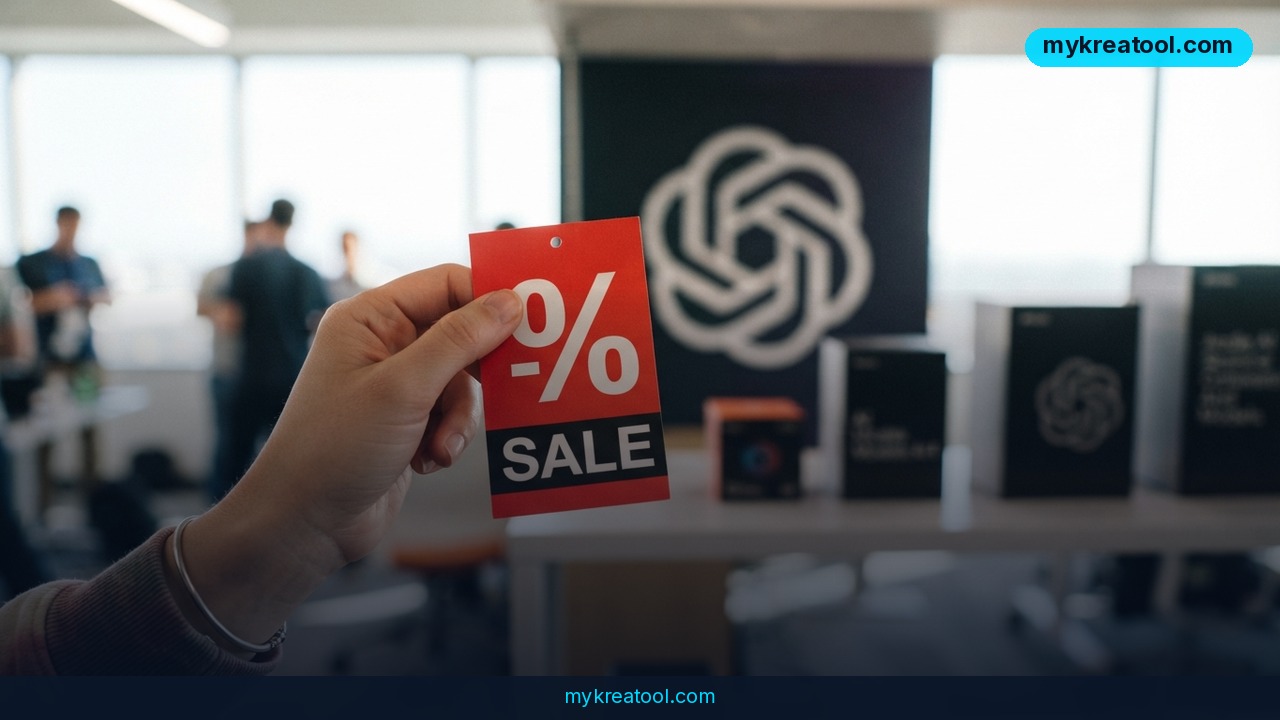
OpenAI just triggered the biggest AI price cut of the year. Starting July 30, the company slashed pricing on its GPT-5.6 Luna model by 80 percent, while trimming the mid-tier Terra model by 20 percent. Luna, OpenAI's smallest and cheapest model, now costs just $0.20 per million input tokens and $1.20 per million output tokens — down from levels that put it roughly in line with premium models a year ago. Terra now runs at $2 per million input tokens and $12 per million output tokens. Sol, the flagship model in the GPT-5.6 lineup, keeps its existing price tag.
All three models remain accessible through ChatGPT Work, Codex, and the OpenAI API, meaning developers and businesses can start using the new rates immediately without switching platforms or waiting for a rollout. According to OpenAI, Luna now matches the performance of the leading models from a year ago, but a task that used to cost about a dollar on those older models now costs roughly six cents on Luna — and runs nearly nine times faster.
Why it matters
This isn't just a routine discount. It signals a structural shift in how OpenAI prices its models, and it comes with a concrete technical explanation: OpenAI says GPT-5.6 Sol was used to optimize the company's own infrastructure. Sol reportedly rewrote GPU software on its own, cutting deployment costs by 20 percent, and improved token generation speed by more than 15 percent through a technique called speculative decoding, where a smaller model drafts likely next tokens for a larger model to verify.
In other words, OpenAI is using its own AI to make its AI cheaper to run — and passing part of the savings to customers. But infrastructure efficiency is only half the story. Competitive pressure is the other half. Low-cost Chinese AI providers have been undercutting Western labs on price for months, and Microsoft has started openly marketing its own MAI models as a cheaper alternative to OpenAI's lineup, despite being one of OpenAI's largest backers. That combination — internal efficiency gains plus external price competition — is what's driving this move.
The risk is that a sustained price war could squeeze revenue growth at frontier labs, all of which are carrying massive infrastructure investments that assume continued high-margin API revenue. If prices keep falling faster than usage grows, the economics of building ever-larger models get harder to justify.
A pattern, not a one-off
This cut follows a broader industry trend: every major lab has trimmed prices on its lower-tier models at least once in the past year as inference costs drop and competition intensifies. Luna's 80 percent cut is the steepest single reduction OpenAI has made to date, and it puts Luna's pricing closer to budget open-source models than to premium closed models.
How to use it today
Switching to Luna pricing requires no migration work if you're already calling GPT-5.6 through the API — the new rates apply automatically to Luna and Terra usage from July 30 onward. For teams evaluating whether to downgrade from Terra or Sol to Luna for specific tasks, the practical approach is to benchmark your actual workload: summarization, classification, drafting, and simple coding tasks are strong candidates for Luna, while complex reasoning or long-context tasks may still benefit from Terra or Sol.
If you're building AI-powered features and want to test model quality before committing to a paid API plan, it helps to prototype with free tools first. Sites like mykreatool.com offer free AI tools you can use to test prompts, generate content, and compare outputs before wiring anything into production — a useful sanity check before you start optimizing for the cheapest possible token pricing.
Developers running high-volume pipelines — chatbots, content generation, data extraction — should recalculate their monthly API costs now. At Luna's new rate of $0.20/$1.20 per million tokens, workloads that previously cost hundreds of dollars a month could realistically drop to a fraction of that.
Who benefits
The clearest winners are startups and indie developers running high-volume, low-complexity AI workloads: chatbot support, content drafting, tagging, translation, and lightweight coding assistants. For these use cases, Luna at 6 cents per equivalent dollar-task is a dramatic cost reduction that can make previously unprofitable AI features viable.
Marketers and creators building AI-assisted content pipelines also benefit, since output-heavy tasks like drafting blog posts, product descriptions, or social copy get cheaper fast — output tokens on Luna dropped to $1.20 per million, a steep cut from prior pricing tiers.
Enterprise teams already on Terra get a smaller but still meaningful 20 percent discount, useful for teams running larger-context or higher-accuracy workloads that don't need Sol's full capability.
Risks
The biggest risk isn't to users — it's to the broader AI market. A sustained price war, especially one driven by competition from low-cost Chinese providers and internal players like Microsoft's MAI models, could compress margins across the industry at exactly the moment labs are pouring billions into new data centers and GPU capacity. If revenue growth slows while infrastructure spending stays high, some labs may need to raise prices again later, consolidate, or slow model development.
For businesses building on these APIs, that means today's low prices aren't guaranteed to be permanent. It's worth architecting AI features so you're not locked into a single model or provider, in case pricing shifts again as the competitive landscape evolves.
Conclusion
OpenAI's 80 percent price cut on GPT-5.6 Luna, paired with a 20 percent reduction on Terra, marks one of the most aggressive pricing moves the company has made — driven by real infrastructure efficiency gains and mounting competition from cheaper rivals. For developers, marketers, and startups, this is a direct opportunity to cut AI costs without sacrificing much performance. Just don't assume these prices are locked in for good — in a market this competitive, today's bargain rate could shift again as fast as it appeared.

Comments 0