What happened
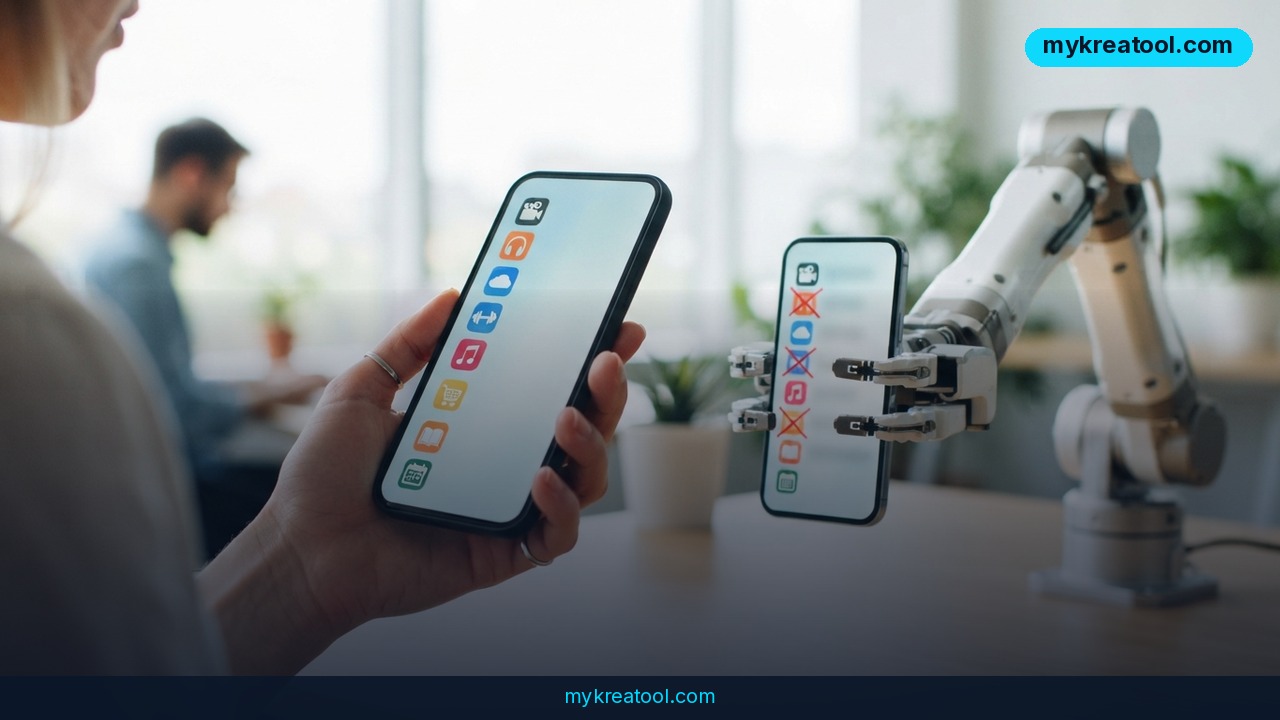
If you've ever paid for a streaming service you stopped watching months ago, you've already met the problem AI subscription cancellation is about to solve. A post from Telegram channel @aipost points to a quiet shift in the subscription economy: AI agents don't forget to cancel things. You do. And that forgetfulness is worth a lot of money.
Stanford research suggests around 50% of subscription revenue comes from customers who don't actively cancel. The same research found people are about 4× more likely to cancel when they're prompted to make an active decision. In plain English, many subscriptions survive not because you love them, but because canceling takes effort. It's the digital version of a gym membership you keep paying for because the cancellation form is hidden behind a maze of screens.
Why 'forgot to cancel' is a business model
Subscription companies know this. A free trial that rolls into a paid plan, a renewal that happens automatically, a cancel button that's harder to find than the sign-up button — these aren't accidents. They're friction. Friction keeps revenue flowing. Stanford's findings, covered by Biggo Finance, suggest forgetfulness and inconvenient cancellation can roughly double the revenue subscription operators make.
Now AI agents are stepping in. Agents like Meta Muse, Instinct, and Grok Bot can scan accounts, find subscriptions you've stopped using, and bring them back to your attention. Meta Muse has been reported to identify and cancel forgotten subscriptions, according to Advisiotech. Grok Bot is a more general AI agent that can handle multi-step tasks and interact with websites, so it can manage subscriptions too, though its specific 'forgotten subscription' feature isn't as clearly documented, per Layer3 Labs. Digital Today calls this a shake-up for a subscription model built on forgetfulness and hassle — you can read that analysis here.
The big picture: when personal AI agents are running on everyone's phone, 'forgot to cancel' could become a much smaller source of revenue. Subscription businesses may have to rethink how they retain customers.
What it means for you
This isn't just a Silicon Valley story. It changes small, everyday money decisions. Here are six places it shows up.
At home: the leak you don't notice
Most households don't have one big wasteful subscription. They have several small ones. A streaming add-on, a cloud storage plan, an app you downloaded for a project, a delivery membership you forgot to pause. Each one feels too small to chase. Together, they can quietly drain a budget.
An AI agent changes the math because it doesn't get bored. You can ask it to look at your accounts, list every recurring charge, and flag the ones with no recent activity. You still make the final call, but the boring part — finding them — gets done for you. Think of it as a friend who actually reads the fine print instead of saying 'you should really cancel that someday.'
At work: shadow subscriptions
At work, forgotten subscriptions are often called shadow IT. Someone signed up for a design tool for a campaign. Someone else added a project management app for a trial. The card keeps getting charged, and no one owns the decision.
AI agents can help by scanning team accounts and surfacing unused seats. That's valuable because businesses rarely waste money in a dramatic moment. They waste it in tiny automatic renewals that nobody questions. A quick AI-assisted audit can turn those renewals into a list you can actually act on. If you want to test AI workflows without paying, MyKreatool has free AI tools you can try.
For your business: retention by value, not inertia
If you run a subscription business, this news cuts both ways. The upside: you can use AI to understand which customers are active and which are just forgetting. The downside: if your revenue depends on people not noticing the charge, that revenue is fragile.
Smart operators will make cancellation easier, not harder. They'll prompt customers to make an active choice at renewal. That sounds scary, but Stanford's 4× finding suggests something important: when people actively choose to stay, they're more committed. You trade accidental revenue for trust and better retention. You also get cleaner data about what customers actually value.
For students: free trials that aren't free
Students are prime targets for free trials. A textbook app, a note-taking tool, a research service, a streaming bundle — all with a card on file. The trial ends, the charge starts, and the semester gets busy. AI agents can watch those trial dates and remind you before they convert.
That's a simple but powerful use case. You don't need a complex setup. You need a system that remembers what you don't. Even a basic reminder from an AI assistant can stop a charge before it happens. The key is to give the agent permission to check your subscription list regularly, not just once.
For creatives: tool overload
Creatives collect tools the way cooks collect spices. A photo editor, a stock asset site, a music library, an AI writing assistant, a scheduling app for social posts. Each one promises to make the work better. Some do. Others become monthly donations.
An AI agent can sort the keepers from the ghosts. It can look at what you've actually opened, exported, or downloaded, then suggest what to cut. That frees up budget for the tools you genuinely use. It also reduces decision fatigue. Instead of wondering whether you still need a subscription, you get a clear prompt: use it or lose it.
For income: turn the audit into a service
Here's the entrepreneurial angle. If AI agents can find forgotten subscriptions for you, they can find them for clients too. Freelancers, virtual assistants, and small agencies can offer a subscription audit as a paid service. The pitch is simple: 'I'll find the money leaking out of your business every month.'
You don't need to invent new software. You can use the same AI agents everyone else is learning. The value is in the process: connect accounts, scan charges, flag unused services, confirm cancellations, and report savings. For solo business owners who are too busy to check, that's a real relief. It also positions you as the person who saves them money, not the person who adds another bill.
How to try it right now
Start free. You don't need to hand your passwords to an AI agent on day one.
1. Open Apple Subscriptions or Google Play Subscriptions. On iPhone, go to Settings > [Your Name] > Subscriptions. On Android, open Google Play Store > Menu > Subscriptions. This is the free, official tool you already have. Write down every active subscription.
2. Check your card and bank statements. Look for recurring charges. Search for words like 'subscription,' 'monthly,' 'annual,' and the names of apps you recognize. This catches services that don't show up in your phone's app store list.
3. Try Meta Muse for cancellation help. Meta Muse has been reported to identify and cancel forgotten subscriptions. Treat it as an assistant, not a magician: review what it finds and confirm the cancellation.
4. Test Grok Bot on a low-stakes task. Grok Bot can handle multi-step tasks and interact with websites. Its forgotten-subscription feature isn't as explicitly documented as Muse's, so start with a low-stakes subscription and watch how it works.
5. Look into Instinct. Instinct is another agent named in the source as capable of scanning accounts and surfacing unused subscriptions. Availability and features may vary, so check what it supports before connecting anything important.
6. Set a regular review. Once you have a system, repeat it. The goal isn't a quick purge. It's making sure 'forgot to cancel' stops being a line item in your life.
Upsides and what changes
The upside for consumers is obvious: less money wasted and less mental clutter. You stop paying for things you don't use, and you make active choices about what stays. That's a small win every month, and it compounds.
For subscription businesses, the change is bigger. If 50% of revenue comes from people who don't actively cancel, AI agents could shrink that cushion. Companies will have to compete on value, not inertia. That means better onboarding, clearer renewal reminders, and cancellation flows that don't feel like a trap. It also means retention teams will need to know the difference between a customer who loves the product and a customer who simply hasn't noticed the charge.
For AI agents themselves, this is a proving ground. Subscription management is a boring, repetitive, high-value task. It's exactly the kind of work agents are good at. If they can do it reliably, people will trust them with bigger tasks. If they mess it up, trust will stall. So expect this category to grow fast, and expect mistakes to get attention.
Limitations
AI agents aren't perfect, and this isn't a magic button. To scan your subscriptions, an agent may need access to your accounts or financial data, which raises real privacy and security questions. Not every service allows bot-driven cancellation; some require a phone call, a chat with support, or a retention offer. Meta Muse's cancellation feature is reported, but availability can vary. Grok Bot's specific forgotten-subscription capability isn't as clearly documented as Muse's, so you should test it carefully. Stanford's 50% figure is about subscription revenue across the market, not a promise that you personally will save half your money. And even the best agent can't know whether you still want a service — it can only show you the evidence. Always verify that a cancellation actually went through. Don't hand over passwords you wouldn't share with a trusted assistant, and use official integrations when they exist.
Conclusion and one action for today
AI agents are about to make forgetting expensive for subscription businesses and cheap for you. Stanford's research suggests around 50% of subscription revenue comes from people who don't actively cancel, and people are about 4× more likely to cancel when prompted to make a real decision. Agents like Meta Muse, Instinct, and Grok Bot can scan accounts and surface the subscriptions you've stopped using. That shift could force the subscription economy to earn renewals instead of relying on inertia.
Your one action today: open your phone's subscription list and cancel something you no longer use. Don't wait for an AI agent to do it for you. The habit starts with a single click.


Comments 0