What happened
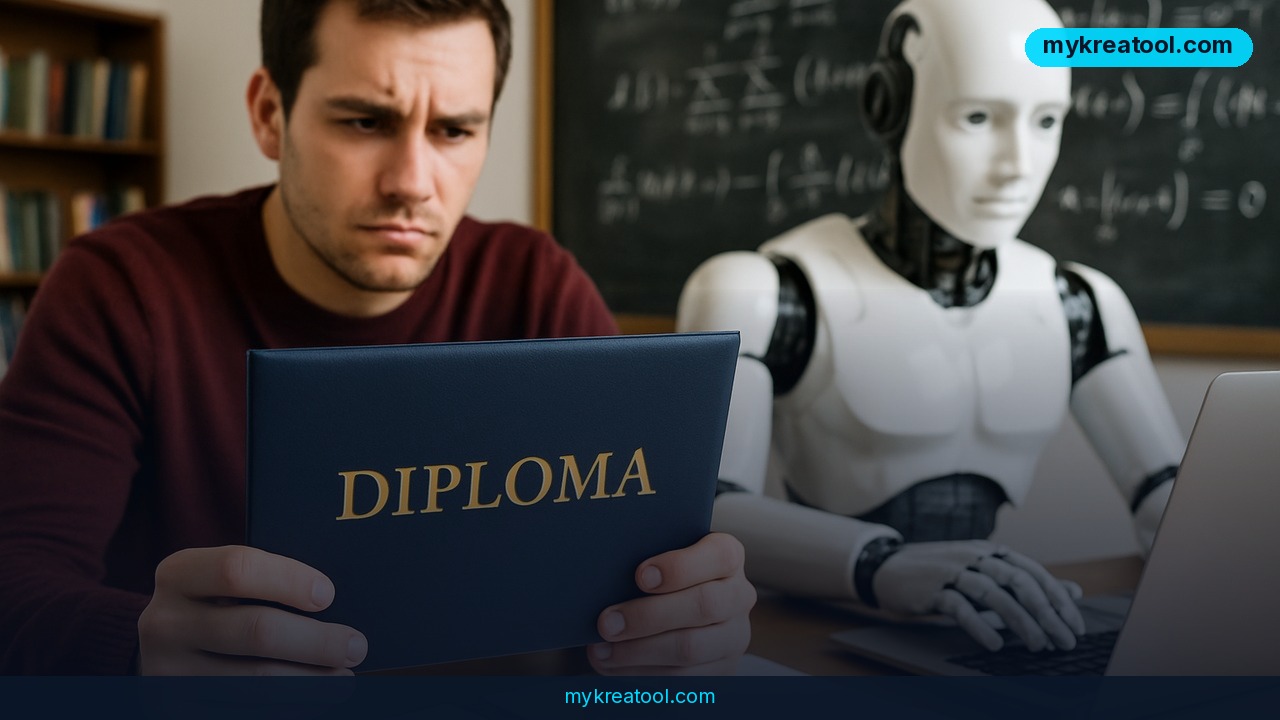
AI solved 10 decade-old math problems for $2,000 in compute — and that single line is why researchers, founders, and investors are still talking about it. On a recent panel, entrepreneur Peter Diamandis, computer scientist Alex Wissner-Gross, and AI founder Emad Mostaque discussed a case where an AI system was pointed at ten unsolved mathematical problems, some open for over a decade, and returned machine-checkable proofs for all of them. Total compute cost: roughly $2,000.
This wasn't a vague claim about AI "getting better at math." A Fields Medalist reviewing one of the proofs reportedly said he would recommend it for publication without hesitation — the highest bar in pure mathematics. A cosmologist on the same panel called it "a dark night for mathematics," describing the moment as "the old gods being slaughtered by the new machine gods." Mostaque summed it up more bluntly: "It's a bad time to be a pure mathematician."
Why the price tag matters
The headline number isn't the ten proofs — it's the $2,000. Just a few years ago, a single unsolved problem in pure mathematics could absorb years of a researcher's career, grant funding, and institutional support. Now a comparable batch of results came from an afternoon of compute at the price of a mid-range laptop. That cost curve, more than the proofs themselves, is what's rattling academic mathematics.
Why it matters
The significance here isn't that AI can do arithmetic — calculators have done that for decades. It's that AI can now perform the kind of open-ended, creative reasoning that mathematicians assumed was uniquely human: finding a novel proof strategy for a problem nobody had cracked, then verifying it in a form other machines (and humans) can check.
That distinction matters because pure mathematics has long been treated as one of the last strongholds against AI automation — abstract, non-repetitive, dependent on intuition built over a career. If a $2,000 compute run can produce a publication-worthy proof, the assumption that certain intellectual work is automation-proof starts to look shaky, not just for mathematicians but for anyone whose job involves structured problem-solving: engineers, actuaries, quantitative analysts, and researchers across fields.
A parallel from outside math
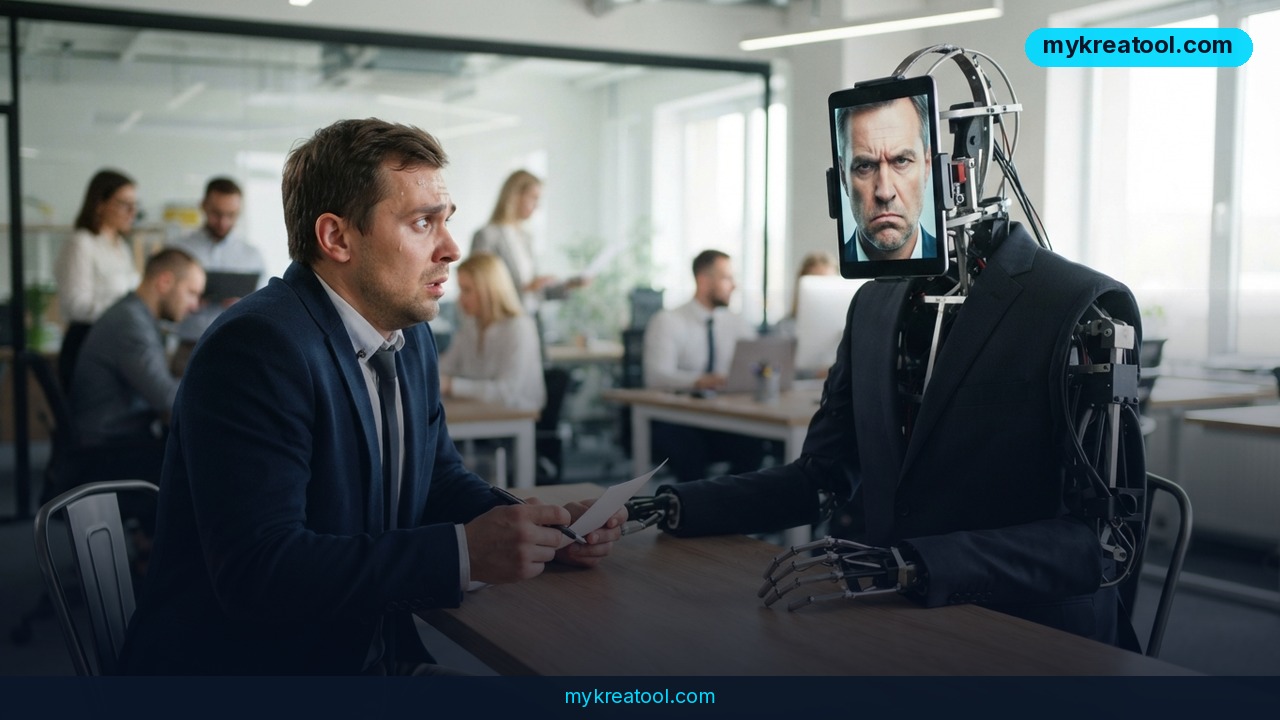
One of the panelists illustrated the point with a story from a construction project in Malaysia around 2013–2014, where an engineer wanted to cut an opening straight through a reinforced concrete beam — right at the point of peak bending stress. A more experienced colleague caught the error and rerouted the ducts instead, preserving the beam's structural integrity. The lesson: the raw engineering knowledge wasn't rare. The judgment — catching a costly mistake before it happened — was. That's the skill AI is now starting to encroach on, not just execution, but judgment.
How to use it today
You don't need a research lab to benefit from this shift. The same reasoning capabilities that solved decade-old proofs are already available in mainstream AI tools for far more everyday problems: debugging complex logic, checking financial models, validating statistical assumptions, or stress-testing a business plan for hidden flaws.
For entrepreneurs and creators, the practical takeaway is to start treating AI as a second set of eyes on anything involving structured reasoning — not just content generation. If you want to experiment without committing to paid subscriptions, a good starting point is a collection of free AI tools like the ones at mykreatool.com, which let you test AI-assisted writing, analysis, and automation workflows before investing in a specific paid stack.
Where the gains show up first
Expect the earliest real-world impact in fields with clear, checkable rules: finance, engineering QA, software verification, and legal contract review. These domains resemble math proofs in one key way — a correct answer can be verified objectively, which is exactly the condition under which current AI systems perform best.
Who benefits
The clearest winners are researchers and institutions willing to adopt AI as a collaborator rather than a threat. Universities and labs that integrate AI-assisted proof generation could dramatically increase research output per dollar, especially in mathematics, physics, and theoretical computer science where problems are well-defined and results are verifiable.
Startups and solo founders benefit too. A small team can now run reasoning-heavy tasks — quantitative modeling, algorithm design, technical due diligence — that previously required hiring specialized PhDs. That lowers the barrier to building technically ambitious products without a large research budget.
Educators and students also stand to gain, provided the tools are used to build understanding rather than bypass it. AI-generated proofs can serve as worked examples that accelerate learning, similar to how calculators changed (but didn't eliminate) how arithmetic is taught.
Risks
The most immediate risk is professional displacement in a field that assumed it was insulated from automation. Pure mathematicians, along with adjacent quantitative researchers, may need to shift focus from solving known-open problems toward posing new questions, designing better verification systems, and overseeing AI-generated proofs for subtle errors.
There's also a trust problem. Machine-checkable doesn't mean flawless — a proof can pass automated verification while resting on assumptions that don't hold in the real world it's meant to describe. Without expert human review, low-cost AI proofs could flood journals and slow peer review rather than speed up genuine progress.
Finally, there's the judgment gap illustrated by the construction story earlier: knowing the rules isn't the same as knowing when to break or bend them. As AI takes over more rule-based reasoning, the premium shifts to people who can catch the one exception the model missed — a skill that's harder to price, and much harder to automate.
Conclusion
AI solving 10 decade-old math problems for $2,000 isn't just a research curiosity — it's a signal that the cost of high-level reasoning is collapsing fast. For entrepreneurs, marketers, and creators, the takeaway isn't to panic about pure mathematicians losing their jobs; it's to recognize that the same reasoning power is now cheap enough to apply to your own business problems today. The advantage will go to whoever starts experimenting first.
Comments 0