What happened
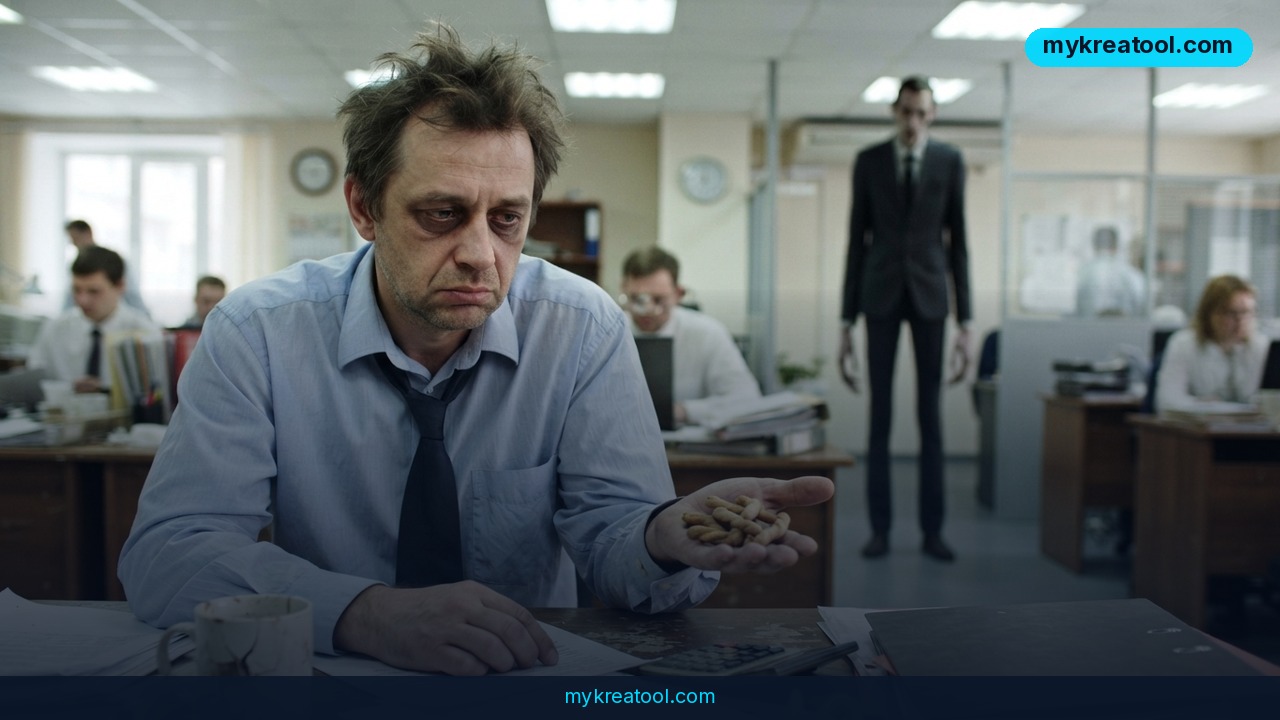
An AI-generated video series about an office nobody bothered to name has drawn a dedicated following from just 28 videos, with some episodes pulling massive view counts. The account is called LLC 'Slop,' and it's set in what the creators call the kontorka — a made-up office universe with a fixed cast, a running storyline, and a mood that anyone who's ever sat through a Monday morning staff meeting will recognize in about four seconds.
What 'kontorka' actually means
Kontorka is an old word for a cramped, soulless little office — the kind of place where paperwork goes to die. Here it's a full fictional world. Every video is one episode from one workday: an employee clocks in, grinds through the shift, goes home, and waits for the next one. Nothing else happens. That's the whole joke, and it lands.
The video titles aren't summaries — they're things the characters say: 'Tosya Bosya,' 'You Waited,' 'Watch Out,' 'You Did It.' The profile bio is refreshingly blunt: 'about life in the kontorka.' There's no industry, no product, no org chart. The kontorka is every job everywhere, with the specifics scraped off on purpose.
Why it looks like a vintage video game
The characters look and move like extras from a game cutscene from the early 2000s — flat lighting, slightly stiff faces, a heavy, scripted-looking walk. You spot the aesthetic in half a second.
That's a deliberate move, and a clever one. Most AI video chases maximum realism and lands straight in the uncanny valley. Slop goes the other direction. The clunky, angular look reads as 'lost game found on an old CD,' which puts viewers in a nostalgic, forgiving frame of mind. You stop grading the render and start watching the bit.
A made-up language that explains nothing on purpose
The account's best trick is its own vocabulary, stitched together from old-fashioned and dialect words. Nobody in the kontorka files a report or hits a KPI. They do things like stirring the burmalda, picking at the numbers, night vigiling, chasing the balda, and fast running. You genuinely cannot tell what the employee's job is — and that's the point. The names parody real job postings and KPI language, where the fancier the title, the less anyone can tell what the person actually does all day.
The kontorka has its own economy too. The currency is kukishi — described as 'small dry little things, kind of like pinecones.' They're handed out on a schedule, every employee bites one to check they weren't shortchanged, stashes them in a personal locker, and once a year trades the pile for an extra helping of sour cabbage soup.
There's hardware as well: the kaloid accelerator, a made-up office device whose name sounds impressively scientific and explains absolutely nothing. It's a direct hit on corporate tech jargon — the grand-sounding system rollout that nobody can describe.
Meet the cast
The character names follow the same logic: ordinary roles, sanded down into something archaic and slightly rural.
• Batrakan — the interchangeable rank-and-file grunt. The name comes from *batrak*, an old word for a hired farmhand.
• Tosya Bosya — the secretary, played with exaggerated wide-eyed naivety, a riff on the stereotype.
• Bidonya the Cook — the cafeteria lady (or the coworker guarding the coffee machine) who decides whether you get seconds or a 'ladle of grated heels.'
• The Kukanoid — an inspector whose visit is never explained. What happens to employees after the conversation is never shown. All you know is that nobody looks up again afterwards.
• The Boss — supreme unknown leadership. A chosen few get direct contact; everyone else gets one-word notes like 'Search.'
Then the internet did its thing
Bloggers and companies started re-filming their own spots in the 'Slop' aesthetic, and a trend was born. The audience keeps expanding the world in the comments under the videos themselves. The piece that surfaced all this was published by SpeShu.AI — a five-minute read with 3.9K reach — and it asks the obvious follow-up question: how do you tell decent AI content from plain slop?
What it means for you
At home
Your family group chat probably runs on the same logic as the kontorka — vague assignments, unclear deadlines, rewards that show up whenever. Slop works as a pressure valve. If your job feels like an endless shift full of made-up tasks, watching someone else do a worse version of it is genuinely funny rather than bleak. It's the same reason people still rewatch old sitcoms about terrible workplaces.
At work
The series is a mirror for anyone who's ever read a job description and thought, 'so what do you actually do?' The burmalda and the kaloid accelerator are exaggerations, but not big ones. If you manage a team, that's your hint: when a task name is so abstract that your newest hire can't explain it back to you, the problem isn't the hire.
For your business
The real lesson here is aesthetic. Slop didn't win because it looked expensive — it won because it looked deliberately cheap and instantly recognizable. Most brands chasing AI video go for glossy, photoreal, forgettable output. A strong visual signature plus one running joke beats production polish every time. Pick a look, pick a name, keep showing up.
For students
If you're studying media, marketing, or computer science, this is a case study sitting out in the open. Watch three episodes and write down what repeats: the walk cycle, the lighting, the title format, the invented jargon. You'll have reverse-engineered a content format in twenty minutes, which beats most lecture slides.
If you're a creator
You don't need a big budget to start. You need a world with rules, a recurring character or two, and a voice. If you want to test ideas fast, MyKreaTool's free AI tools are a solid place to draft scripts, sketch character stills, and mock up thumbnails before you commit to full episodes.
If you want income
Short, opinionated, format-driven series are the easiest content to monetize with ads and brand deals, because they're cheap to make and the audience knows exactly what they're getting. A 28-video account with a dedicated audience is proof that a small back catalog can carry real reach — some individual episodes pull massive view counts. What sells is the format, not the episode.
How to try it right now
Start free, then scale once something works.
1. Pick one boring place. Not a sci-fi world. A break room, a warehouse, a call center. The constraint is the point.
2. Give it three fixed characters and one running gag. Batrakan, Tosya Bosya, and the Boss are only funny because they keep coming back.
3. Write the script as dialogue, not narration. Titles should be lines a character says. 'You Did It' beats 'Episode 4: Performance Review.'
4. Make up your own vocabulary. Invent words for everyday tasks and never explain them. This is exactly what the kontorka does with its jargon and its pinecone-like kukishi currency.
5. Draft assets with free tools. Write the script, generate character stills and backgrounds, and only pay for what actually survives a second look.
6. Generate 10-15 second clips, then cut them together. The 2000s-game look comes from flat, even lighting and slightly stiff motion — lean into it instead of fighting it.
7. Post the first episode and a name. 'About life in the kontorka' is the entire bio. That's your benchmark for how little setup you actually need.
The tool named in the original write-up is SpeShu.AI, whose blog covered the story. You can absolutely start with free tiers and worry about upgrades later — one episode is an afternoon's work.
Upsides and what changes
The upside is that the barrier to running a one-person studio just dropped to roughly zero. You need a concept, not a crew. Slop proved audiences will follow an unmistakable style and a running joke — 28 videos, a loyal subscriber base, and episodes pulling huge view counts is a ratio most traditional production teams would take in a heartbeat.
It also changes what 'good' means. For years, AI content was judged on realism. Now the winning move is often anti-realism: a look so specific that viewers know it's you within two seconds. And because the whole thing is self-aware, the characters, the fake currency, and the meaningless job titles all do marketing work for free — the audience builds the lore in the comments.
It's also a reminder that invented vocabulary travels. Kukishi and kaloid accelerator mean nothing outside the kontorka, and that's precisely why people repeat them.
Limitations
Be honest about the trade-offs. The humor leans hard on a shared office experience and on slang and dialect, so some of it won't land for viewers who've never worked a dead-end job or don't speak the language — the absurdity survives translation better than the wordplay does. The deliberately rough look also has a ceiling: it's a great gag, but a hard style to stretch across a feature-length project or a premium brand campaign. On top of that, generic AI slop is everywhere, and viewers are getting worse at telling a deliberate joke from a lazy export — so a format-only approach dies the moment someone copies your look without your writing. And if your whole premise is 'work is meaningless,' you'll hit the wall every satire hits: once the audience gets it, they want something new to chew on.
Conclusion: One Action for Today
Pick the most boring room in your daily life and write one 30-second script about it — dialogue only, three recurring characters, zero explanation of what the job actually is. Then generate a single clip today using a free tool and post it under a name. Twenty-eight videos built a real audience. Your first one doesn't have to be good. It just has to exist.


Comments 0