What happened
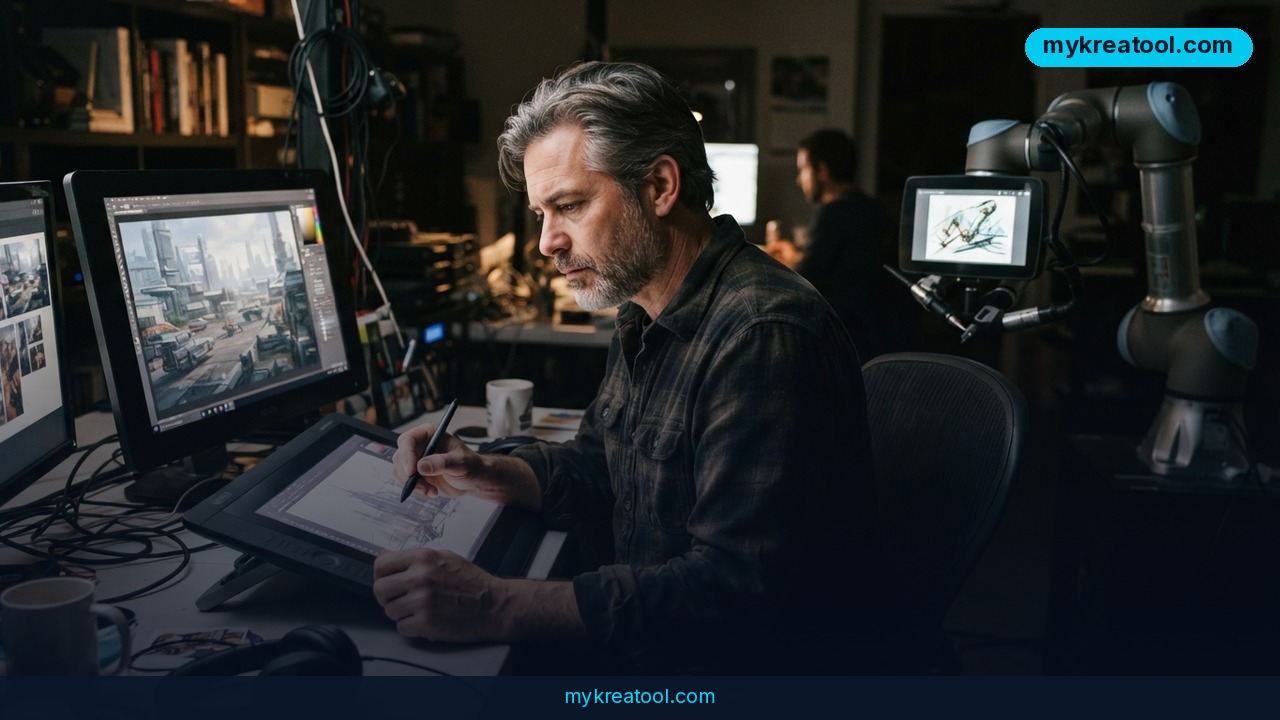
Hollywood creatives training AI models has become one of the more unsettling side hustles in the entertainment industry. According to a Guardian investigation, experienced and award-winning screenwriters, directors, and producers are taking gig work with AI training agencies, earning between $12 and $200 an hour to teach machine learning systems how to replicate the exact skills that once paid their full-time salaries.
These agencies hold contracts with the biggest names in AI, including Anthropic and OpenAI, and recruit professionals from finance, health, law, social work, and increasingly, entertainment. Ruth Fowler, a Los Angeles screenwriter and producer who wrote the BBC One drama Rules of the Game and co-wrote Little Disasters for Paramount Plus, is one of them. She trained an AI to build a detailed two-day film shoot schedule, complete with filming permits, location hazards, daylight conditions, and personnel lists — tasks that would normally fall to a line producer or production coordinator.
Another case involved an LA documentary director who taught an AI to transcribe muddled video audio from a Little League baseball game, including tagging speakers by appearance and characterizing accents. He described the experience bluntly: "I was essentially handed a shovel and asked to dig the grave of my profession."
The numbers behind the story
The timing isn't coincidental. Fowler estimates production work is down roughly 35% industry-wide. Netflix has confirmed it used AI in 300 of its 1,000 titles released in 2026, and directors like Ron Howard are now building AI-enabled projects, including an animated documentary feature about Vietnam War prisoners.
Why it matters
This story matters because it shows AI displacement isn't a future hypothetical for creative industries — it's already generating a parallel gig economy where skilled professionals are paid to make themselves replaceable. The people best equipped to train AI on screenwriting, scheduling, pitch decks, and production logistics are the exact people who used to get paid to do that work directly.
It also signals a shift in how AI companies build capability. Rather than relying purely on scraped data, firms like Anthropic and OpenAI are paying for structured, expert-level human feedback on domain-specific tasks — a process known as reinforcement learning from human feedback (RLHF) applied to creative and production workflows. That means the next generation of AI tools for entertainment will be trained not on generic internet text, but on real shooting schedules, real pitch decks, and real transcription judgment calls from industry veterans.
A pattern beyond Hollywood
The same training-gig model is spreading across finance, law, health, and social work — meaning any knowledge-based profession facing AI disruption could soon see its own version of this trend. For marketers, consultants, and creators watching AI eat into their own workflows, Hollywood is essentially a preview.
How to use it today
For entrepreneurs and creators, the practical takeaway isn't to fear AI training gigs — it's to get ahead of the tools these gigs are building. AI is already capable of handling production scheduling, transcription, pitch deck assembly, and rough script coverage. Rather than waiting to be disrupted, marketers and small creative teams can start testing these capabilities now on lower-stakes projects: draft shot lists, generate first-pass video transcripts, or build a pitch deck outline in minutes instead of hours.
If you want to experiment without committing to a paid AI subscription, a free toolkit like mykreatool.com is a practical starting point for creators and marketers who want to test AI-assisted writing, image, and content workflows before investing further.
Where to start
• Use AI for first-draft scheduling or logistics documents, then have a human refine them
• Test AI transcription on your own video content to see accuracy on accents and overlapping audio
• Treat AI-generated pitch decks as a starting skeleton, not a final product
Who benefits
Three groups stand to gain the most from this shift. AI companies benefit directly, acquiring high-quality, expert-labeled training data at $12 to $200 an hour — far cheaper than the cost of producing an actual film or show. Freelance creatives facing a 35% production slowdown get short-term income between jobs, filling gaps left by the industry contraction. And smaller studios, marketers, and independent creators benefit downstream, gaining access to AI tools that can handle scheduling, transcription, and pitch work that used to require a full production team and a much bigger budget.
Netflix and major studios as early adopters
With AI already used in 300 of Netflix's 1,000 2026 titles, and directors like Ron Howard actively building AI into feature production, studios themselves are becoming the biggest beneficiaries — cutting costs on tasks that used to require large crews.
Risks
The clearest risk is the one the workers themselves describe: they are being paid to accelerate the automation of their own jobs. The documentary director's "dig the grave of my profession" comment captures the fatalism many feel — accepting the work because refusing it wouldn't stop the trend, only exclude them from the income.
There are also quieter risks buried in the training data itself. The accent-tagging work in the transcription project — labeling speakers as English, Scottish, African American, or Asian — raised concern among freelancers about bias getting baked into AI models at the training stage. For businesses adopting these tools, that means auditing AI outputs for embedded bias before deploying them in transcription, casting, or customer-facing content.
Finally, there's a structural risk for the industry: as AI training work replaces short-term production gigs, fewer professionals may enter or stay in entertainment careers, thinning the very talent pool that trained the systems in the first place.
Conclusion
The Hollywood AI training trend is a real-time case study in how creative industries adapt — or don't — to automation. Production is down an estimated 35%, Netflix has AI in nearly a third of its 2026 titles, and the writers and directors best positioned to resist automation are instead being paid to teach it their craft. For entrepreneurs, marketers, and creators outside Hollywood, the lesson is clear: the tools being built today from this labor will show up in your own workflows soon. Testing AI-assisted scheduling, transcription, and content tools now — rather than waiting to be disrupted — is the more strategic position to be in.

Comments 0