What happened
A new privacy feature for AI agent phone control just changed how much personal data leaves your device when an AI assistant operates your Android phone. The open-source project Android Remote Control MCP, an MCP (Model Context Protocol) server that lets AI agents tap, scroll, and type inside your apps without root access or a USB cable, shipped version 1.11.0 with a feature called Privacy Mode.
Until now, letting an AI agent drive your phone meant every screen it "saw" — including emails, phone numbers, credit card digits, IBANs, and national ID numbers — was sent straight to whichever LLM provider was running the agent, whether that's Anthropic, OpenAI, or another vendor. The developer built Privacy Mode after a user pushed back with a blunt complaint: the tool worked well, but they didn't want an AI company logging everything visible on their screen.
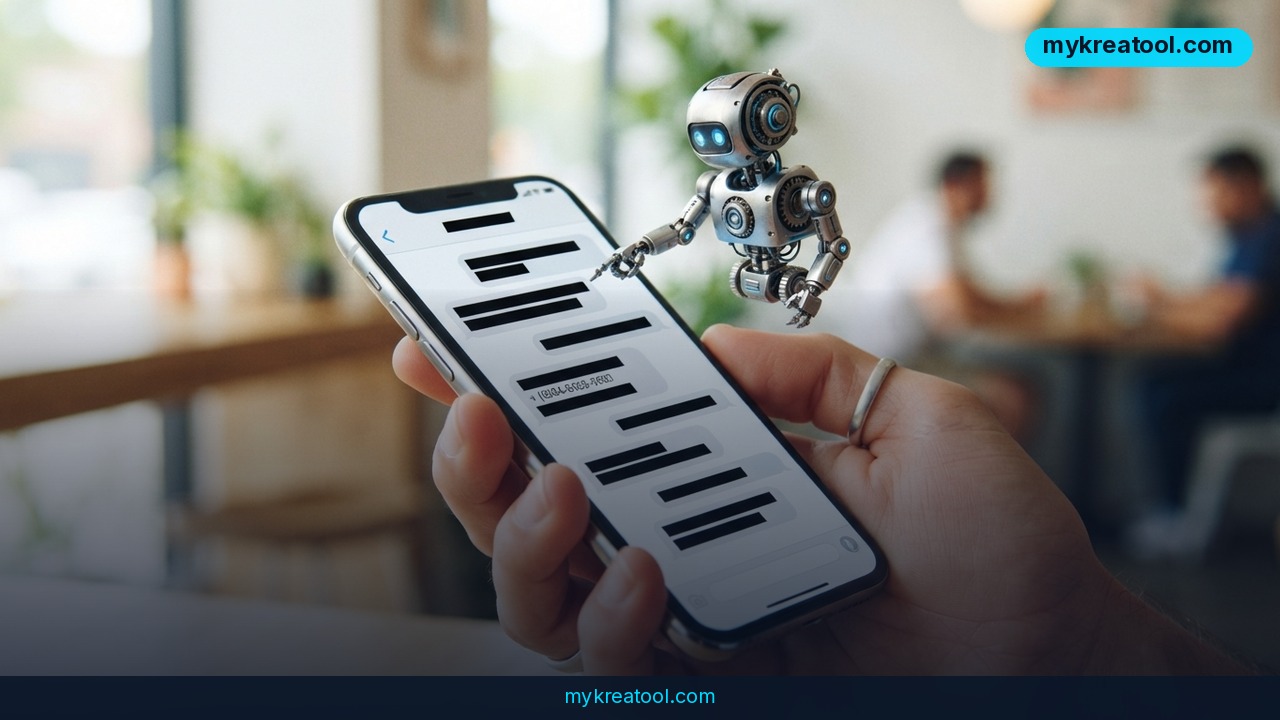
Privacy Mode answers that directly. It scans on-screen content locally, on the device itself, and swaps sensitive values for placeholders before anything is transmitted. The AI agent still completes its task normally because it works with the placeholder text; the real values are substituted back only on the phone, after the model responds. On the developer's own benchmark, the system catches roughly 87% of personal data across categories like emails, phone numbers, credit cards, and IBANs. The one confirmed weak spot: names in non-English scripts, which the developer says is an active area of improvement. The release also fixed Android's habit of killing background services, so the MCP server now survives being backgrounded.
Why it matters
This matters because AI agents that can control real devices are moving from novelty to daily tool fast, and most of them assume you're comfortable streaming your screen contents to a third-party model. For an entrepreneur automating customer support replies from a phone, or a marketer using an agent to post content across apps, that screen can easily contain client emails, payment details, or ID numbers — data most businesses are contractually or legally obligated to protect.
On-device PII redaction shifts where the privacy boundary sits. Instead of trusting a provider's data retention policy, the filtering happens before the network call is made, so sensitive values never exist in the request in the first place. That's a meaningfully different risk model than "the company says they don't train on your data." An 87% catch rate isn't perfect, but it's a real, measured number from a public benchmark rather than a marketing claim, and it's a strong baseline for a first release of this kind of local filtering on consumer hardware.
It also signals a broader trend: as AI agents get hands-on access to phones, laptops, and business software, the industry is going to need local, verifiable privacy layers rather than relying purely on provider trust. Expect more MCP-based tools to add similar redaction layers as agent-driven automation spreads into finance, healthcare, and customer service workflows where PII exposure carries real compliance risk.
How to use it today
Android Remote Control MCP v1.11.0 is available now on GitHub, free and open source, with no root or cable required. Setup follows the standard MCP server pattern: install the release on the Android device, connect it to your AI client of choice (any MCP-compatible agent), and toggle Privacy Mode on before granting the agent control of the screen. Once enabled, redaction runs automatically in the background — no extra configuration needed for the covered PII categories.
For teams experimenting with agent-driven workflows more broadly, it's worth pairing device-level privacy tools like this with lightweight AI utilities you already trust for day-to-day tasks. If you're building out an AI toolkit for content, research, or automation, mykreatool.com offers a set of free AI tools worth testing alongside agent frameworks like this one, particularly if you want to prototype workflows without committing to a paid stack first.
Given the current 87% detection rate, treat Privacy Mode as a strong filter, not an absolute guarantee — especially if your workflows touch non-English names, where coverage is still catching up.
Who benefits
Solo founders and small teams get the most immediate upside: anyone using an AI agent to manage a phone-based workflow — replying to messages, managing a storefront app, testing a mobile product — can do it without manually redacting screenshots or worrying about what a screen capture exposes to a model provider.
Developers and agencies building on top of MCP-based automation benefit from a reusable privacy layer they don't have to build themselves. Rather than writing custom PII-scrubbing logic for every client project, they can point to a benchmarked, open-source component. Compliance-conscious businesses in regulated spaces — healthcare intake, financial services, legal — also benefit, since on-device redaction reduces the surface area for a data exposure incident even before any formal audit happens.
Risks
The biggest risk is the gap between 87% and 100%. A 13% miss rate on personal data is not trivial when the content involves credit cards or national IDs — a single leaked value in a support ticket or automated workflow can still cause harm, especially at scale. Non-English names being an explicitly unresolved weak spot means teams operating in non-English-speaking markets should not assume full coverage.
There's also the general risk profile of any tool that hands an AI agent live control of a phone: mis-clicks, unintended app actions, or an agent misinterpreting instructions can cause real-world consequences independent of the privacy question. And because this is a community-maintained open-source project rather than an enterprise product with a support contract, businesses in regulated industries should treat it as a helpful mitigation layer, not a compliance guarantee, and pair it with their own data handling policies.
Conclusion
On-device PII redaction for AI-controlled phones is a meaningful step toward giving users real control over what AI providers see, backed by a measured 87% detection benchmark rather than vague promises. It's not flawless — non-English names remain an open gap — but for entrepreneurs, marketers, and developers experimenting with AI agents on mobile, it's a practical way to lower privacy risk without abandoning automation. As agent-driven tools spread further into daily business workflows, expect local redaction layers like this one to become a standard expectation rather than a differentiator.



Comments 0