What happened
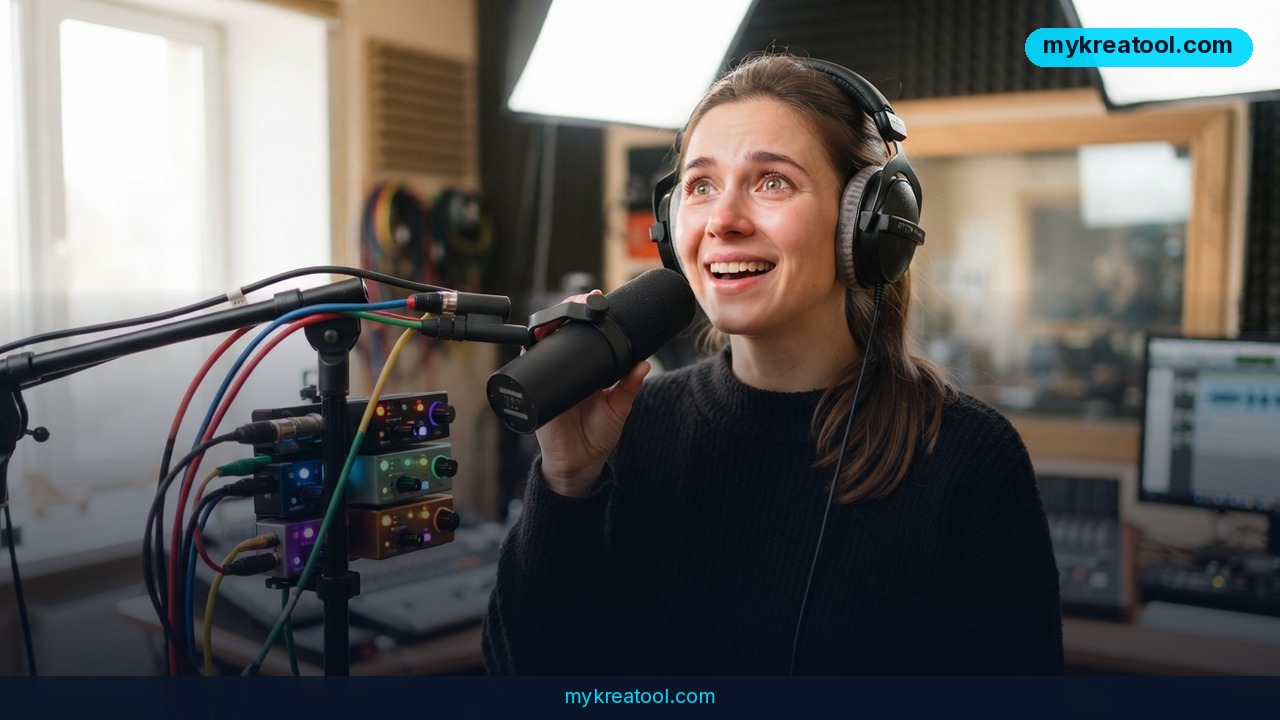
ElevenLabs has just released Eleven v4, its most emotive text-to-speech model to date, alongside a low-latency version called Eleven v4 Turbo. The pitch is simple: older AI voices could read a line out loud, but they couldn't really mean it. Eleven v4 is built to read tone, pacing, emotion, character and context, so a doctor gently calming a frightened patient no longer sounds like a video-game soldier yelling at his squad before a drop.
The numbers behind the launch are the interesting part. Eleven v4 is ranked #1 by Artificial Analysis, and in blind head-to-head listening tests roughly 75% of listeners preferred it over competing models. Turbo, the version built for real-time use, has a median inference latency of about 100ms — faster than the average pause between two people talking. (In plain English, inference latency is the gap between the AI finishing its thinking and sound coming out of the speaker.)
A new architecture, not a face-lift
Both models sit on an entirely new architecture, which is why the quality jump isn't just a volume knob being turned up. Audio fidelity is cleaner and more natural across the board, and the output is designed to land as emotive rather than mechanical.
You can direct it in plain language
You don't need to code the emotion in. You can describe how a line should be delivered in ordinary words, or drop inline audio tags straight into the script: [laughs], [said angrily in French accent], [light rain], [phone buzzing], [excited, happy], [sleepy drowsy voice], [yawning]. Eleven v4 follows those tags and direction prompts more accurately than earlier models, so what you describe is much closer to what you get. Support for IPA phonemes — the phonetic alphabet used to pin down exact pronunciations — has also improved significantly, which matters if your brand name is spelled "Ngo" but pronounced "No."
The other headline is multi-speaker dialogue. A new method for capturing each speaker's identity keeps a voice consistent across agent conversations, audiobooks and ads. And because the model understands the context of a whole scene rather than treating lines as isolated scraps, speakers actually respond to what was just said instead of sounding like separate clips stitched together.
What it means for you
At home
Ever tried to get a voice assistant to say a family name correctly and given up? The IPA improvements are for you. Neither are bedtime stories: give Grandma one voice and the dragon another, and the dragon can be [sleepy drowsy voice] when it's time for lights out. Audio messages and narrated recipes also stop sounding like a GPS giving directions.
At work
Training videos, onboarding clips and slide narration are the obvious wins, because nobody wants to record the same paragraph eleven times. Support teams can use the Turbo version for phone agents that reply in about 100ms — quick enough that callers don't hear that awkward dead air and start talking over the bot. If you're rolling out AI tools across a small team and want to test the cheap stuff first, the free AI tools at MyKreaTool are a sensible warm-up before you commit anyone's budget.
For your business
Ads, product demos, explainer videos and multi-voice promos. The consistency angle matters more than it sounds: if a customer hears the same brand voice across an ad, a phone agent and an audiobook, it feels like one company instead of three random freelancers. Dialogue scenes no longer need you to babysit every line — describe the delivery and let the model handle the timing.
For studying
Turn dense notes or textbook chapters into audio you can listen to on a walk. Ask for a calm, steady narrator for definitions and a livelier one for examples, so your brain gets a cue about which is which. Language learners can push the model on pronunciation and shadow it out loud — hearing a native-sounding delivery beats reading phonetic spelling off a page.
For creative projects
This is where tags shine. An audiobook can have a muttered villain and a bright-eyed hero in the same paragraph. A sketch comedy bit can slide from [excited, happy] to [yawning] without you hunting through a sound library, and small touches like [light rain] or [phone buzzing] can be baked right into the read.
For extra income
If you've ever lost a voiceover gig because you don't own a studio mic, direction prompts change that math. Dubbing, narration, podcast intros and character work all become things you can draft, revise and deliver, with the performance instructions written out instead of recorded.
How to try it right now
1. Start free. Open the Eleven v4 launch page, hit play on the sample clips and listen to how the same idea changes with different tags. No card, no setup.
2. Type your own line. Write something you'd actually say, not a test sentence. Something like: [excited, happy] Big news, everyone. The mango sticky rice is back.
3. Add a direction prompt. Describe the delivery in plain words — "warm, a little rushed, like she's smiling" — and compare it to the flat read.
4. Stack the tags. Try [laughs], [said angrily in French accent], [light rain] or [phone buzzing]. Tweak one at a time so you can hear what each one is doing.
5. Pick your model. Use ElevenLabs Eleven v4 when quality matters most, and Eleven v4 Turbo when the voice has to reply in real time, like a phone or chat agent.
6. Nail the pronunciations. Feed tricky names and product terms in as IPA phonemes so they behave the same way every single take.
7. Go deeper. The ElevenLabs developer documentation covers the full tag syntax and how to apply these tags through the API.
Upsides and what changes
Until now, high-quality voice models tended to be slower, which meant picking between fast and expressive voice agents. Turbo largely collapses that choice: you get the same technology with roughly 100ms median latency. That's the practical change — real conversations stop feeling like walkie-talkie chatter.
Add the direction prompts and inline tags, and the balance of power shifts from engineers to writers. You no longer need a sound designer to get a sigh in the right place; you need a decent sentence. Multi-speaker consistency means long-form projects — audiobooks, agent scripts, ad campaigns — hold together instead of drifting.
Limitations
A few honest caveats. Eleven v4 is ranked #1 and won about 75% of blind preference tests, which means roughly one in four listeners still preferred something else — a strong result, not a unanimous one. Faster-than-human-pause latency is impressive, but it doesn't fix a confusing script or a bad phone line. Tags are powerful and they're still instructions: the model interprets [said angrily in French accent], so you'll want to listen back and adjust rather than assume take one is perfect. The launch material also doesn't spell out pricing, language coverage or every voice available, so check the current details on ElevenLabs' own pages before you build a workflow around it. And finally, emotion can't rescue weak writing — a flat sentence with great delivery is still a flat sentence.
Conclusion and one action for today
Eleven v4 is the clearest sign yet that AI voice has moved past "reading text" and into "performing it." Ranked #1 by Artificial Analysis, preferred by about 75% of blind-test listeners, and fast enough to keep up with a real conversation at roughly 100ms, it's less of a gimmick and more of a tool you can hand to writers, teachers and small business owners.
Here's your one action for today: pick a single line you'd normally record yourself — your voicemail greeting, a product tagline, the first sentence of a story — and run it through ElevenLabs Eleven v4 with one emotion tag. Listening to the difference takes about two minutes, and it'll tell you more than any spec sheet will.


Comments 0