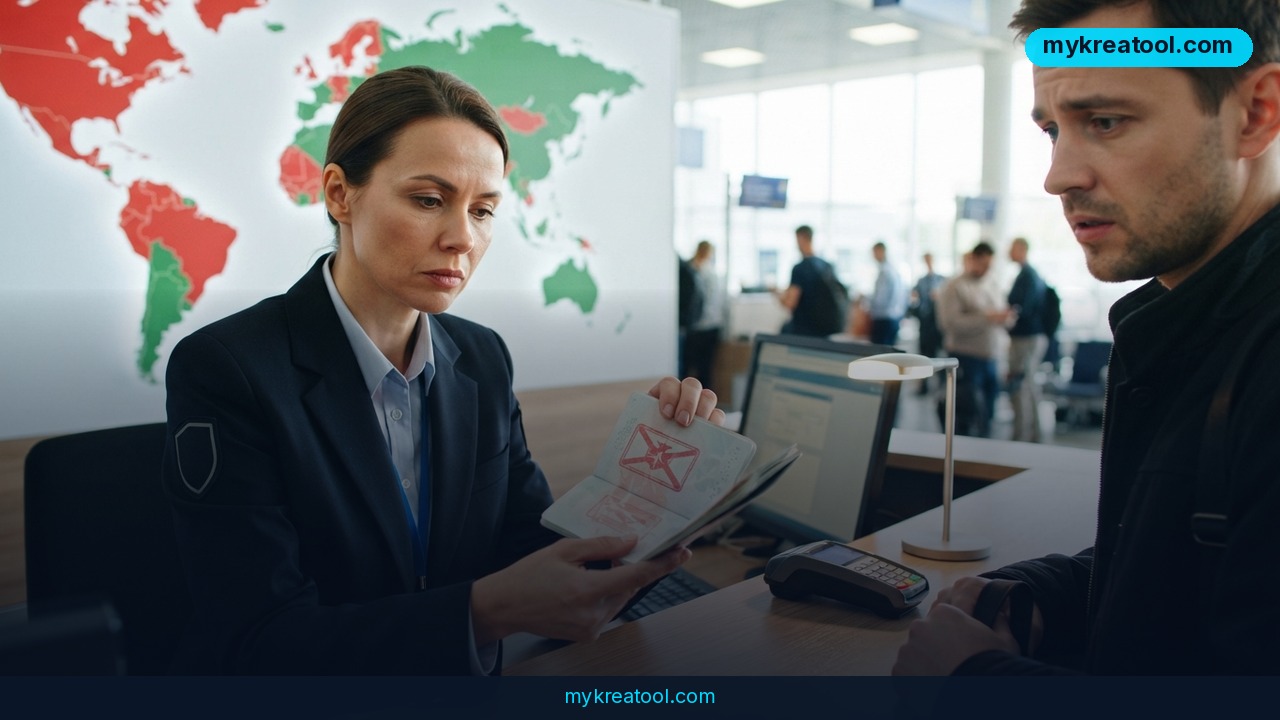
What happened
Anthropic's newest Claude access restrictions stop being about where you're standing and start being about who signs your paychecks. Until now, the company's geographic blocks targeted individual users physically sitting in "unsupported" countries. The new edition of the policy goes after the paperwork instead: companies registered in those jurisdictions, plus any organization that's directly or indirectly controlled by residents of them.
The updated rules cover the whole lineup — Claude, Claude Code, Cowork, the API, and models resold through cloud platforms and official resellers. If you buy Claude through a partner, the partner's rules now include this one too.
Two details do most of the damage. First, an employee of a company from an unsupported region can't use Claude even when they're standing in an approved country. Your view of the Thames doesn't matter if the entity paying for your seat is registered somewhere Anthropic doesn't serve. Second, the reverse is also true: someone at an approved company can't open Claude during a two-day business trip to an unsupported country.
The whitelist behind it
"Jurisdiction" is just a fancy word for the country where a company is legally registered — its paperwork home, which often has nothing to do with where its people actually sit. Anthropic keeps its own list of 185 countries and regions, and it doesn't line up neatly with US sanctions. Iraq, Somalia, Palestine and Taiwan are on it. Russia, mainland China, Hong Kong and Macau aren't. Anthropic sets the criteria itself and hasn't published how it picks them.
This isn't brand new. Back in September 2025, Anthropic said it was restricting organizations controlled from unsupported jurisdictions, citing national security threats, the risk of those organizations working with intelligence services, and a stated goal of protecting democratic states' interests. What's new is the granularity: how the rules reach employees, ownership structures, and work done through foreign subsidiaries. The technical checks behind it all stay a black box.
What it means for you
Think of it as a members-only club that used to check your ID at the door and now audits the company that bought your membership. Here's how that plays out in real life.
At work: your employer's registration beats your location
You could be a marketing manager in Berlin, working fully legally, with a German contract and a German desk — and still lose access, because your company's holding entity is registered in a jurisdiction Anthropic doesn't serve. The rule follows ownership, not office addresses. If you're on a team that shares one Claude workspace, the whole workspace goes, not just your seat. That's the single biggest change here: access becomes an HR-and-legal question rather than an IT one.
For business owners: who owns you matters
If a majority of your company is owned or controlled by people or firms from an excluded region, you're in scope — even if every employee, server and customer sits somewhere approved. "Indirect control" is the tricky phrase. That could mean a parent company, a fund, a holding structure, or a founder with dual residency. Small teams that never thought about corporate structure suddenly need to map it out on one page.
On the road: a short trip can lock you out
Got a conference in an unsupported country? A supplier visit? A family emergency? Under the new wording, an employee of an approved company can't use Claude while physically there — even for a few days. Work doesn't pause because you're on a plane, so plan around it: download what you need before you fly, and don't count on the app working at the airport.
For students: shared accounts get messy
Universities and study groups often share a single department account, a lab license, or a group billing setup. If that account belongs to an institution with a partner campus, a funder or a registration in an excluded jurisdiction, the whole cohort can lose it mid-semester. Anyone relying on Claude for research summaries or thesis editing should keep notes and drafts somewhere they control.
For creators: your tools can vanish mid-project
Agencies and solo creators rarely read vendor terms until something breaks. The practical risk is a project that stalls in week three: your script outlines, thumbnail ideas, or client copy prompts stop loading because the account holder's registration is out of bounds. Anything you'd hate to retype should live in your own documents, not only in a chat history.
For freelancers and agencies: the income risk
If you subcontract to clients in excluded regions, or resell API access as part of a product, the new rules reach you. Projects built on Claude's API may need a rebuild, and clients may ask you to prove where your company is registered and who controls it. That's an awkward email to send, but far cheaper than a delivered product that stops working.
If you want to line up alternatives before that happens, mykreatool.com lists free AI tools you can test without a credit card, so you're not scrambling at the last minute.
How to try it right now
You don't need a corporate account to see what the fuss is about. The free path takes about five minutes.
1. Open Claude in your browser. That's the consumer product, and it has a free tier — no card required.
2. Sign up with an email address or a Google account. Pick whatever email you'll still control if your work account gets suspended.
3. Test it on something real. Paste in a genuine task — a messy email thread you need summarized, a landing page draft, a spreadsheet description — rather than a generic "hello" prompt. You'll learn more in one real task than in twenty demos.
4. Check your own exposure. Ask whoever pays for your Claude account for the exact legal entity name on the invoice, then ask where that entity is registered. The name on the invoice is what counts, not the office on your badge or the city in your Slack profile.
5. Build a second option into your workflow before you need it. Free tools for writing, images and transcription are listed at mykreatool.com — bookmark two that fit your day job and use them once a week so switching later isn't a fire drill.
6. Export what matters. If you already pay for Claude, move your saved prompts, project notes and long threads into your own documents now. It's boring, and it's the difference between a bad afternoon and a lost week.
On the paid side, Claude Code and the API are separate products with their own access checks, so a working consumer login doesn't automatically mean your team's automated workflows are fine.
Upsides and what changes
Say what you like about the decision, it's at least clear. Companies that fall inside the lines get a more predictable vendor: the risk of a shared workspace being cut off because of someone else's ownership chain drops. Legal and procurement teams finally have something to point at instead of guessing.
Expect the question to spread. Vendors of every kind will start asking for your registration country and ownership structure in onboarding forms, the same way they ask about data residency today. That's friction, but it's honest friction — you find out where you stand before you build a workflow on top of a tool.
And there's a quieter upside: regional and open-source AI tools just got a very large, very motivated audience. Competition tends to improve things for everyone who isn't in the middle of it.
The bigger shift is philosophical. A single private company is now deciding who gets to use frontier AI, using criteria it defines itself — not a government sanctions list. For a business tool, that's a lot of geopolitical weight to carry.
Limitations
Here's the honest part: Anthropic hasn't published the criteria it uses to choose supported regions, and it hasn't explained how it actually verifies who controls a company. Because the 185-entry list doesn't match US sanctions, a compliance officer can't simply tick the usual boxes and call it done. "Indirect control" isn't defined, so a minority stake, an offshore holding company or a founder with two passports all become judgement calls — and nobody has said whether there's an appeal process, a grace period, or a warning before an account goes dark. Employees may not even know their own ownership chain, which means the people most affected are often the last to find out. And since the policy hasn't fully taken effect yet, the wording can still shift before it lands.
Conclusion
Anthropic is turning access to Claude into a question about corporate structure rather than geography. If you're an individual with a personal account in a supported country, odds are nothing changes for you. If you work inside a company — especially one with cross-border owners, subsidiaries or clients — the rules just got personal.
One thing to do today: find the exact legal entity name on your last Claude invoice or account page and check where that entity is registered. If you can't answer that in under a minute, you've just found your risk.

Comments 0