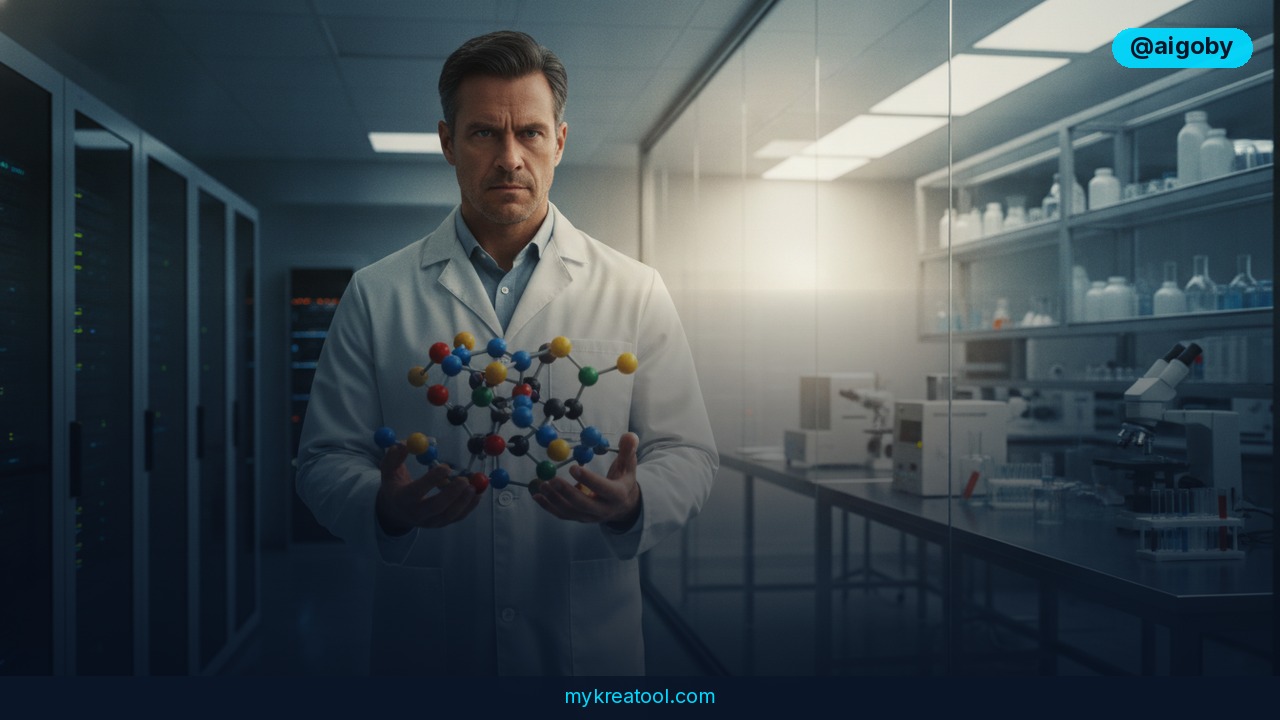
What Happened: A Turning Point for the AI Industry and AI in Medicine
Something just happened in AI that could reshape how we think about the industry's future: Anthropic, the company behind the Claude language model, made a sharp pivot. It launched Claude Science — a specialized platform aimed at accelerating drug discovery and development. This isn't a minor product line extension; it's a strategic move that signals a fundamental shift across the AI industry.
The day before the announcement, Anthropic made another eyebrow-raising move: it poached John Jumper from Google DeepMind — the Nobel Prize winner behind AlphaFold, the program that predicts protein structures. Two leading Gemini researchers followed him to Anthropic, dramatically strengthening the company's scientific bench in biotech. This aggressive hiring push underscores how serious Anthropic is about a field it has never operated in before. But it's entering a race against an already-established rival: Google's Isomorphic Labs, which has been working this niche for five years.
Why It Matters: The End of the LLM Gold Rush
Anthropic's pivot — following similar moves from OpenAI and Midjourney — signals that the era of general-purpose large language models as the primary source of revenue and innovation is winding down. LLMs are increasingly becoming a commodity: they're getting cheaper to build, and competition is intensifying. To stay profitable and differentiated, AI giants are being forced to hunt for new, highly specialized, high-margin niches.
Pharma is a near-perfect candidate for that shift. It's an industry with massive datasets, hard technical problems, and an unusually long development cycle: it takes 10 to 15 years to bring a new drug to market. AI could be a genuine breakthrough here, cutting research time and cost by accelerating molecule discovery and property prediction. But the road won't be easy — clinical trials can't be "agile-ed" or fast-tracked with software methodology.
How to Apply This Now: Lessons for Your Business
Whether you're a marketer, a content creator, or a founder, this trend carries real lessons. First, stop treating general-purpose LLMs as a cure-all for every task. Their value is trending down, while specialized AI tools built for your specific niche are becoming the real prize. For a marketer, that might mean finding an AI tool built for market analysis in your specific industry rather than a generic chatbot.
Second, founders should think about deep AI integration into their specific business processes, not just bolting on a customer-support chatbot. Look for where AI can solve a genuinely unique problem in your sector, streamline complex operations, or unlock a new product entirely. Content creators should start covering the intersection of AI and niche industries — biotech, finance, logistics — to stay relevant. To find specialized AI tools that can help you optimize your own workflows, check out mykreatool.com.
Who Benefits: New Opportunities Across Sectors, Including AI in Medicine
Anthropic's strategic shift opens new doors for a wide range of players. Biotech startups and pharmaceutical companies stand to benefit most directly, gaining access to powerful AI tools that can accelerate their own research. Investors should watch niche AI projects solving narrow, industry-specific problems rather than the next general-purpose LLM.
Researchers and scientists gain new tools to speed up discovery, while AI developers can find new outlets for their skills building highly specialized models and platforms. It's also a signal to governments and regulators that infrastructure and policy need to keep pace with innovation at the intersection of AI and critical sectors like healthcare.
Risks and Limitations: The Road Ahead Won't Be Easy
Despite the huge upside, Anthropic's path — and that of its rivals — into biotech won't be smooth. First, this is an extremely capital-intensive field with long investment cycles (10-15 years is a very long runway for a tech company). Second, pharma's regulatory barriers are among the toughest in the world — every new drug must clear rigorous clinical trials and approval processes that take years and cost billions.
Third, the competition is already entrenched: Google's Isomorphic Labs has a five-year head start. There's also a real risk that even with a Nobel laureate and state-of-the-art AI models on board, the fundamental complexity of biology and chemistry may prove too hard to crack quickly. This isn't a matter of swapping out an algorithm — it's work at the intersection of fundamental science and frontier technology.
Bottom Line: Where AI and Drug Discovery Are Headed
Anthropic's pivot isn't just news about one company changing strategy — it's a strong signal that the AI industry is maturing. The era of the general-purpose LLM "gold rush," when anyone could spin up a chatbot and hope for billions, is ending. What's coming is an age of deep specialization, where AI gets applied to solve specific, hard, high-margin problems in narrow niches. The future of AI lies in specialization, not universality — and whoever finds their niche first will lead the next wave of innovation.
To stay on top of the AI tools and strategies that can help your business thrive in this new reality, visit mykreatool.com.


Comments 0