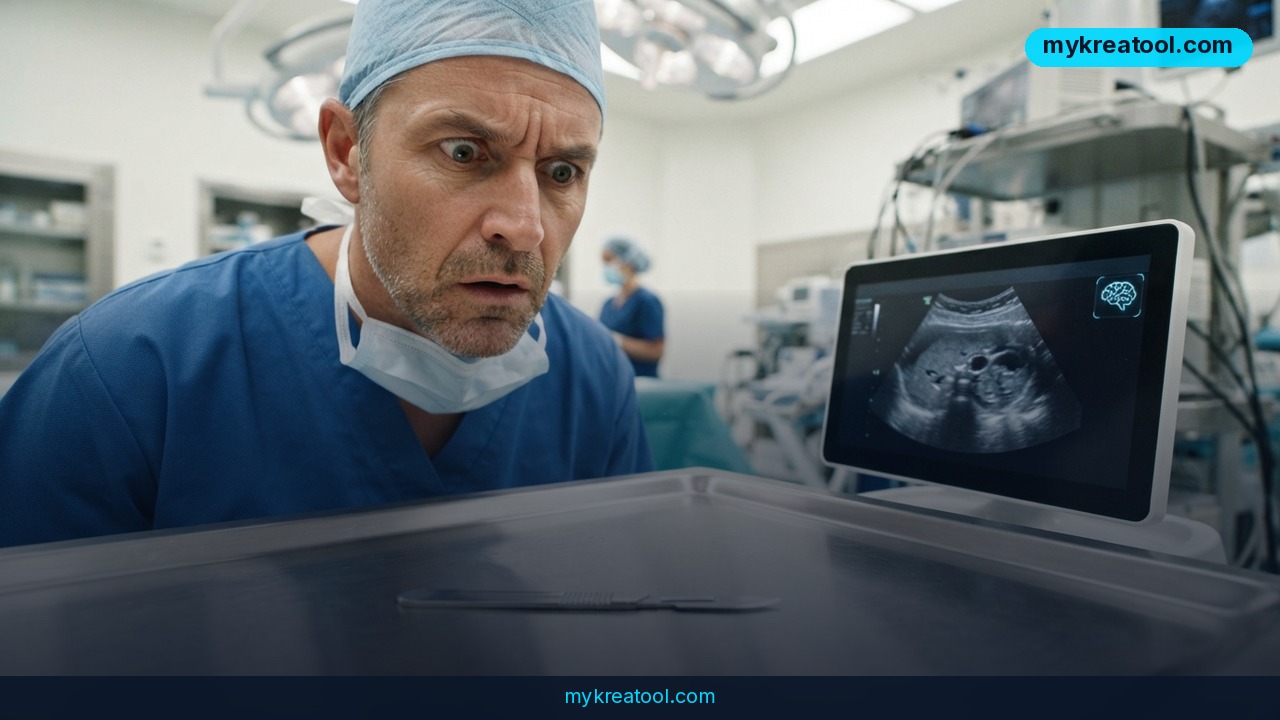
A 2026 JAMA viewpoint by bioethicist Ezekiel Emanuel and investors Vinod and Neal Khosla argues that standalone AI will outperform both doctors and doctor-AI teams at five core clinical tasks by 2030 — including diagnosis, history-taking, and prescribing. Here is what the evidence shows, where it is contested, and what it means for healthcare and business.
What the JAMA Study Claims: Five Clinical Tasks AI Will Master
The paper, titled "Will Autonomous AI Exceed AI-Aided Physicians as the Best Medical Care?", was co-authored by Ezekiel Emanuel along with venture capitalist Vinod Khosla and his son Neal Khosla, who runs the AI-first telehealth company Curai Health. After reviewing published studies on AI in medicine since January 1, 2024, the authors concluded that medicine is approaching a tipping point.
Standalone AI, they argue, is on track to beat both physicians and physician-AI teams at five core clinical tasks: taking a patient history, reaching a diagnosis, ordering the right tests, prescribing treatment, and managing chronic disease. Their timeline for this shift: by 2030.
That conclusion cuts against years of conventional wisdom that the safest model is a "human in the loop" — a doctor double-checking an algorithm's suggestion. This paper claims the opposite: in the studies it cites, autonomous AI outperformed AI-assisted physicians, meaning human oversight didn't improve on the AI's own accuracy.
Why 2030? The Evidence Behind the Timeline
Emanuel himself is a useful gauge of how surprising this is. For over a decade, he dismissed Khosla's predictions that AI would eventually handle the bulk of clinical work. It wasn't until he read an advance copy of UCSF physician Robert Wachter's book "A Giant Leap" — which sketches a two-tier future where premium care blends doctors and AI while everyone else gets AI alone — that Emanuel started taking the idea seriously.
The 2030 timeline rests on a string of task-level results cited in the paper — the headline one: autonomous AI running without physician input outperformed AI-assisted physicians at diagnosis by 21.3 percentage points in one cited comparison. The accordion below breaks down the evidence for each of the five tasks. Full source: Emanuel, Baker-Butler, N. Khosla, V. Khosla — JAMA, DOI 10.1001/jama.2026.15380.
See the full per-task evidence cited in the paper
• Patient history-taking — Google's AMIE model was reported as statistically significantly better than physicians at eliciting complete patient history across simulated cases.
• Diagnosis — ChatGPT beat physicians at differential diagnosis by 18 percentage points (92% vs. 74%) in one cited comparison; a separate comparison found autonomous AI beating AI-assisted physicians at diagnosis by 21.3 percentage points.
• Test selection — the Microsoft AI diagnostic orchestrator returned correct diagnoses roughly four times more often than physicians (80.4% vs. 20%) while ordering test panels 19.1% cheaper.
• Prescribing — an AI system called MIRA prescribed guideline-concordant treatment about 35 percentage points more often than doctors in the cited comparison.
• Chronic disease management — a Stanford AI system reached a stable insulin dose for diabetes patients in 15 days, versus eight weeks in which physicians in the comparison group had not yet stabilized dosing.
These are individual cited studies, not a single unified trial — which is exactly what critics below push back on.
Criticisms and Real-World Limits of Autonomous AI in Medicine
Not everyone is convinced. John Whyte, CEO of the American Medical Association, pushed back publicly, noting that many of the studies cited in the paper were simulations rather than real-world blind trials, and that not every study actually supports the authors' conclusion.
A separate factor the JAMA authors' 2030 timeline may be underweighting: a February 2026 Nature Medicine study led by the Oxford Internet Institute found that in a near-1,300-person randomized trial, laypeople struggled to get reliable medical guidance from LLMs — the gap wasn't in the model's clinical knowledge, but in ordinary patients' ability to describe symptoms and interpret answers in a live conversation. That distinction matters: it's a patient-facing chat problem, not necessarily a limit on AI used as backend clinical decision support reviewed by a clinician. Full source: Reliability of LLMs as medical assistants for the general public — Nature Medicine, Feb 2026.
There's also a disclosed conflict of interest: Vinod Khosla has financial investments in AI health startups, and his son Neal runs Curai Health, one of the companies referenced in the paper's orbit — a relationship the authors disclose but that still colors how the 2030 conclusion should be weighted. Removing doctors from the loop also raises accountability questions: when an autonomous AI system misdiagnoses a patient, who is legally and ethically responsible?
Who Benefits If AI Diagnosis Scales
Several groups stand to gain if autonomous AI diagnosis proves out at scale. Patients in rural or underserved areas, where specialist access is limited, could get faster, cheaper triage and diagnosis. Telehealth companies like Curai Health — which already blends AI intake with physician oversight for complex cases — are positioned to expand their AI-first model. Health systems facing physician shortages could redirect scarce clinical staff toward complicated or high-risk cases while AI handles routine consultations.
Insurers and employers offering "economy class" health plans, as Wachter's book describes them, could lower costs by leaning on AI-first care for straightforward conditions. And AI developers building diagnostic and clinical-decision tools have a clear commercial incentive: the paper functions as both research and a market signal to investors.
What This Means for Business: AI on Narrow, Well-Defined Tasks
The capability shift described in medicine — AI outperforming trained specialists on narrow, well-defined tasks — isn't unique to healthcare. The same underlying pattern shows up in clinical decision support tools today: software that doesn't replace a professional's judgment outright, but that consistently outperforms them on one specific, bounded task while a human reviews the output. That's the model most likely to reach the market first, in medicine and elsewhere.
Outside healthcare, the same pattern is already visible in marketing, content, and small-business operations, where AI tools can draft copy, generate visuals, or analyze data faster than a person working alone. You can compare multiple leading AI assistants side by side to see firsthand how far that kind of narrow-task AI has come, and browse the full catalog of AI tools for content and marketing teams on MyKreaTool — without needing a developer team or an enterprise contract. The same logic is already playing out in how AI is speeding up marketing and competitor research.
Two concrete examples of that narrow-task pattern: a website SEO audit tool that scans a page and flags fixable issues in under a minute, and an AI document builder that formats long reports — page numbers, margins, table of contents — automatically. Neither replaces a strategist or a writer; each just removes a bounded, repetitive task from their day, the same trade-off the JAMA paper describes for clinical tasks.
The practical lesson from the JAMA paper applies broadly: businesses that pair human judgment with the right AI tool for a specific task tend to outperform those relying on either alone — at least until the AI itself becomes reliable enough to run the task unsupervised.
Conclusion
The JAMA paper doesn't prove AI has already surpassed doctors — but it does mark a shift in how seriously the medical establishment is taking that possibility, with a concrete 2030 target attached to it. Whether or not that timeline holds, the direction is clear: AI is moving from a support tool to a potential primary decision-maker in high-stakes fields, not just medicine. For businesses and creators, the takeaway is to start getting comfortable with what AI can already do well today, rather than waiting for a headline to force the decision.



Comments 0