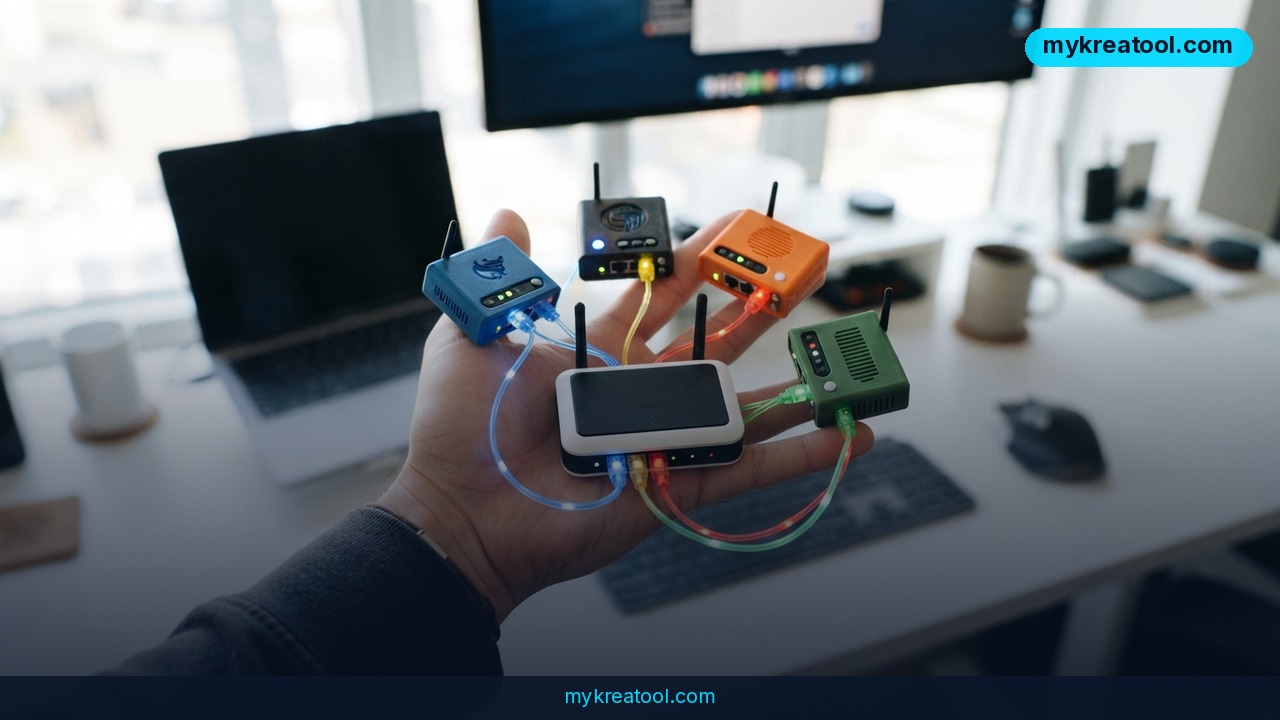
What happened
Free AI API access is no longer limited to the rate-limited playgrounds of OpenAI or Anthropic. A round of testing on August 16, 2026 checked six third-party AI routers — OrcaRouter, TeamoRouter, AgentRouter, Token Harbor, NaraRouter, and FreeRouter — to see what a brand-new account actually receives: starting balance, free models, request limits, and whether the API calls genuinely go through. The results varied widely, from $0.00 balances with a couple of free DeepSeek models to one router that credited a new account with $125.00 and access to Claude Opus 4.8, Claude Opus 5, and GPT-5.6 Sol.
Each service was tested the same way: sign up, generate an API key, and send real requests to every model listed as free. OrcaRouter handed out four free models, including two DeepSeek V4 variants and a Qwen3.8 27B model, with no starting credit. TeamoRouter offered two free DeepSeek models with a 1M-token context window at $0 input and $0 output. Token Harbor required email verification before unlocking two free models — MiMo V2.5 and DeepSeek V4 Flash — under a 7-day "Free Access" window. NaraRouter capped free usage at 7 million tokens per day with a 10-requests-per-minute limit across roughly 51 available model IDs.
The standout was AgentRouter, which required GitHub sign-in (accounts younger than about a year reportedly get rejected) but rewarded verified accounts with $125 in credit and access to premium models rather than budget ones.
Why it matters
For builders and small teams, the cost of testing multiple large language models adds up fast. Running the same prompt through Claude, GPT, and DeepSeek to compare quality normally means juggling separate accounts, separate billing, and separate rate limits. Routers that expose several providers behind one API key remove that friction — and when they throw in free tiers or starting credit, they turn model comparison into something you can do before committing a dollar.
The free tiers uncovered here aren't token gimmicks, either. TeamoRouter's free DeepSeek models support a 1-million-token context, which is enough for entire codebases or long documents. AgentRouter's $125 credit, spread across models priced at $2–$4 per million input tokens, is enough for meaningful production testing, not just a handful of "hello world" calls. That's a real gap between routers offering token-level trials and routers offering budget for actual project work.
At the same time, verification checked whether these free models behave like their paid counterparts once a request actually reaches them — several routers silently substitute the underlying model version (for example, TeamoRouter's `deepseek-v4-flash-free` resolves to `deepseek-v4-flash-0731`), which matters if you're benchmarking a specific model release.
How to use it today
Getting started with any of these routers follows a similar pattern: register, generate an API key, and point your existing OpenAI-compatible client at the router's endpoint instead of the original provider. Most support the same request format developers already use for GPT or Claude calls, so switching is usually a one-line change to the base URL.
A few practical notes from testing:
• OrcaRouter: no card required, API key issued immediately; the `orcarouter/free` model has its own small quota separate from the DeepSeek and Qwen free models.
• TeamoRouter: two free DeepSeek models work out of the box among 37 total API models.
• AgentRouter: works reliably through Claude Code and Qwen Code, but a direct `curl` request to `/v1/models` returned an "unauthorized client" error in testing — worth knowing before assuming raw API calls will behave identically to client-integrated ones.
• Token Harbor: free models must be manually enabled in the dashboard after confirming your email, and the service warns that free-tier prompts and responses may be stored.
• NaraRouter: the daily 7-million-token allowance resets every 24 hours, with a strict 10 requests-per-minute ceiling.
If you're building small tools, prototypes, or internal scripts on top of these free tiers, pairing them with a set of ready-made free AI tools can save time on the surrounding tooling — prompts, formatting, and quick utilities — so the free API credit goes toward the model calls that actually matter.
Who benefits
Indie developers and solo founders testing product ideas benefit the most obviously: free access to Claude-class and GPT-class models means validating an AI feature before writing a business case for a paid API plan. Students and hobbyists get a legitimate way to experiment with frontier models without a credit card. Content creators and marketers running small-scale automation — summarizing research, drafting outlines, batch-processing text — can offload that work to a free DeepSeek or MiMo model instead of paying per token.
Agencies and consultants evaluating which model fits a client's use case also gain: routers that expose multiple providers under one key make side-by-side quality comparisons far cheaper than running separate trials with each vendor. And teams that specifically need premium reasoning models — AgentRouter's $125 credit against Claude Opus 4.8, Claude Opus 5, and GPT-5.6 Sol — get a meaningful sandbox for production-grade testing before committing to a paid contract.
Risks
Free tiers on third-party routers come with trade-offs worth weighing before routing real workloads through them. First, terms change: the free balances, model lists, and limits described here were accurate as of August 16, 2026, but router pricing pages are updated without much notice, and a free model today can become a paid one next month.
Second, data handling is inconsistent. Token Harbor explicitly warns that free-tier requests and responses may be stored — a real concern for anyone sending proprietary or client data through a free model. Always check a router's privacy policy before sending anything sensitive.
Third, some routers gate access behind account requirements that filter out casual signups — AgentRouter's apparent GitHub account-age requirement is one example — which limits who can actually claim the advertised credit. Others, like OrcaRouter, impose separate hidden quotas on their in-house free model that exhaust faster than the headline numbers suggest.
Finally, because these routers sit between you and the underlying model provider, an outage, policy change, or shutdown at the router level can break your integration even if the original provider (Anthropic, OpenAI, DeepSeek) is running fine. Treat free-tier routers as a testing and prototyping layer, not the backbone of a production system you can't afford to lose.
Conclusion
Free API access to Claude, GPT, and DeepSeek-class models is now genuinely available through third-party routers — not just theoretically, but verified with live requests. TeamoRouter and OrcaRouter offer no-cost DeepSeek access with zero setup friction, Token Harbor and NaraRouter add daily token allowances once email is confirmed, and AgentRouter stands out with $125 in starting credit against premium models. None of these replace a direct enterprise contract with a model provider, but for prototyping, comparison testing, and small-scale automation, they remove the cost barrier that used to gate experimentation. Check each router's current terms before building anything durable on top of them, since free tiers are the part of this landscape most likely to shift.


Comments 0