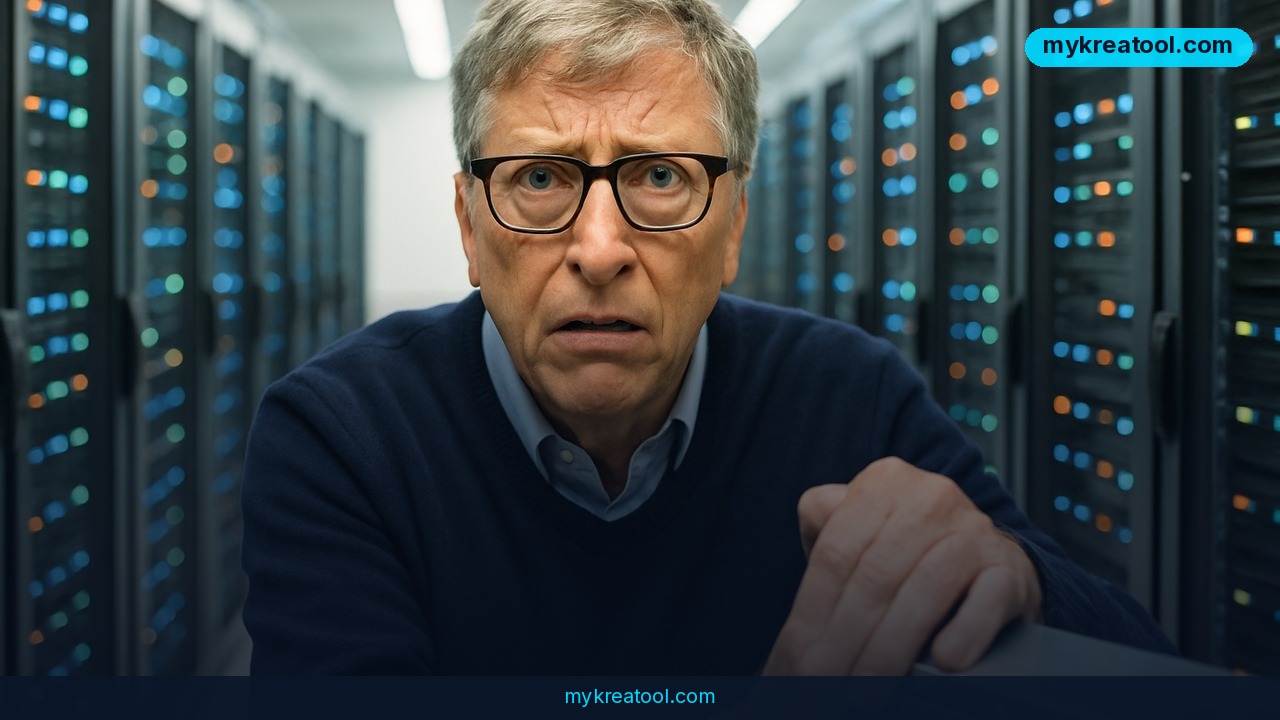
On August 26, 2026, Bill Gates published a nearly 6,000-word essay warning that the turbulent AI era is here and the choices made now will determine whether AI becomes "the worst source of injustice ever seen" or "the greatest equalizer ever invented." Here is what he said, what it means, and what to do.
What Bill Gates Said in His August 2026 AI Essay
The Bill Gates AI warning landed on August 26, 2026, in the form of a nearly 6,000-word essay titled "The turbulent AI era is here. The choices we make now are critical." After roughly two years of relative public silence on artificial intelligence, the Microsoft cofounder returned with a message that is far darker than his 2023 essay on the same topic, according to reporting from The Verge.
Gates, once one of AI's most visible optimists, now says the technology could become "the worst source of injustice" the world has ever seen — or, if handled well, "the greatest equalizer ever invented." He argues the world is not remotely ready for what's coming, and worse, "we are not preparing for it."
Why the shift in tone matters
Gates isn't a casual commentator. He co-founded one of the largest software companies on Earth and now runs the Gates Foundation, which shapes global health and development policy. When someone with that vantage point pivots from optimism to alarm, it signals that the gap between AI's pace and institutional readiness has widened faster than even industry insiders expected.
Why Gates Calls This AI Era Different From the PC and Internet Revolutions
Gates's central claim is that this technological shift is different from past ones — and that comparisons to the arrival of PCs or the internet are "misleading." He points out that early performance issues with AI models get "fixed quickly,” unlike the slower, more forgiving rollout of earlier technologies.
Permanent Job Losses: Gates's Predictions and Policy Proposals
The essay repeatedly returns to labor markets. Gates predicts widespread, permanent job losses across both white-collar and blue-collar work, warning that "many jobs will disappear forever." This isn't a vague concern — he lays out concrete policy proposals, including:
The AI Token Tax: What It Is and Why Gates Proposes It
• Taxing AI tokens and robots to reduce the financial incentive for companies to replace human workers
• Using that tax revenue to strengthen social safety nets
'Human Reserved' Jobs: Which Roles Gates Wants to Protect From Automation
• Creating a category of "Human Reserved" jobs set aside specifically for people, not automation
He frames the timeline as urgent, arguing leaders must act "before unemployment rises sharply, communities are hurting, and public trust has eroded."
Global AI Governance: Why Existing Institutions Can't Keep Up
Gates also argues that existing institutions — built for narrower, single-sector problems — can't manage something as cross-cutting as AI, which touches tax policy, labor, health, national security, and education simultaneously. He calls for new international bodies capable of setting priorities across all of these domains at once, rather than leaving each government or agency to react in isolation.
How Businesses and Creators Can Act on Gates's Warning Today
For entrepreneurs, marketers, and creators, Gates's warning isn't just a headline — it's a signal to get ahead of the curve rather than be caught flat-footed by it.
Start with practical AI literacy
The businesses least exposed to disruption are the ones already using AI tools hands-on, not just reading about them. If you haven't experimented with automation for content, research, or workflow tasks yet, a low-risk way to start is by testing AI-powered text and content tools hands-on, which let you see what current AI systems can and can't reliably do before you build a strategy around them.
Audit which tasks AI can already touch
Gates's job-loss warning is really about task replacement, not job titles disappearing overnight. Break your own workflows into discrete tasks — drafting, scheduling, data entry, basic analysis — and identify which ones AI already handles competently. That's the fastest way to see where your business is exposed and where human judgment still adds clear value.
Watch the policy conversation, not just the tech
Proposals like taxing AI tokens or robots could directly affect the cost of automation for small businesses. Following the latest AI news and industry analysis — even informally — helps you plan budgets and hiring decisions with fewer surprises.
Who benefits
Several groups stand to gain from taking Gates's warning seriously now rather than later.
Small business owners and solopreneurs
Those who adopt AI tools early, while treating labor and ethics questions seriously, can build resilient operations before regulation or market pressure forces the issue.
Marketers and content creators
Gates's "Human Reserved" concept implicitly acknowledges that some creative and relationship-driven work will remain valuable specifically because it's human. Creators who lean into that distinctiveness — original voice, judgment, taste — are better positioned than those competing purely on speed or volume.
Policymakers and industry groups
Gates's call for international coordination gives smaller companies and trade associations a template for advocating their own interests before large-scale AI regulation is finalized elsewhere.
Where Gates's Essay Falls Short: Critical Gaps Worth Knowing
The essay is not without gaps, and it's worth reading Gates's warning with some skepticism.
Vague on execution
According to The Verge's analysis, Gates's essay largely "treads familiar ground," identifying systemic problems in global AI governance without offering genuinely novel solutions. Concrete mechanisms — how an AI token tax would actually be calculated, or which jobs qualify as "Human Reserved" — remain undefined.
Timing and credibility questions
Gates was notably quiet on AI for roughly two years before this essay. Critics may question why the shift to alarm comes now, and whether it reflects new evidence or simply a recalibrated public position from someone reclaiming a central voice in AI policy debates.
Overcorrection risk for businesses
There's a risk that headlines about mass unemployment push smaller companies toward either paralysis (avoiding AI entirely) or panic-driven overinvestment. Neither extreme matches Gates's own framing, which explicitly leaves room for AI to be "the greatest equalizer ever invented" if the transition is managed well.
Conclusion
Bill Gates's return to the AI debate after two years of silence is a notable moment: one of the technology's earliest and most influential optimists is now warning that the world isn't prepared for what's coming. His essay's core message — that job losses could be permanent and widespread, and that global institutions aren't built to manage a technology this cross-cutting — deserves attention even where his specific policy proposals remain underdeveloped. For entrepreneurs and creators, the practical takeaway isn't panic; it's preparation. Understanding what current AI tools can actually do, auditing which of your own tasks are exposed, and staying alert to the policy conversation are all steps you can take today, regardless of how the larger governance debate unfolds.
Gates's warning is a call to act before disruption arrives — not after. MyKreaTool gives you hands-on access to AI tools for video, audio, text processing, and content workflows so you can map exactly what AI does reliably in your specific tasks before building a strategy around it. Start with MyKreaTool and stay ahead of the shifts Gates describes.


Comments 0