What happened
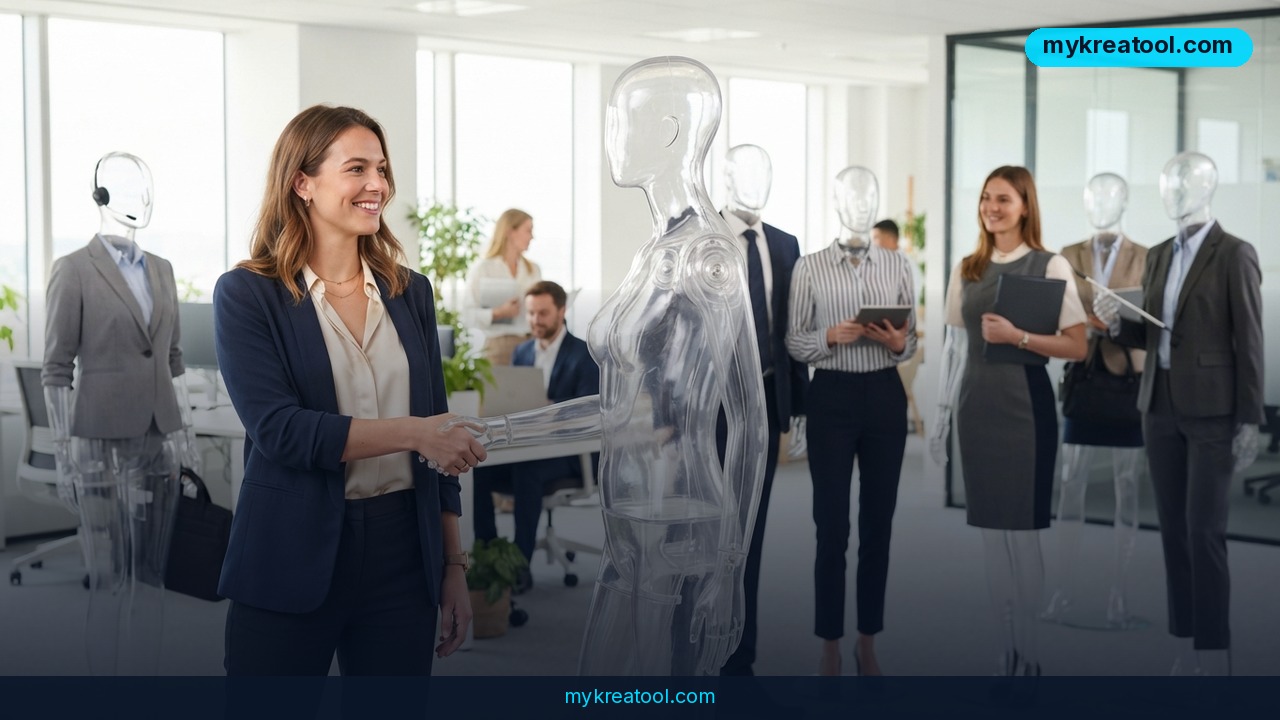
A solo founder scaled a product to 100,000 users using nine specialized AI agents instead of a traditional team. Claire Vo, creator of ChatPRD, built and ran the entire company as the only full-time human on staff — no co-founders, no venture capital, no engineering department. Instead, she deployed nine named AI agents, which she calls OpenClaws, each scoped to one specific job: marketing, sales, customer support, executive assistance, and more.
Each agent operates with its own identity, its own toolset, and its own workspace. One of them, acting as an executive assistant, independently emailed a podcast host 90 minutes before Vo's scheduled appearance to confirm logistics — without being asked to in that moment. Vo says she coaches each agent individually, refining its instructions and scope the same way a manager would onboard a new hire.
The turning point came on the Fourth of July. Vo was in Santa Cruz, laptop open, pushing code fixes while her kids played nearby, when she realized she was the single point of failure for all of ChatPRD's engineering. Two days later, she hired her first human employee — an engineer. Everything else, from lead generation to customer replies, was still running on the agent system.
Why it matters
The headline number is simple: 100,000 users, one full-time employee, zero outside funding. That ratio is what makes this story stand out from the usual "AI helps me work faster" narrative. Vo isn't describing a productivity boost — she's describing an operating structure where AI agents function as departments, not assistants.
The key design choice is narrower than it sounds: instead of building one large, general-purpose AI assistant that tries to handle every function of the business, Vo built nine small, tightly scoped agents. Each one only needs to understand its own job — writing marketing copy, answering support tickets, qualifying leads — rather than the entire business context. That constraint turns out to be the advantage. A narrowly scoped agent is easier to test, correct, and improve than one system trying to be everything at once.
This matters for the broader AI industry conversation because it reframes what "AI-run company" actually looks like in practice. It's not a single chatbot replacing a workforce. It's a roster of specialized agents, each with clear boundaries, coordinated by one human who decides what gets automated and what still needs a person.
The nine-agent breakdown
While Vo hasn't published a full org chart, the roles she's described publicly include a marketing agent, a sales agent, a support agent, and an executive-assistant agent — each with a distinct name, personality, and permission set. The remaining agents reportedly cover adjacent operational tasks, following the same one-job-per-agent principle.
How to use it today
Founders and small teams don't need Vo's exact stack to apply the same logic. The practical takeaway is a three-step method: identify a repeatable task currently bottlenecked on you, scope an agent to do only that task, and give it a name and a feedback loop so it improves over time.
Start small. Pick one function — customer support replies, first-draft marketing copy, lead qualification — and build or configure a single agent around it before trying to automate everything at once. Vo's model succeeded specifically because each agent's job was narrow enough to get right.
For founders without engineering resources to build custom agents from scratch, free platforms can shortcut the setup. Tools like the ones available at mykreatool.com let you experiment with AI-powered workflows for content, support, and marketing tasks without writing code, which is a reasonable way to prototype your own version of a scoped agent before investing in a custom build.
Once one agent is reliably handling its task, treat it like a team member: review its output regularly, adjust its instructions, and only then add a second agent for the next bottleneck. This is the same incremental approach Vo used to reach nine.
Who benefits
Bootstrapped solo founders and small teams stand to gain the most from this model, since it directly replaces the hiring they can't yet afford or don't want to take on. Indie SaaS builders, freelance consultants scaling client work, and early-stage startups trying to extend runway are the clearest fits.
Marketers and creators running one-person operations also benefit, since agents scoped to content drafting, scheduling, and customer replies can absorb the repetitive load that otherwise caps how much a single person can produce.
Agencies and larger companies can borrow the structural idea even if they have full teams: assigning AI agents narrow, well-defined jobs alongside human staff tends to produce more reliable results than deploying one broad AI tool across every department.
Risks
The Fourth of July moment in Vo's story is itself the clearest risk signal: running solo on AI agents works until it doesn't. She hired an engineer specifically because being the only person who could fix a broken system was untenable at 100,000 users. Founders following this model should identify their own single points of failure before an outage forces the decision.
Agent output still requires oversight. Support and sales agents interacting directly with customers can make mistakes, misrepresent policies, or send messages a human wouldn't approve — the executive-assistant agent emailing a podcast host unprompted is charming when it works and risky when it doesn't. Regular review of agent actions, not just outputs, is necessary.
There's also a scaling ceiling. Nine agents worked for ChatPRD's specific business, but more complex operations — regulated industries, multi-product companies, larger support volumes — may need human judgment that no amount of narrow scoping can replace.
Conclusion
Claire Vo's ChatPRD shows a concrete, working alternative to the standard scale-up playbook: 100,000 users, one full-time founder, nine scoped AI agents, and no venture funding. The lesson isn't that AI replaces every job — it's that narrowly scoped, well-coached agents outperform one all-purpose assistant, and that even a solo founder needs to know when to bring in a human before the system breaks.
Comments 0