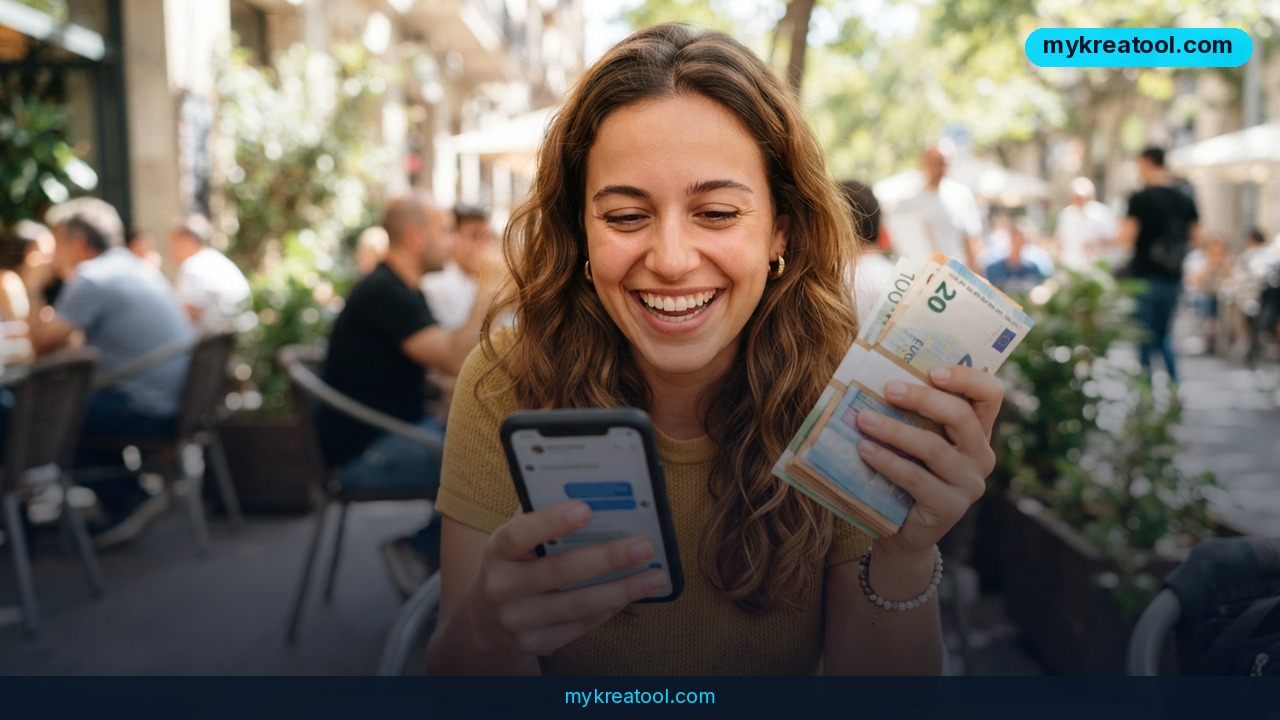
Paying people to use a chatbot sounds like a typo in a marketing email, but that's exactly the promise making the rounds right now. A product called CutGPT is pitching free access to an AI assistant — and cash back for the time you spend chatting with it. Here's the plain-English version of what's going on, what it could mean for your week, and how to poke at it without wasting an afternoon.
What happened
The tip came from a Reddit post by /u/thepillowco, who spotted CutGPT in Google results and summed it up as "a super interesting approach to offering AI." The pitch, as described: free access to AI, and users get paid while they're at it.
That's the whole story so far. No rate card, no payout screenshots, no confirmation that anyone has actually been paid. What makes it worth a second look isn't the dollar amount — it's the model. Nearly every AI tool asks you for a subscription. CutGPT flips the arrow and puts the money on your side of the table.
A quick glossary, because the jargon gets thick fast:
• Neural network — the pattern-matching engine under a chatbot's hood. Think of a very well-read intern who never sleeps and sounds just as confident when it's wrong as when it's right.
• Free access — no card on file, no subscription. Almost always means there's a ceiling somewhere.
• Getting paid to chat — the part nobody has explained in public yet.
Why "get paid to chat" is such a strange pitch
Picture a coffee shop that pays you to drink coffee. Either the coffee is terrible, or somebody else is picking up the tab — a supplier, an advertiser, a company that wants something from you.
AI tools don't run on goodwill. They run on one of three things: ads, a premium tier that a small slice of users actually pays for, or data. When a product offers you money instead of charging you, you're usually the one supplying one of those three. That doesn't automatically make it a scam. It just means the question "who's really paying?" has an answer, and it's worth knowing before you hand over your email.
What it means for you
The headline isn't whether CutGPT works. It's that AI access is turning into a commodity — something companies compete to give away, the way free email and free cloud storage went. Once that happens, the incentives get creative, and you get to be picky.
At home
If you already use a chatbot to plan meals, decode a confusing letter from your landlord, or draft the birthday message you've been avoiding for a week, a free tool with a payout attached is a low-stakes experiment. Worst case, you lose ten minutes. Best case, a counter on your dashboard creeps upward. Either way, keep private stuff out of it — no bank details, no medical records, no passwords.
At work
Say you spend twenty minutes a day cleaning up meeting notes or rewriting terse emails so they don't sound passive-aggressive. If the same task runs through a tool that pays you, that's a small rebate on time you were already spending. Treat it as a rounding error, not a raise, and never route client data or anything under NDA through an unvetted platform.
For business owners
This is the scenario worth watching. If free-plus-incentive AI access becomes normal, the per-seat subscription you're paying for a team of five starts looking negotiable. Use CutGPT-style products as leverage in your next renewal conversation, and test them on throwaway projects first — marketing copy drafts, brainstorm lists, nothing that touches customer records.
For students
Free matters enormously when you're on a student budget. If the trade is "watch an ad, get explanations of quadratic equations," most people will take it. Just don't let a payout counter tempt you into pasting essays or research you'd rather not have stored on someone else's server. And if you mainly want free AI tools without the payout side quest, there's a whole shelf of free AI tools you can use today with no strings attached.
For creativity
Writers and designers burn through AI credits fast because good ideas come from volume — twenty bad headlines to find one decent one. A tool that pays you per interaction flips that math. The catch: anything genuinely original, anything you plan to sell, needs a check on who owns the output. Read that clause before you build a portfolio on it.
For extra income
Be honest with yourself about scale. "Paid to chat" is not a side hustle you can budget around, at least not until a published rate exists. Think of it the way you'd think about cashback apps: nice when it lands, useless as rent money.
How to try it right now
Start with the free version — that's the whole point of the offer. Here's the order of operations that keeps you out of trouble:
1. Search for CutGPT on Google. That's how it surfaced in the first place, and it's the fastest way to reach the real product instead of a lookalike domain. Ignore the sponsored results sitting above it.
2. Read the terms before you sign up. Look for three specific things: a written payout policy, a minimum withdrawal threshold, and a stated date when money actually leaves the platform. If any of those is missing, you're looking at a demo, not an income stream.
3. Use a separate email address. A fresh inbox costs nothing and keeps your main one out of whatever list this becomes.
4. Chat normally for a short session. Ask it real questions — summarize an article, plan a trip, fix an awkward email. You're testing two things at once: whether the answers are any good, and whether the earnings counter moves.
5. Try to cash out a tiny amount. Not because you'll get rich, but because the withdrawal page is where promises go to die. If you can't find it, that's your answer.
6. Keep a free backup. Have a second chatbot you already trust, so you're never dependent on a single unproven platform.
Upsides and what changes
Free access alone is genuinely valuable — a capable AI assistant for zero dollars is a real win for anyone who's been priced out of a subscription. The bigger shift is psychological: once one company pays users to show up, every other AI product has to justify its monthly fee out loud. Competition on price is good news for you.
There's also an honest upside to the model itself. If a platform earns from engagement rather than subscriptions, it's incentivized to make the assistant pleasant and useful, not to nag you toward an upgrade every four messages. Whether that actually happens is another question.
Limitations
Here's the part the pitch skips. Nobody outside the company has verified a single payout, and no public rate has been posted, which means you can't calculate what an hour of your time is worth — or whether it's worth anything at all. "Free" usually carries a ceiling: message limits, a waitlist, or a downgrade the moment the economics shift. And a product that pays for engagement has an obvious incentive to keep you chatting, which is exactly the wrong incentive for a tool you want to be fast and boring. Add the usual privacy caveats — everything you type lives somewhere — and the honest verdict is: interesting experiment, unproven promise, zero cost to look.
Conclusion and one action for today
CutGPT is less a product launch than a signal. It says AI access is getting cheap enough that companies will pay for your attention instead of charging for theirs. That's a genuinely interesting shift, and it's worth watching — but it's not a paycheck yet.
Your one action today: search for CutGPT, spend ten minutes inside the free version, and go straight to the withdrawal page. If there's a written payout policy with a real threshold, bookmark it and check back in a month. If there isn't, you've lost ten minutes and learned something about how "free" gets funded.
Comments 0