What happened
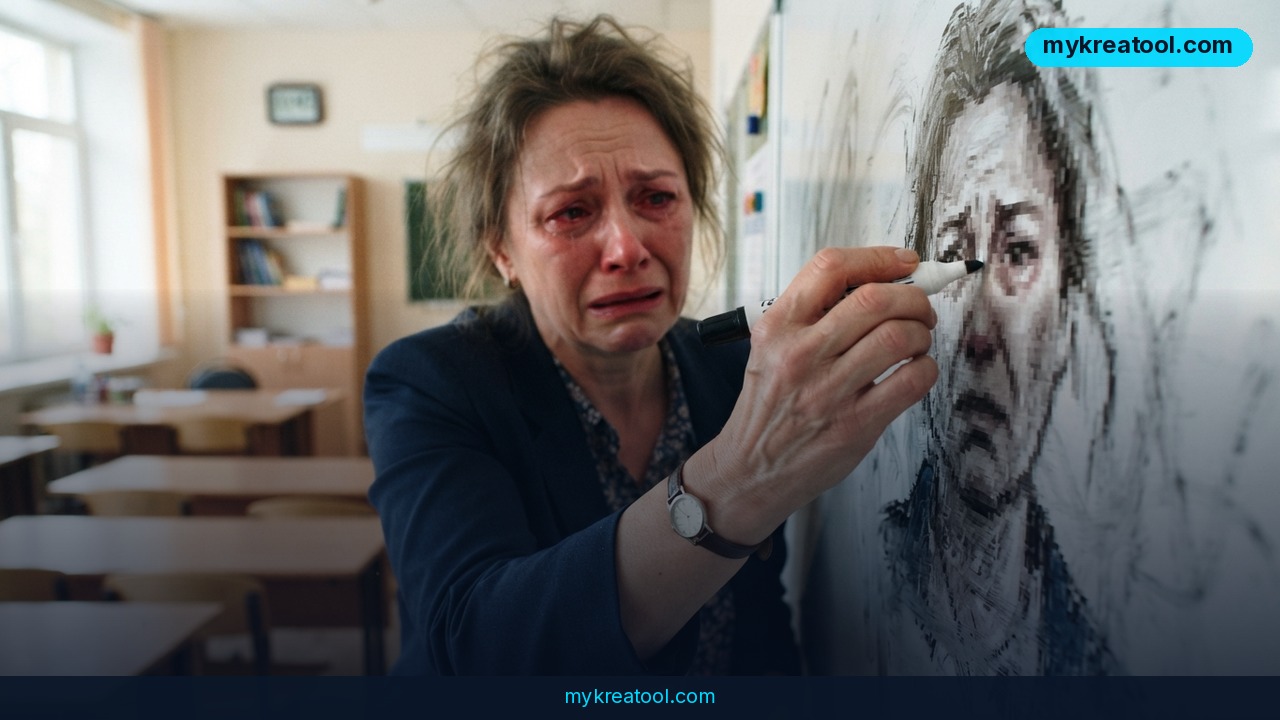
AI deepfake images of teachers are turning classrooms into a new kind of crime scene, and the case of Luis DeSantiago shows exactly how fast it can spiral. DeSantiago, a substitute teacher in Los Banos, California, was tipped off by a coworker on March 12 that a sexualized AI-generated photo of him was circulating on TikTok. The image reused a real mirror selfie he had taken years earlier at a college job, but AI editing swapped his uniform for lingerie and altered his pose into something suggestive.
From one photo to a district-wide problem
Within hours, DeSantiago traced the post to a student account using a real name, then identified two more students likely involved through their social connections. A separate account had already impersonated him outright, copying his name and profile photo. He reported it to school administrators, who promised action, but the image kept resurfacing — on Snapchat, in AirDropped files during class, and in crude comments on his TikTok. One student received in-school suspension; the broader spread was never fully contained. WIRED found DeSantiago wasn't alone: three other teachers described similar AI-generated sexualized content made by their own students, forcing some to rethink whether they can safely return to their classrooms at all.
Why it matters
This isn't an isolated prank. It's a preview of how accessible AI image generation has made a form of harassment that used to require technical skill. A single smartphone photo — the kind every teacher has posted publicly at some point — is now enough raw material for a convincing fake. Because the tools work in seconds and spread through apps students already use daily, a single incident can multiply across TikTok, Snapchat, and group chats before any adult even knows it exists. For schools, that turns a disciplinary question into a legal, reputational, and duty-of-care crisis simultaneously.
The trust problem
Teachers described the psychological toll as the worst part: knowing a student in their own classroom created and shared explicit fake images of them. It corrodes the basic trust that classroom relationships depend on, and several educators said it changed how they now interact with students entirely — more distance, more caution, less willingness to be photographed or tagged online at all.
How to use it today
For school administrators, HR teams, and content moderators, the practical response starts with policy clarity, not just discipline after the fact. Effective steps schools are adopting in 2026 include: explicit acceptable-use policies naming AI-generated sexual content as a Title IX and criminal matter, not a "prank"; mandatory reporting timelines (many districts now require action within 24–48 hours of a report); and staff training on how nonconsensual AI imagery spreads across platforms so incidents get escalated fast, not buried in an inbox.
For marketers, creators, and small businesses reading this from outside the education world, the underlying lesson is about image provenance and consent. Any public photo — a headshot, a work selfie, a conference photo — can now be repurposed by generative AI. If you're building content workflows that involve AI image or video generation for legitimate marketing, product mockups, or creative projects, it's worth using platforms built around transparent, consent-based generation rather than tools with no guardrails. Free platforms like mykreatool.com let creators and small teams experiment with AI image tools in a controlled way, which is a useful contrast to the anonymous, unmoderated apps students used in these cases.
Who benefits
Understanding this story benefits several groups directly. School administrators and counselors gain a concrete case study for updating discipline codes around AI-generated harassment, since most existing policies were written before generative tools existed. Teachers and school staff benefit from knowing they're not alone — WIRED documented at least four educators across multiple districts facing nearly identical harassment, which strengthens the case for collective advocacy and union-backed protections. Parents benefit from a clearer picture of what their kids can do with a phone and a free app, which reframes "just a joke" conversations at home. And lawmakers and platform trust-and-safety teams get another data point for tightening rules around nonconsensual AI imagery, an area several U.S. states have already targeted with new legislation in 2024 and 2025.
Risks
Legal and platform gaps
Even where laws exist, enforcement lags. DeSantiago's district did not respond to WIRED's request for comment, and the image reportedly kept spreading even after one student was disciplined — a sign that school-level punishment alone doesn't stop distribution once content is on Snapchat or TikTok. Platforms' content moderation systems, which DeSantiago initially trusted to catch and remove the image automatically, didn't act fast enough to prevent it from circulating among students and peers.
The chilling effect
The deeper risk is behavioral: teachers who no longer feel safe being visible, posting photos, or working in the schools where this happens. DeSantiago told WIRED he doesn't currently feel safe returning to the district, a sentiment echoed by other educators in the piece. If that pattern spreads, schools risk losing substitute and full-time staff precisely because the tools meant to make their jobs easier — cameras, social apps, even AI itself — have been turned against them.
Conclusion
The DeSantiago case is a warning shot for every school, workplace, and platform: AI-generated deepfakes of real people, including teachers, are no longer a hypothetical risk but an active, spreading problem with real victims. Fixing it will take faster platform moderation, clearer school policy, and stronger legal consequences — but it also starts with basic awareness of how easily a public photo can be weaponized. Whether you're an administrator writing policy, a parent talking to your kids, or a creator using AI tools for legitimate work, the same principle applies: treat consent and provenance as non-negotiable, because the technology that makes creative work easier is the same technology making this kind of harassment easier too.

Comments 0