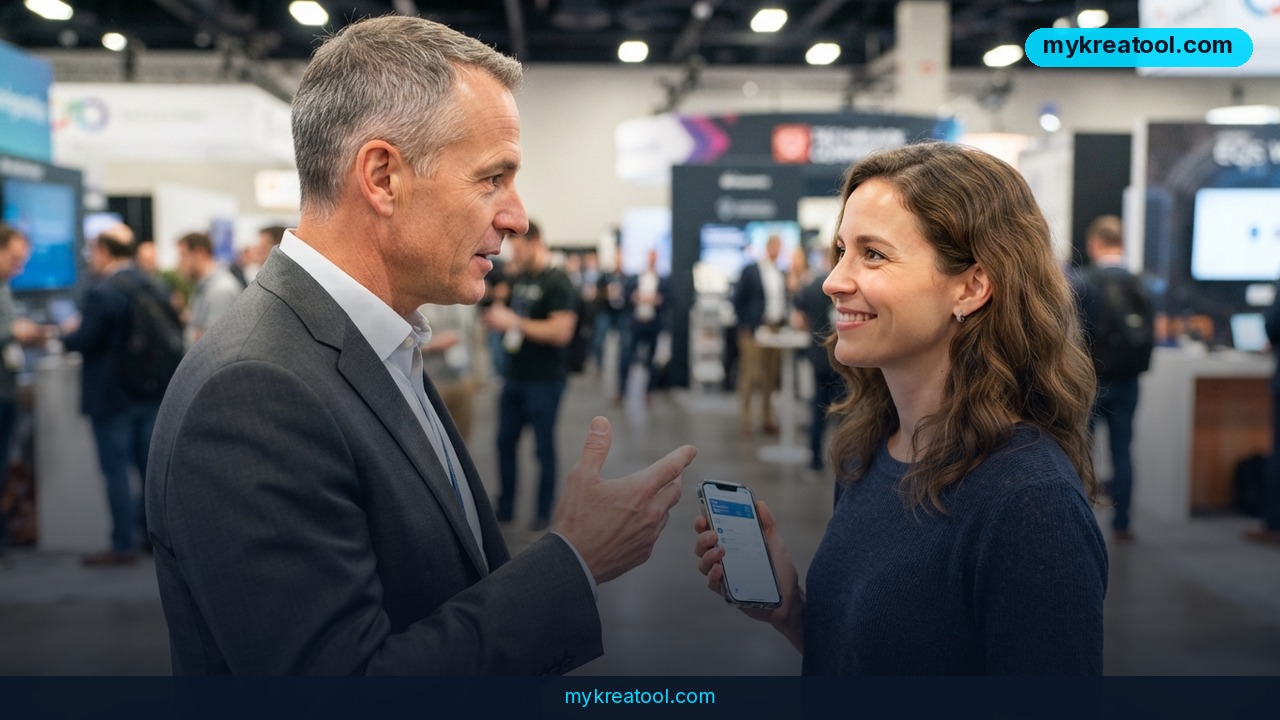
Most AI voice generator demos hold your attention for only a few seconds before the tone flattens, the pause lands in the wrong place, and your brain quietly files the whole thing under 'robot.' ElevenLabs used its New York Summit this week to argue that this gap is closing fast — and that AI voice is about to stop being a party trick and start being plumbing: the layer between a business and every single person who talks to it.
What happened
At ElevenLabs Summit NYC, the company announced a new set of models, agents and deployment options, all aimed at one idea. AI is more capable than ever, but most people can't actually use that capability because the interface is still clunky. ElevenLabs wants to own the interface — the interaction layer where humans and machines actually meet.
Eleven v4: "our most emotive model yet"
The main reveal was Eleven v4, which the company bills as its most emotive text-to-speech model so far. The pitch is simple: the voice should carry emotion, and the conversation should feel like a conversation rather than a phone tree with a personality disorder.
CEO and co-founder Mati Staniszewski made the bigger bet explicit on stage: "Within a few years, conversational agents will become critical infrastructure for every enterprise, as essential as cloud or payments." His reasoning is blunt — every business will have to reinvent how it talks to customers, employees and the wider world.
One letter apart, two very different drugs
The most convincing detail wasn't about voice at all. It was about listening. ElevenLabs has been building domain-specific speech-to-text models that learn the vocabulary of one industry, the way a new hire picks up the jargon of the job. The example given was Scribe v3 Medical, a transcription model for healthcare that recognizes thousands of complex medical terms and can tell the difference between drug names like cycloserine and cyclosporine. Mix those two up and a patient ends up on a tuberculosis treatment instead of an immunosuppressant. That's the entire argument in one example: accuracy stops being a nice-to-have when one syllable changes the outcome.
Your own fine-tuned model
Staniszewski also announced that in the coming months, ElevenLabs will help businesses fine-tune certain open-source language models, plus its own voice models, on their own data. Teams will bring data from live deployments, choose the metric they actually care about — customer satisfaction (CSAT) or reliability, for instance — and work with ElevenLabs researchers to tune the model behind it. He compared it to each company having its own reinforcement-learning stack, where every new interaction becomes training material. A domain-optimized model for financial services is in the works as well.
What it means for you
You don't need to care about model architecture. You need to care about what just got cheaper, faster or possible. Here's what changes depending on who you are. (And if you'd rather experiment before you spend anything, there's a decent stack of free AI tools at MyKreaTool worth bookmarking first.)
At home
Picture a helper that never gets tired of repeating itself: it reads to you, walks you through setting up a router, or explains a confusing letter from your insurer out loud. Emotive speech matters more than it sounds like it should. If a voice sounds reassuring instead of flat, people actually keep using it — which is why the "emotive" part of Eleven v4 isn't just a marketing word.
At work
Meetings produce jargon: product codenames, acronyms, client names nobody spells right. A model tuned for your domain transcribes those correctly, so your notes stop looking like autocorrect had a breakdown. The Scribe v3 Medical approach — learn the industry's actual words — is the template you should expect everywhere else.
In business
This is the big one. A conversational agent that handles bookings, refunds and "where's my order" calls doesn't get sick, doesn't quit, and doesn't need a script taped to the monitor. Staniszewski's claim is that this becomes infrastructure like cloud or payments. Whether or not you buy the timeline, the direction of travel is clear: if your phone line is your front door, the person answering it is now a product decision.
For studying
Record a lecture, get an accurate transcript. For anyone in healthcare, nursing or pharmacy school, the cycloserine-versus-cyclosporine problem is the whole ballgame — a transcription tool that fumbles drug names is worse than useless in exam prep.
For creative work
Audiobooks, podcast intros, game characters, narration in a tone that matches the scene instead of a sleepy newsreader. If you write but don't love your own voice, an emotive model gets you a rough cut you can actually listen to and judge.
For income
Freelancers are already selling voiceover, transcription and "AI receptionist" builds to local businesses. The fine-tuning announcement matters most here: once you can tune a model on a client's own data, your deliverable stops being a generic voice and starts being their voice — harder to copy, easier to charge for.
How to try it right now
1. Start on the free side. Open ElevenLabs in a browser and create an account. Poke around the voice library before you commit to anything paid.
2. Look for Eleven v4. When you pick a text-to-speech model for a new project, check the model selector for the v4 option rather than defaulting to whatever's first in the list.
3. Paste real text, not a slogan. Two or three sentences from an actual email, product page or script. Generic sample copy hides flaws; your own copy exposes them.
4. Make two versions and compare. Same script, different voices or settings. Play them back-to-back on your phone speaker — that's where most AI voice falls apart.
5. If you work in healthcare, test Scribe v3 Medical. Upload a recording with real clinical vocabulary and check the drug names and abbreviations by hand. Don't trust a transcript you haven't spot-checked.
6. If you're a business with live traffic, ask about fine-tuning. Bring your deployment data, pick your metric (CSAT, reliability) and talk to ElevenLabs researchers about what a tuned model would look like for your customers.
Upsides and what changes
The upside is straightforward: better voices make voice interfaces usable by normal people, and per-industry models make accuracy a solved-ish problem for the fields that need it most. Fine-tuning on your own data is the sleeper feature — it turns a rented tool into something closer to an asset, and it's one of the few ways a small company can turn its own customer conversations into an edge competitors can't just buy.
Limitations
Be clear-eyed about what was actually announced. Eleven v4 was previewed on stage — you're hearing a promise, not a finished product you can stress-test today. Fine-tuning for open-source language models and ElevenLabs voice models is "in the coming months," which means no date, no price and no word yet on how much of your own data or engineering time it takes. The domain-specific accuracy story rests on one healthcare model, with financial services still in the works — every other industry is waiting. And none of this solves the boring parts: what happens when the agent gets it wrong, who's accountable, where the recordings live and what your compliance people say. A great-sounding voice doesn't fix a bad escalation policy.
Conclusion
The message from ElevenLabs Summit NYC isn't really "our voices sound better." It's that the conversation itself is becoming the product, and the companies that treat voice as plumbing — reliable, tuned, measured — will win the customers who'd rather talk than tap. One action for today: write down the three questions your customers ask most often, then record yourself reading them out loud. That script is the raw material for everything above, and you'll know within a week whether an AI voice can carry it.
Comments 0