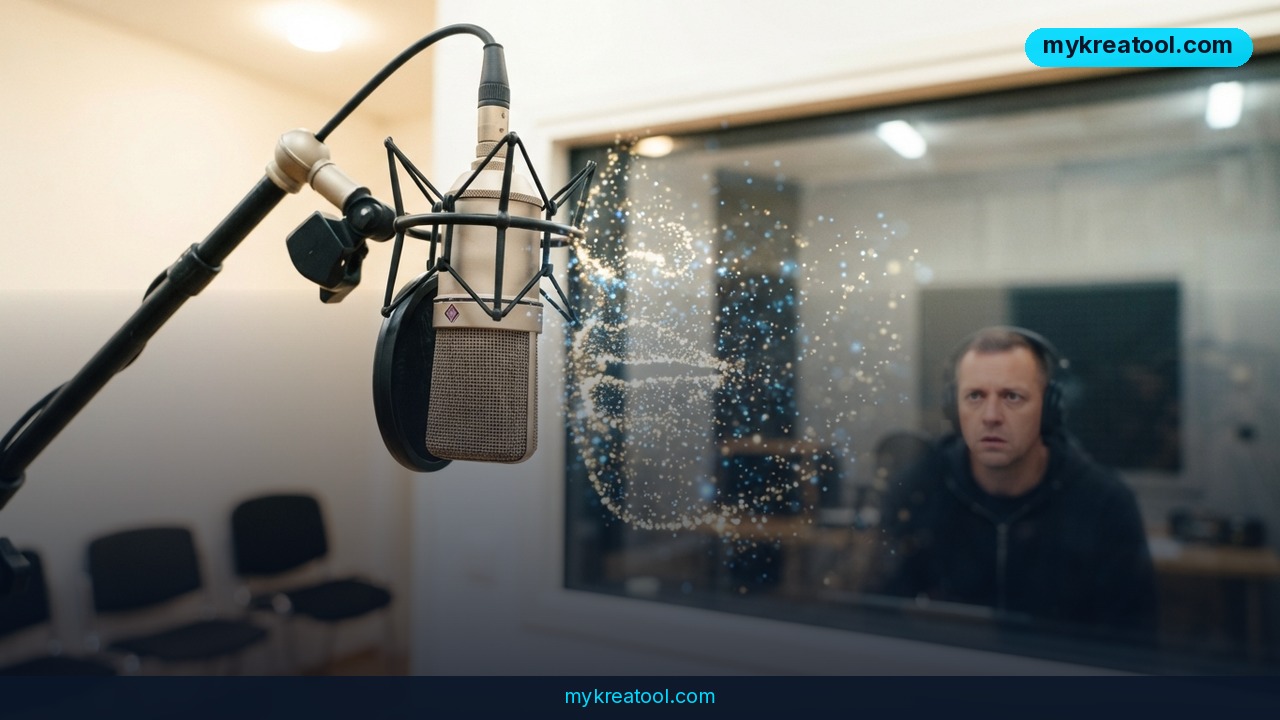
Fish Audio Drama 3 is out, and the headline feature isn't a prettier demo reel—it's control. Fish Audio just released the weights for this voice model, and the pitch is simple: you can tell a line how to be performed in plain language, including changing the delivery partway through a sentence. That's a big shift from picking a voice and hoping the model reads your mind. It also puts a sharp question on the table: if open-weight voice models get close enough in expressive dialogue, how much longer can premium closed models like ElevenLabs keep their edge?
What happened
According to the release, Fish Audio has made Drama 3's weights available. The key ability is direction: you can describe how a line should sound in everyday words, not studio jargon. You can also change the delivery mid-sentence, so a single line can start one way and land another. The release frames this as a challenge to closed premium voice models and asks whether voice quality is still the real moat, or whether speed, reliability and convenience matter more.
Plain-language direction, explained
Think of a voice model as an actor reading a script. Older tools often give you a voice preset and a few sliders. Drama 3's promise is closer to stage direction: 'read this warm, then get sharp after the word but.' The model is supposed to follow that instruction inside one line. For dialogue, that's the difference between a flat read and a performance that sounds written for the scene.
The license detail people will skip
The weights are under the Fish Audio Community License, not an unrestricted open-source license. That's the fine print worth reading. It's like getting a recipe you can inspect and use, but with house rules attached. Before you build a product or a client workflow on top of it, check what the license allows.
What it means for you
You don't need to train a model or understand neural networks to care about this. If the control works as advertised, it changes how ordinary people make audio drafts. Here are six everyday scenarios.
At home: better bedtime stories and messages
A parent can ask for a calm narrator, then a playful lift on the funny line. A long voice note can sound warmer at the start and more serious at the end. The win isn't celebrity-level voice quality. It's that you can direct the read in words you already use.
At work: faster rough cuts for training videos
Learning and development teams often need a scratch track before a real voice actor is booked. Plain-language direction could make those drafts more useful for timing, tone and review. You can test whether a line lands before you spend money on a final recording. That's a practical speed gain, not just a demo trick.
For business: more tests, lower cost per draft
Small teams can test ad reads, product walkthroughs and onboarding scripts without booking a studio for every version. Before you generate audio, you can sharpen the script with free AI tools at MyKreaTool. Then use a directed voice pass to hear where the copy drags. The point is faster feedback, not replacing the final human touch.
For study: language practice with real emotional cues
A learner can hear the same sentence delivered pleased, doubtful or annoyed. Mid-sentence changes are useful because real speech rarely stays on one emotional setting. If the model holds up, students get a cheap way to practice listening for tone, not just words.
For creativity: directing a character in plain words
Indie game makers and podcasters can describe a character beat by beat. 'Start tired, then turn excited when you mention the plan.' That's easier than hunting through presets. For short scenes, it could cut a lot of back-and-forth.
For income: the low end of voice work gets squeezed
This is the uncomfortable part. Even if models like Drama 3 don't replace a strong lead performance, cheap and editable dialogue can pressure the smaller jobs people use to get started. Think explainer videos, internal training and short social spots. The release asks the right question: is this the start of a DeepSeek moment for voice AI, or are we still mistaking good demos for something that holds up across a whole production?
How to try it right now
Free option first: use the official pages to evaluate Drama 3 before you spend anything. Reading the release and the model card costs nothing, and it tells you whether the license fits your project.
1. Open the Fish Audio Drama 3 blog. Read the examples and the claim about changing delivery mid-sentence.
2. Open the Fish Audio Drama 3 model and weights page on Hugging Face. Check the Fish Audio Community License before you download or use anything.
3. Write one test line with a clear turn in it. For example: 'I'm fine, but don't ask me again.' Ask for a calm start and a sharper finish after 'but.'
4. Compare the result with a flat read. Listen for whether the change lands in the right place, not just whether the voice sounds good.
5. If you plan to use it commercially, read the license terms first. The release says community license, not unrestricted open source. That distinction matters.
Upsides and what changes
The biggest upside is control in ordinary language. You don't have to learn a tool's internal labels to get a performance note across. Mid-sentence changes are especially useful for dialogue, where emotion often shifts fast. Open weights also invite more experiments, more local setups and more competition.
The bigger shift is strategic. If open-weight models get close enough on expressive dialogue, premium closed models can't rely on voice quality alone. They'll have to win on speed, reliability, convenience and the boring stuff that makes production work: uptime, support, rights and predictable output. That's good news for buyers and a pressure test for vendors.
Limitations
The honest limit is that a good demo is not a whole production. The source doesn't give benchmarks for long-form narration, accents, background noise, latency or consistency across many lines, and it doesn't publish pricing here. The license is a community license, not unrestricted open source, so commercial use needs a careful read. And the voice actor question is real: cheaper editable dialogue may squeeze entry-level jobs even if lead performances stay human. Treat Drama 3 as a promising open-weight option to evaluate, not a proven replacement for every voice workflow.
Conclusion
Fish Audio Drama 3 puts a useful idea on the table: direct the performance, not just the voice. The plain-language control and mid-sentence changes could make audio drafts faster and more expressive, while the community license and unanswered production questions keep it in the 'test it' pile. Your one action today: open the model card and read the license before you generate a single line.

Comments 0