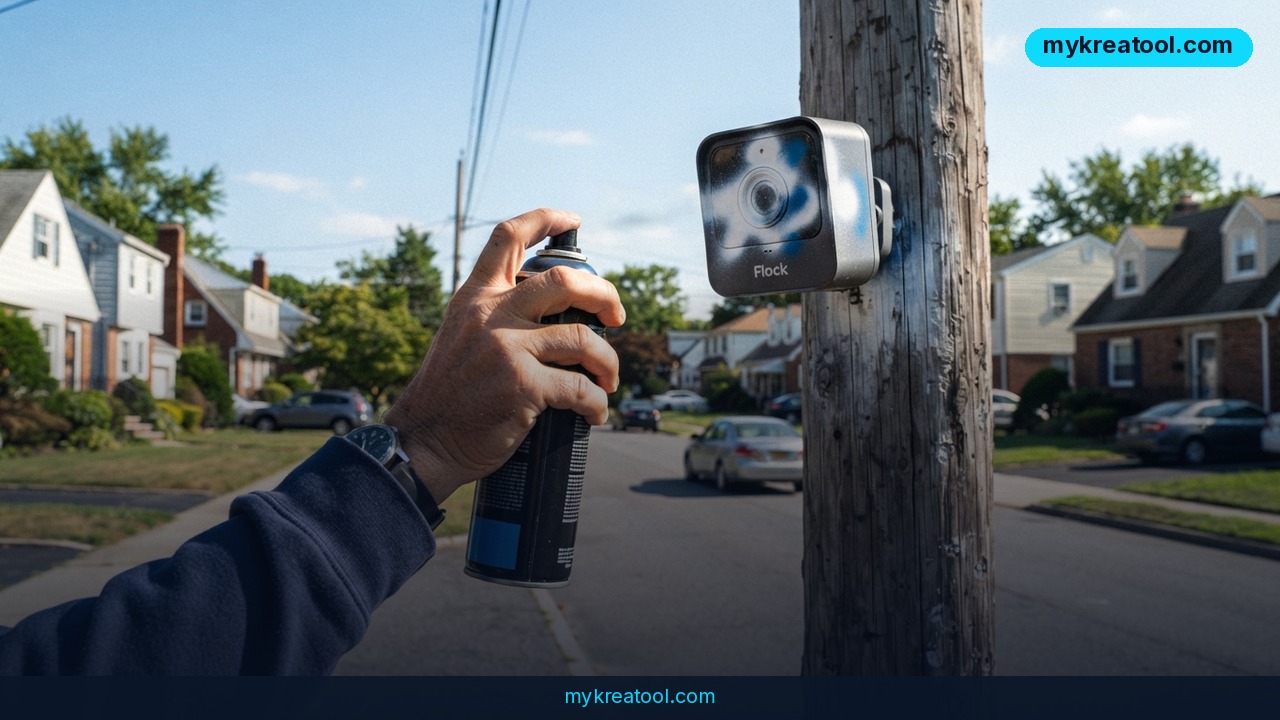
What happened
Flock AI cameras have become the rare issue that unites Americans across the political spectrum — and not in a good way. According to a report from Military.com, shared widely on Reddit's r/artificial community, conservative and progressive activists, small-town city councils, and civil liberties groups are independently arriving at the same conclusion: the automated license-plate-reading (ALPR) network built by Flock Safety has expanded too far, too fast, with too little oversight.
Flock Safety's AI-powered cameras are now installed in more than 5,000 U.S. cities and towns, used by thousands of police departments and homeowners' associations across over 40 states. The cameras don't just photograph license plates — they use computer vision to log vehicle make, color, damage, bumper stickers, and travel patterns, then store that data in a searchable network that other agencies can query. Flock has publicly stated its system processes over 1 billion vehicle scans every month.
What started as a tool marketed for solving car thefts and Amber Alerts has turned into a de facto nationwide tracking grid, and that's what's triggering pushback from libertarians worried about government overreach, progressives worried about immigration enforcement and reproductive-rights surveillance, and ordinary residents who simply didn't know their movements were being logged.
Why it matters
The Flock AI cameras controversy matters because it exposes a gap between how fast surveillance AI is deployed and how slowly regulation catches up. Local governments often approve these systems through routine budget votes, with little public debate about data retention, access rules, or who can query the network.
Investigations have found that some police departments shared Flock data with federal immigration authorities or out-of-state agencies pursuing abortion-related cases — despite local laws restricting such cooperation. That's the core fear driving the bipartisan coalition: once a surveillance network exists, it can be repurposed by whoever gets access to it next, regardless of the original intent.
There's also a scale problem. A single Flock camera can log thousands of vehicles a day. Multiply that by 5,000+ deployment sites, and you get a system capable of reconstructing anyone's daily movements — where they work, worship, seek medical care, or attend protests — without a warrant in most states.
For entrepreneurs and marketers watching the AI space, this story is a preview of a broader trend: AI tools built for a narrow use case (stopping car theft) tend to expand into general-purpose surveillance or data products once the infrastructure exists. That pattern shows up in retail analytics, workplace monitoring, and ad-tech too.
How to use it today
If you're a resident, business owner, or local official, there are concrete steps you can take right now:
Check what's already installed
Many city councils publish contracts with Flock Safety or similar vendors in public meeting minutes. Search your city's name plus "Flock Safety contract" to see if cameras are already active near you.
Request an audit trail policy
Ask your local police department whether they log every search made in the Flock network, who can access it, and whether that data is shared with federal agencies or private companies. Several cities, including ones in California and Virginia, have passed ordinances requiring exactly this kind of transparency after resident pressure.
Use AI tools to stay informed, not just surveilled
The same AI wave powering surveillance cameras also powers free tools that help everyday people and small businesses summarize public records, draft public-comment letters, or analyze local council agendas quickly. If you want to research a city ordinance or draft a comment for a council meeting without spending hours on it, a free AI tool like the ones at mykreatool.com can help you turn a dense PDF or meeting transcript into a clear summary in minutes — leveling the playing field between residents and well-resourced vendors.
Who benefits
Several groups have a stake in how this plays out:
• Law enforcement agencies get faster case resolution for stolen vehicles and Amber Alerts, which is the primary justification cities use to approve these contracts.
• Flock Safety and competing vendors benefit from recurring subscription revenue — cities typically pay $2,500–$3,000 per camera per year, adding up to significant municipal budgets across thousands of installations.
• Civil liberties organizations like the ACLU and EFF gain a mobilizing issue that crosses party lines, strengthening coalitions for broader AI-surveillance legislation.
• Journalists and researchers benefit from increased public records requests forcing more transparency around how AI surveillance data is used and shared.
• Small businesses and marketers can benefit indirectly: as public trust in unregulated AI data collection erodes, companies that build privacy-respecting, transparent AI products stand to gain a reputational edge.
Risks
The risks extend beyond individual privacy. Retention policies vary wildly — some agencies keep scan data for 30 days, others for years, with inconsistent rules on deletion. Data breaches are also a real concern: a searchable, centralized network of vehicle movements is a high-value target for hackers.
There's also mission creep. Systems approved for stolen-vehicle recovery have reportedly been used to track people attending protests, visiting reproductive health clinics, or crossing state lines — uses that were never disclosed to the city councils that approved the original contracts.
Finally, there's an accountability gap: because Flock and similar vendors are private companies, some of their data-sharing practices fall outside the public-records laws that would normally apply to government surveillance, making independent oversight harder to enforce.
Conclusion
The backlash against Flock AI cameras shows that surveillance concerns aren't a left-or-right issue anymore — they're a shared American concern about unchecked AI infrastructure. As more cities quietly adopt these systems, the pressure for clear data-retention rules, public audits, and access restrictions is likely to grow. Whether you're a resident, a local official, or a business builder, the lesson is the same: transparency about how AI systems are used matters as much as the technology itself.



Comments 0