What happened
Google has released Nano Banana 2 Lite, a faster and dramatically cheaper version of its in-house AI image generator, and the numbers are hard to ignore: four-second image generation at a cost of just $0.034 per 1,000 images. Announced on June 30, 2026, the model is designed for high-volume workflows — the kind where a marketing team or solo creator needs to churn out dozens of image variations in minutes, not hours.
The release builds on a fast-moving lineage. Google launched the original Nano Banana (powered by Gemini 3.1 Flash) last summer, followed by Nano Banana 2 in February 2026, which added more realistic image rendering. Nano Banana 2 Lite now sits alongside Nano Banana Pro, a pricier model aimed at advanced use cases. Google is positioning Nano Banana 2 as the "generalist workhorse" of the lineup, while Lite is the speed-and-volume option — and the original Nano Banana has been quietly demoted to "legacy model" status.
Alongside Lite, Google also widened access to Gemini Omni Flash, a video-generation model priced at $0.10 per second of output, and showed off Omni Product Studio, a demo app that converts static product images into short cinematic e-commerce videos. All three are available now through Google AI Studio, the Gemini API, and the Gemini Enterprise Agent Platform.
Why it matters
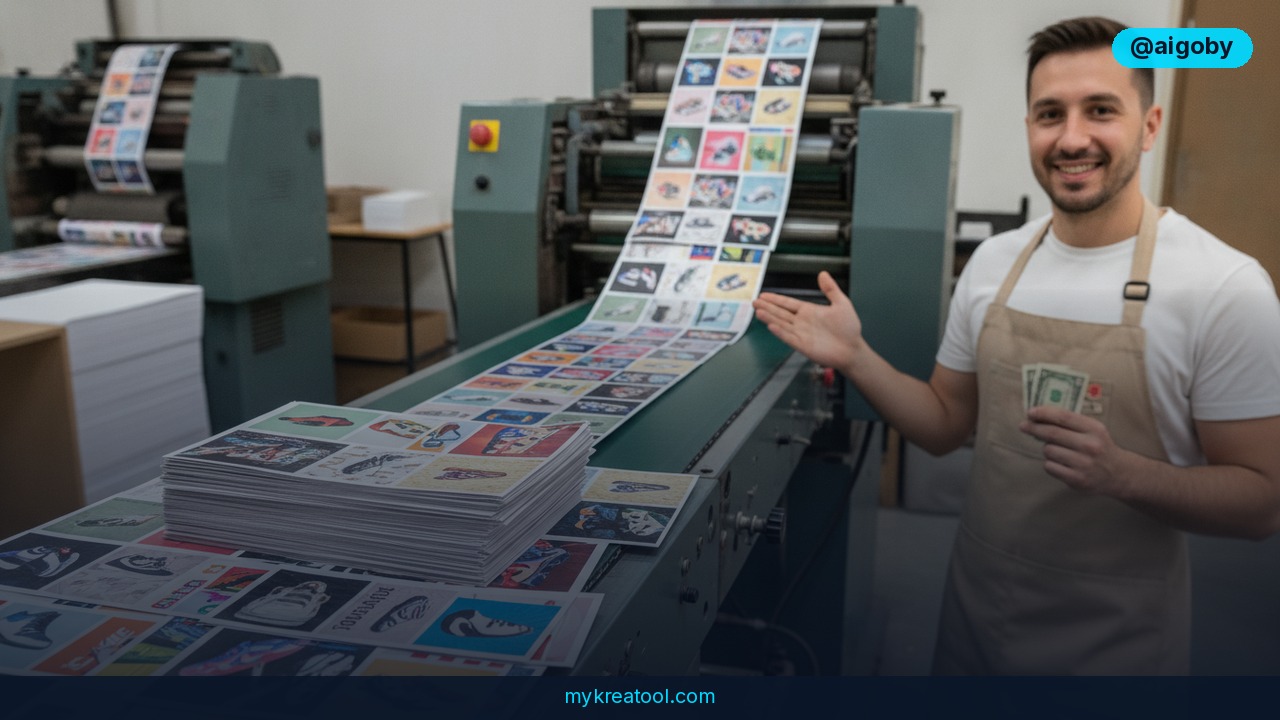
Speed and price are the whole story here. A four-second turnaround means image generation stops being a bottleneck in creative iteration — you can generate, review, tweak the prompt, and regenerate multiple times within the space of a single coffee-break task. At $0.034 per 1,000 images, the cost per individual image works out to roughly $0.000034, low enough that testing ten or twenty variations of a product shot or ad banner costs a fraction of a cent.
That combination matters most for workflows built around volume rather than a single polished hero image: A/B testing ad creative, generating product photography variants for an online store, or producing thumbnail options for a content calendar. Previously, this kind of high-volume experimentation was throttled either by generation latency or by per-image cost adding up across dozens of drafts.
It also signals where Google sees the competitive battleground: not in raw image fidelity alone, but in throughput. By explicitly branding Nano Banana 2 as the quality-focused generalist and Lite as the volume tool, Google is segmenting its own product line the way cloud providers segment compute tiers — pay more for quality-critical work, pay a fraction of a cent for iteration and drafting.
How to use it today
Nano Banana 2 Lite is live now and accessible through three channels: Google AI Studio (for hands-on prompt testing), the Gemini API (for developers building it into an app or pipeline), and the Gemini Enterprise Agent Platform (for teams building internal agent workflows). There's no waitlist or beta gate mentioned — it's a straight replacement for the original Nano Banana.
For a marketer or small-business owner without engineering resources, the practical entry point is Google AI Studio: paste in a product description or campaign brief, generate a batch of image concepts, and pick the strongest ones to refine further — either with more prompting or by handing them to a designer for finishing touches. Teams already using AI tooling in their content pipeline can plug the Gemini API directly into existing asset-generation scripts.
If you're testing image generation options for your own projects without committing to an API integration yet, sites like mykreatool.com offer free AI tools for quick image and content generation — useful for comparing output quality and workflow fit before deciding whether a paid, high-volume model like Nano Banana 2 Lite is worth building into your stack.
Who benefits
The clearest winners are teams running high-frequency creative workflows. E-commerce sellers who need dozens of product image variants for listings and ads can now generate and test at near-zero marginal cost. Performance marketers running constant ad-creative rotation get a tool built specifically for rapid iteration rather than one-off polished output. Agencies producing content at scale for multiple clients can use Lite for drafting and reserve Nano Banana Pro or human designers for final, client-facing assets.
Solo creators and small businesses benefit disproportionately here, since the cost barrier that made rapid experimentation impractical — even at a few cents per image — effectively disappears. A creator who previously generated five image options per post can now reasonably generate fifty.
Developers building AI-powered products also benefit from the pairing with Gemini Omni Flash and Omni Product Studio: a pipeline that goes from static image to short product video without leaving Google's ecosystem lowers the integration overhead for building end-to-end content tools.
Risks
The obvious concern is volume itself. Cheaper, faster generation lowers the barrier to flooding feeds, marketplaces, and search results with low-effort AI imagery — the "AI slop" backlash that TechCrunch's own reporting notes has already generated consumer pushback. A four-second, fraction-of-a-cent generation loop makes it trivially easy to mass-produce content without a human quality filter in the loop.
There's also a brand and trust dimension. Google's continued push into content generation, paired with deals like its reported $75 million partnership with indie studio A24, has drawn criticism from creative communities wary of AI's expanding footprint in entertainment and advertising. Businesses adopting these tools should weigh the efficiency gains against how AI-generated imagery is perceived by their own audience — particularly in creative or entertainment-adjacent industries where authenticity carries real weight.
Finally, as with any low-cost, high-throughput API, cost can still add up at true enterprise scale, and teams should track usage against the $0.034-per-1,000-images rate rather than assuming it's negligible once volume reaches millions of images a month.
Conclusion
Nano Banana 2 Lite is less about a single new capability and more about removing the last frictions — speed and cost — from AI image generation at scale. Four-second turnaround and sub-cent-per-image pricing turn image generation into a disposable, iterate-freely step in a creative workflow rather than a metered resource. For marketers, e-commerce sellers, and small creative teams, that's a meaningful shift in what's practical to test before committing. The tradeoff, as with every leap in generation speed and cost, is that the same features that enable rapid legitimate iteration also lower the floor for low-quality mass content — making thoughtful use, not just adoption, the deciding factor.


Comments 0