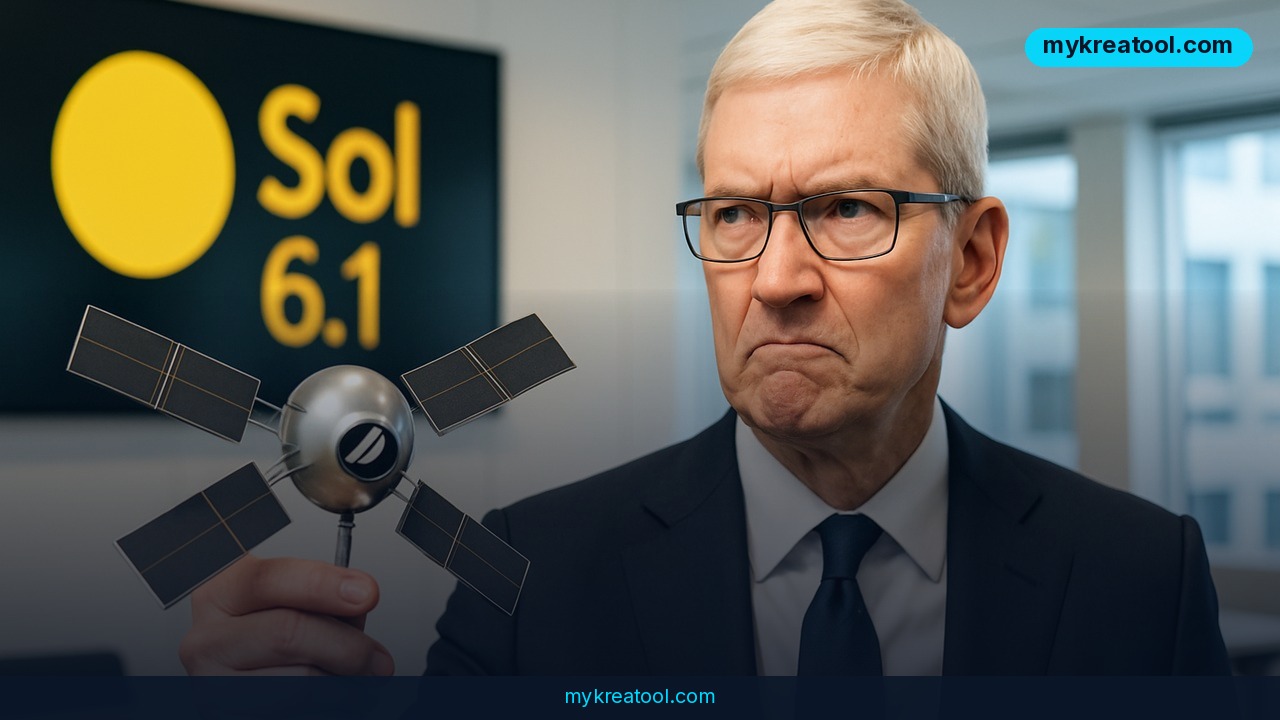
If you blinked during OpenAI's DevDay keynote, you probably missed the quietest launch of the day. The stage was busy selling everyone on Space, while GPT-6.1 Sol slipped out the side door — and if you run a small business, a side hustle or a content channel, that's the part of the news that actually touches your wallet.
What happened
OpenAI officially announced and released GPT-6.1 Sol at its annual DevDay event. DevDay is the company's annual show-and-tell: one long keynote where OpenAI unveils new models, new subscription options and new features, and the rest of the industry takes notes for the following week.
This year the spotlight landed on Space, which swallowed most of the press coverage. GPT-6.1 Sol arrived in the same batch as a round of subscription changes and new model announcements — CNET's full roundup of everything announced at DevDay lays them out side by side, while The New Stack covered the Sol release on its own. The official announcement lives here: GPT-6.1 Sol.
Word travelled fast beyond the keynote hall. A single post about the launch in @data_secrets, a Telegram channel that tracks AI tools and data, pulled 3,623 views, 93 reposts and 35 reactions. Those aren't celebrity numbers, but they're a clear sign that founders and developers grabbed the news within hours of it going live.
What "a new model" actually means in plain English
Strip the branding away and a language model is basically a very well-read assistant that has absorbed an enormous amount of text and learned the patterns inside it. It doesn't "know" your business the way a colleague does — it predicts, very well, what a useful answer should look like.
A new generation like GPT-6.1 Sol is the equivalent of swapping that assistant for a sharper one: it follows messier instructions, holds more of your conversation in mind at once, and needs less hand-holding before it produces something you can actually use. You don't need to understand how it works. You just need to notice how much less editing you're doing afterward.
What it means for you
You don't have to be a programmer for any of this to matter. Here's what a jump in model quality usually looks like in the six places ordinary people actually spend their time.
At home
The boring stuff pays off first: meal plans built from whatever's left in the fridge, a polite email to the landlord, a plain-English summary of a ten-page insurance letter. The upgrade shows up as fewer "that's not what I meant" corrections. You'll spend two minutes instead of fifteen.
At work
Drafting, summarizing and rewriting are the three tasks most people touch every single day. Paste in a messy thread of messages and ask for the decision buried inside it. Hand over your rough notes and ask for a client-ready version. If your company blocks AI tools, check the policy before you paste anything confidential into anything.
Running a small business
This is where a faster model turns into money. Product descriptions for a whole catalogue, replies to your most common customer questions, a landing page that doesn't read like a robot wrote it, a first pass at competitor research. If you want free tools to stack alongside it — image generators, copy helpers, small utilities — mykreatool.com keeps a decent pile of them in one place, no paywall.
School and study
Used honestly, it's a tutor that never sighs. Ask it to explain a concept three different ways, then quiz you on it. Ask it to poke holes in your essay argument before your teacher does. The trap is letting it write the essay — the learning happens in the arguing, not the typing.
Creative work
Writers, designers and video people tend to use these models as a sparring partner rather than a ghostwriter: twenty thumbnail ideas in a minute, a script structure, the same paragraph rewritten in five different tones. Most of it will be mediocre — that's fine. You're panning for the one idea that sparks something.
A second income stream
Freelancers charge for speed and for the first draft. If a new model cuts an hour off every project, you can either take on more clients or charge the same and work less. Common starting points: editing and proofreading, short-form scriptwriting, local business listings, translation cleanup, and simple automation setups for people who hate spreadsheets.
How to try it right now
1. Start free. Open ChatGPT and use the free version before you pay for anything. You want to know whether Sol actually beats what you're already using, and you can't learn that from a pricing page.
2. Read the official page first. Open GPT-6.1 Sol on OpenAI's site so you know exactly what shipped and what access comes with which plan.
3. Bring one real task from this week. Not a test question. A genuine thing — the quote you owe a client, the report you're dreading, the email you've rewritten four times.
4. Run the same task in your current tool. Same prompt, side by side. Judge on time saved and edits needed, not on vibes.
5. Upgrade only when it earns its keep. If Sol saves you an hour a week, a subscription pays for itself. If it doesn't, stay on free and check back in a month.
Upsides and what changes
The headline upside is simple: the floor keeps rising. Tasks that felt like a gamble two years ago — summarizing a contract, turning bullet points into a proposal, debugging a spreadsheet formula — are now routine enough that you stop noticing you're using AI at all.
The subscription changes that came with the launch matter for your budget, so read them before auto-renewal quietly hits your card. And the competitive pressure is real: when one lab ships a model like Sol, everyone else's roadmap speeds up, which usually means better tools at lower prices within a few months.
Limitations
Let's be honest about what we don't have here. We know GPT-6.1 Sol launched at DevDay, and we know it landed next to a batch of subscription changes — but nothing in this source material includes independent benchmarks, hands-on testing or a price list, so treat every "it's X times better" claim you see floating around with suspicion until someone you trust actually measures it. New models are also rarely better at everything: they can regress at oddly specific things, they still invent facts with total confidence, and they still need a human to check names, numbers and legal fine print before anything goes out the door.
Conclusion
GPT-6.1 Sol isn't going to run your business for you, and it won't replace the judgment that makes you good at what you do. It's a faster, less annoying version of a tool you've probably already got open in another tab.
One action for today: open ChatGPT, paste in one real task you've been avoiding this week, and give it ten minutes. If it saves you time, keep going. If it doesn't, you've lost ten minutes and learned something useful.
Comments 0