What happened
OpenAI just expanded its GPT-6 lineup with two new models, GPT-6 Sol and GPT-6 Luna, and the headline number is simple: both got 50% cheaper while getting noticeably smarter. Earlier this month OpenAI released GPT-6 Astra, its most capable and most expensive model, built for the hardest, highest-stakes work. Sol and Luna are trained with the same techniques as Astra but tuned to run faster and cost less — they're the models most people and most businesses will actually use day to day.
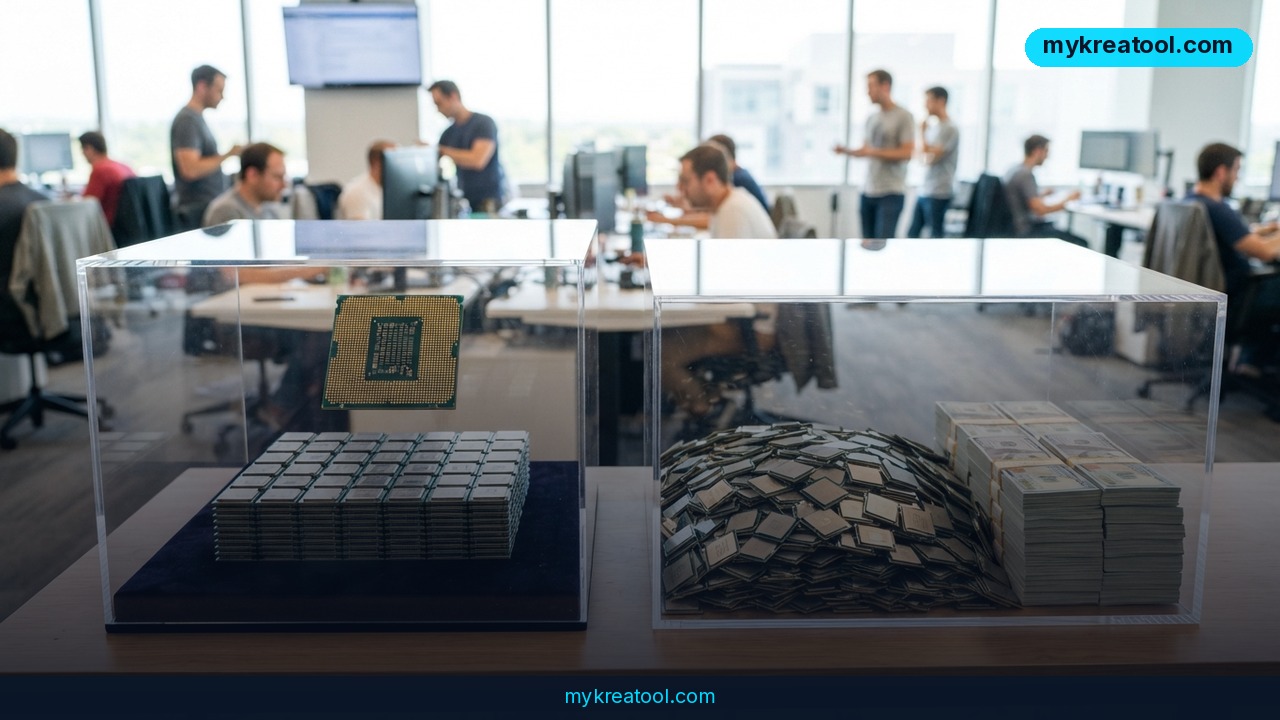
The price cuts are concrete. GPT-6 Sol now costs $2 per million tokens in and $10 per million tokens out, down from $4 and $20 on the previous GPT-5.6 version. GPT-6 Luna, the smallest and cheapest model in the family, dropped to $0.10 in and $0.50 out, down from $0.20 and $1.20. (A "token" is roughly three-quarters of a word — it's just the unit AI companies use to measure and bill for how much text a model reads and writes. A million tokens is roughly 750,000 words, about the length of eight or nine novels.)
The performance numbers behind the price cut
What makes this more than a routine discount is that the cheaper models are outperforming pricier rivals on real tests. In OpenAI's AutomationBench, which measures how well an AI agent can complete real business workflows across 47 tools spanning sales, marketing, operations, support, finance, and HR, GPT-6 Sol scored 33.2% at its top reasoning setting — beating Anthropic's Claude Opus 5 (26.9%) while costing just 9% of what Opus 5 costs per task. On Agents' Last Exam, a separate benchmark covering complex professional work across 55 sub-industries, Sol scored 56.4%, above Claude Opus 5's best result, at 60% lower cost per task. Luna, the budget model, improved 5.4 percentage points over its predecessor while cutting cost per task by 58%. OpenAI also reports that Sol now makes roughly half as many factual mistakes as the model it replaces, closing much of the gap with Astra's accuracy.
What it means for you
At home: Planning a trip, drafting a tricky email to your landlord, or figuring out a recipe substitution now costs the AI provider (and sometimes you, if you pay per use) less to answer — and the answers should have fewer errors baked in, since Sol cuts factual mistakes roughly in half compared to its predecessor.
At work: If your company uses AI "agents" to handle repetitive tasks — pulling numbers from a CRM, drafting reports, updating a spreadsheet across multiple tools — GPT-6 Sol is now good enough to outperform a top-tier competitor model on that kind of multi-step work, at a fraction of the cost. That's the difference between a pilot project and something IT actually approves for everyone's daily use.
Running a small business: Customer support replies, sales follow-ups, and HR paperwork are exactly what AutomationBench measures. A cheaper model that scores higher means you can automate more of this work without your software bill spiking — useful if you're a solo founder or a small team without a dedicated ops person.
Studying: Luna is cheap enough that apps built on it (tutoring bots, flashcard generators, essay feedback tools) can afford to let students use them far more often without hitting usage caps, since the cost per response dropped by half.
Creative work: Faster, cheaper models mean less waiting and fewer "you've hit your limit" messages when you're iterating on a script, a story outline, or a batch of product descriptions — you can afford to ask for five drafts instead of settling for the first one.
Extra income: Freelancers who resell AI-assisted services (writing, data cleanup, research summaries) benefit directly from lower input costs — the same OpenAI API bill now buys noticeably more usable output, which widens your margin per client. If you don't want to touch an API key or write any code, you can get similar AI horsepower through free web tools like MyKreaTool, which bundles no-code AI tools for writing, images, and content in one place.
How to try it right now
1. Free, no coding required: Go to MyKreaTool and use its free AI writing and content tools directly in your browser — no API key, no billing setup, just sign in and start.
2. Through ChatGPT: If your ChatGPT plan offers a model picker, check whether GPT-6 Sol or GPT-6 Luna appears as a selectable option — OpenAI typically rolls new models into the consumer app after the initial API launch.
3. Direct from OpenAI (for developers or businesses): Go to platform.openai.com, create or use an existing API key, and select "gpt-6-sol" or "gpt-6-luna" as the model in your request. Billing is per token, at the new lower rates listed above.
4. Compare before committing: Run the same task (a report draft, a customer-support reply, a data summary) through both Sol and Luna to see which one gives you good-enough results at the lowest cost for your use case — Luna for simple, high-volume tasks, Sol for anything requiring more reasoning.
Upsides and what changes
The clearest upside is access: capability that used to require paying for a flagship, expensive model is now available in a mid-tier and budget-tier model at half the price. For businesses running AI agents at scale, a 58–60% cost-per-task reduction while scoring higher directly changes the math on what's worth automating — tasks that weren't cost-effective to hand to AI a month ago may be now. For everyday users, this mostly shows up as fewer usage limits, faster responses, and fewer wrong answers, even if you never see the underlying pricing.
Limitations
The benchmark numbers come from OpenAI's own tests (AutomationBench and Agents' Last Exam), and while the methodology is published, OpenAI has an obvious incentive to highlight results that favor its own models — treat the comparisons against Claude Opus 5 and Claude Fable 5.1 as a strong signal, not an independent audit. Sol and Luna also remain a step below GPT-6 Astra in raw capability, so the most demanding or highest-stakes work (major financial decisions, legal documents, complex engineering) still calls for the top-tier model, not the discounted ones. And price cuts apply to API usage — free consumer access still depends on which app or plan you're using, and rollout timing can lag the announcement.
Conclusion
GPT-6 Sol and Luna prove that "cheaper AI" and "better AI" aren't opposites right now — OpenAI cut prices in half while its mid-tier model started beating a competitor's flagship on real business tasks. One thing to do today: pick one repetitive task you or your business does weekly — a report, a batch of replies, a summary — and run it through MyKreaTool or the OpenAI API to see how much of it you can hand off for less than it currently costs you in time.

Comments 0