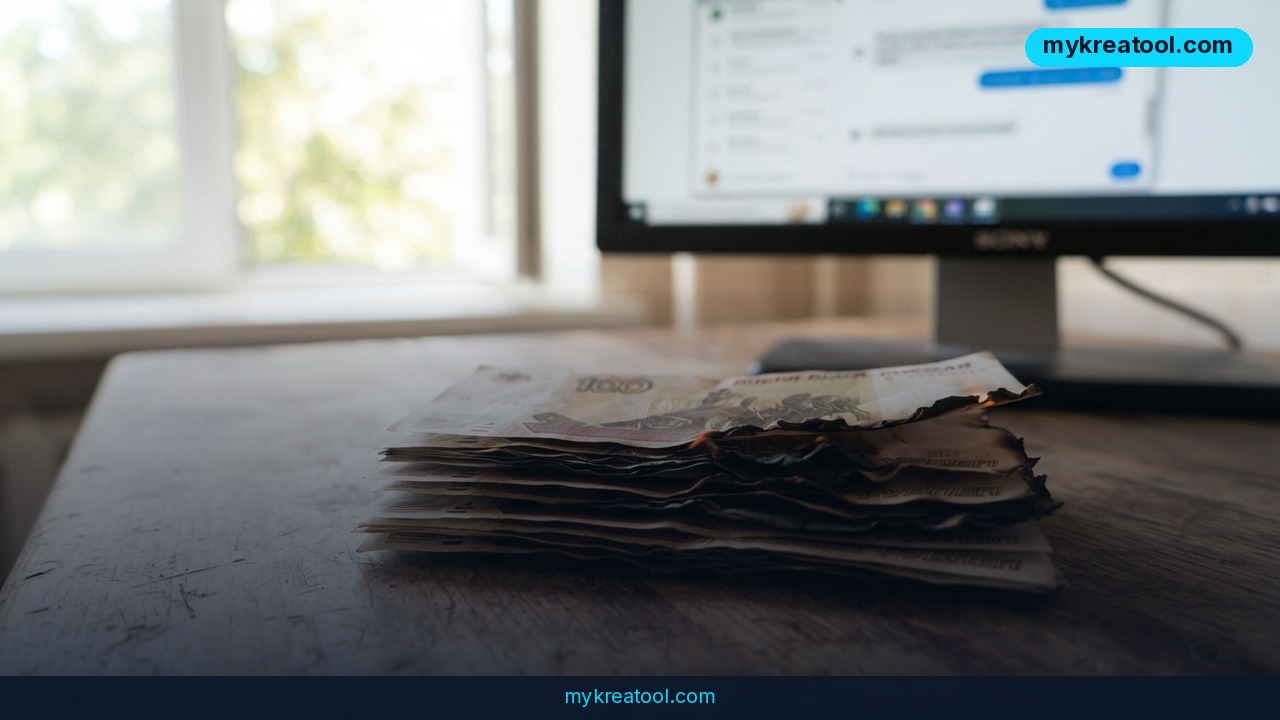
If you've ever typed a question into the chat bubble on a shop's website, you know exactly how it ends. The box wants your name, phone and email before it'll say a word. You fill in all three, and if it's past ten at night it promises an answer "within a minute", then announces that an operator will connect shortly — and never writes again. By then you've already opened a competitor in the next tab, and the shop owner has already paid for your visit. A decent AI chatbot for your website should have told you the price, the lead time and whether the item is in stock. One founder got tired of watching that customer walk away, and built one himself.
What happened
The costly ad lesson
Since the summer, the founder behind SalesAgent has spent a substantial ad budget on Yandex Direct, which is Russia's answer to Google Ads. He knows what those visitors cost because he checked: every single person who did anything on his site, from clicking a form to completing a registration, ran him more than 700 rubles. That's the number that stings. If someone clicks an ad, opens the chat, hits the phone-number field and closes the tab, the 700 rubles are gone. No sale, no lead, no email address to follow up with — just a hole in the budget.
He saw the same pattern from the other side, too. In a Belarusian plumbing store where his bot now runs, more than half of the people who write into the chat arrived from paid advertising. So the most expensive traffic you'll ever buy is landing in exactly the place where a badly built chat widget does the most damage.
What the bot actually is
SalesAgent is an AI salesperson for websites and messengers. Instead of building a wall of form fields, it talks to visitors the way a good shop assistant would: answers the question, names the price and the conditions, and only asks for a contact once there's a real reason to. When the conversation gets there, it hands the contact to the owner through a CRM, Telegram, MAX or another channel. (A CRM is just the shared address book where a company keeps its leads — nobody has to copy and paste anything.)
The tool has been in development since July, and in four months hundreds of sites have tried it: online stores, clinics, manufacturers, wholesalers, schools and plenty of other small and mid-sized businesses.
How it learns your business without prompts
Here's the part that usually scares people off. Most chatbot builders hand you an empty box and expect you to write prompts — the instructions that tell the AI who it is, how it should sound and how it should push a sale. That's a copywriting job, and most shop owners don't want it.
SalesAgent skips that step. You paste in your site address and the bot crawls it, meaning it walks through your pages the way a curious reader would, clicking link after link. Every page lands in a knowledge base, and the dashboard shows you exactly what it read. Facts your site never mentions — a special condition, a price, a ready-made answer to a question you get every day — can be dropped in as separate blocks.
Then comes the catalog. The bot pulls your product cards into a catalog with prices and specs. If you have more products than the crawl can reach, you upload an Excel file or sync by API, which is just a direct line that lets two systems swap data automatically. Clinics and auto shops end up with services as their catalog; the founder's own service has eight pricing tiers, from a free plan to a partner program.
The sales script drafts itself
The bot also builds a sales scenario from your pages: the steps of a conversation, from hello to contact details, plus the conditions that move someone from one step to the next. A clinic's script leads toward an appointment, a store's toward an order, a manufacturer's toward a contact for a quote. The founder's own service got five steps — greet, clarify the task, pick a plan, grab a contact for launch help, wrap up.
You can rewrite any step or add one of your own. But the script only sets the direction: ask a direct question at step two and the bot answers it right there instead of marching you through a funnel. Replies stay short, two or three sentences, and it never opens with a questionnaire. No prompts required.
Free from November 3, if you bring your own key
On November 3 the tool went free, with no limits, for anyone who plugs in their own key to a language model. That key is a short code, like a password, that lets the bot talk to the AI model running behind it. You pay the model provider directly for usage instead of paying per seat or per conversation.
What it means for you
You're shopping at 11 p.m. and want a straight answer
This is the home scenario, and it's the one you'll recognise. You need to know whether a boiler ships to your area, or whether a dress comes in your size. With a bot like this, you get the answer in seconds, at any hour, without typing your phone number to unlock the conversation. You get what you came for, and the shop doesn't lose you to the tab next door.
You run a small business and pay for every click
If you're buying ads, every unanswered chat message is money on fire. A shop owner paying for traffic already knows the price of a click. What they usually don't know is how many of those paid visitors bounce off a form. An AI seller that quotes prices immediately and captures the contact when the person is actually interested is the cheapest fix available, because it works on traffic you've already paid for.
You're a freelancer or creator drowning in messages
The same logic applies to a one-person business. You can't answer DMs at 2 a.m. and you don't want to lose the inquiry either. The bot handles the repetitive part — what it costs, what's included, how long it takes — and leaves you the conversations that actually need a human. If you want to experiment with AI before wiring anything into your site, there's a set of free tools at MyKreaTool that's worth an afternoon.
You sell on the side while working a day job
Side projects die in the gap between "someone messaged" and "you got home". A bot that reads your site and answers in your brand's voice covers that gap. It's the difference between a lead that goes cold overnight and one that's already booked in your calendar when you check your phone.
You run a clinic, salon or service business
Service businesses sell appointments, not products. That's why the scenario for a clinic runs toward a booking rather than a checkout, and why the catalog is built from services instead of SKUs. Anyone who's ever called a clinic after hours and gotten a voicemail knows how much that's worth.
How to try it right now
The free path comes first, and it takes about an afternoon.
1. Sort out your key. Get an API key from a language-model provider (it's the password-like code that lets software talk to the AI). You'll pay that provider for usage, which is why the tool itself can stay free.
2. Open SalesAgent and paste your site address. There's a sample dialogue there if you want to see the pacing before you commit.
3. Let it crawl. Every page goes into the knowledge base. Check the dashboard and confirm that what it read is actually what you sell.
4. Fill the gaps. Add the facts that live in your head and not on your site: a condition, a price, the answer you type out ten times a day.
5. Build the catalog. Let it pull product cards automatically, or upload an Excel file or sync by API if your range is bigger than the crawl covers.
6. Check the business profile. Hours, contacts, payment, delivery, returns and guarantees should be filled in from your pages. Fix anything that's off.
7. Read the sales scenario. Rewrite a step, add your own, or leave it as is. Most people leave it.
8. Choose where leads land — CRM, Telegram, MAX, whatever you actually check.
9. Test it yourself at midnight. Ask it something awkward. That's your customer's first impression.
Upsides and what changes
The headline change is that your website stops being a brochure with a form and starts being a salesperson. Visitors get answers in two or three sentences, at any hour, without an interrogation first. You get the contact details of people who actually wanted something, delivered straight into the tool you already use.
The second change is transparency. Because you can see exactly which pages the bot read, you can spot the gaps in your own site. Half the time the bot's confusion is your site's confusing pricing table talking.
And the third is cost. Bringing your own model key means no per-seat pricing and no conversation caps — the limits come from your provider, not from the tool. Given that the alternative is 700 rubles a visitor and a dead chat window, the math isn't close.
Limitations
Be clear-eyed about this. The bot is only as good as what's on your site — if your prices aren't published anywhere, it can't magic them out of thin air, and someone still has to type those facts into the extra blocks. Big catalogs need the Excel upload or an API sync, which is extra work for a non-technical owner. You also need to get and manage your own language-model key, and that's a separate bill and a small technical step you'll have to do yourself. The scenario and wording may need tuning if you want a very specific tone of voice, and like any AI seller it occasionally needs a human looking over its shoulder. It answers questions and collects contacts — it doesn't close deals that need a real conversation, and you should still plan for a handoff.
Conclusion
The founder spent a substantial ad budget learning that paying 700 rubles for a visitor who never gets an answer is a bad business. SalesAgent is his answer: a bot that reads your site, quotes your prices, skips the form and hands you the contact. With hundreds of sites tested in four months and a free tier since November 3 that only asks for your own model key, there's no good reason to keep losing paid traffic to a chat window that never writes back.
One thing to do today: open SalesAgent, paste in your site address, and watch what the bot reads. If it gets your business right on the first pass, you've just found your new night shift.
Comments 0