What happened
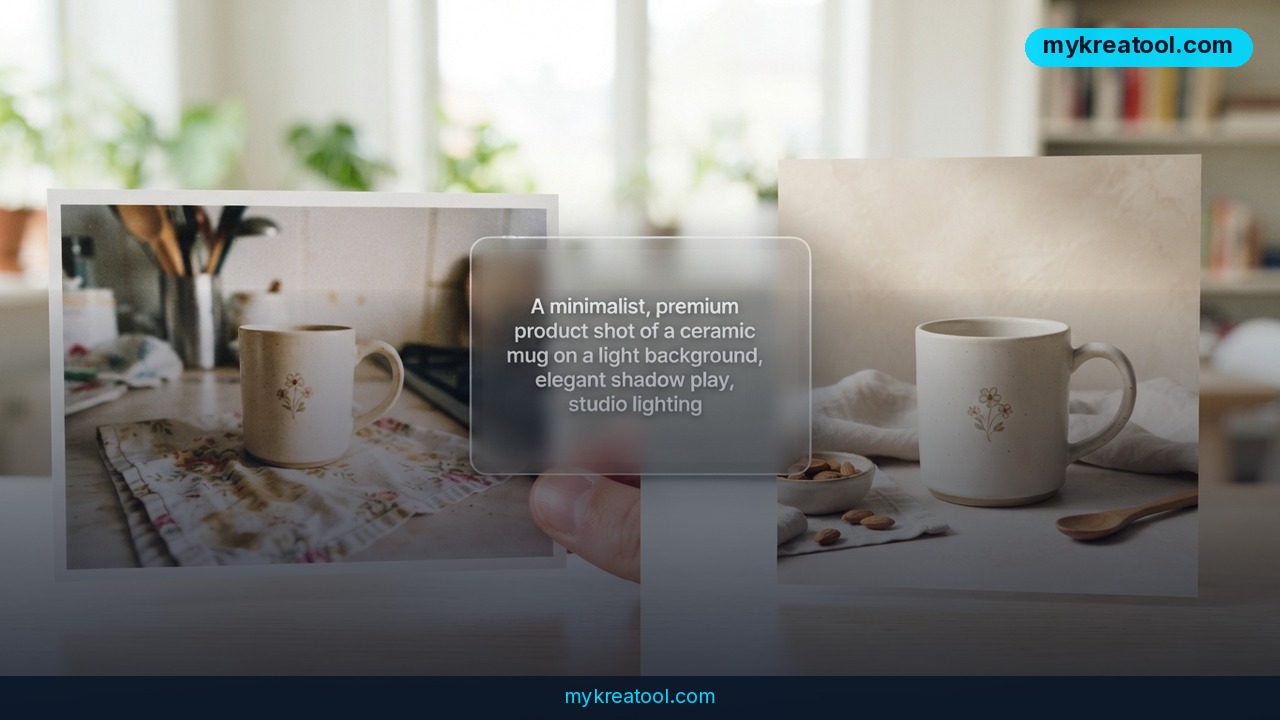
AI product photography has quietly become one of the fastest ways for small sellers to fix bad listing images. A new wave of chat-based AI photo editors — the kind you talk to with plain-language prompts instead of dragging sliders in Photoshop — can now take a messy phone photo of a product and turn it into a clean, marketplace-ready shot in about five minutes. No studio, no lighting rig, no photographer's invoice. Sellers on Amazon, Etsy, Shopify and similar platforms are using written prompts to generate white-background packshots, soft-gray premium shots, floating product renders, and flat-lay compositions, all from a single source image.
The trigger for this shift is simple: most product photos submitted by suppliers or taken on a phone look unprofessional. Wrinkled backdrops, uneven lighting, a kitchen counter or office desk peeking into frame — these details quietly kill conversion rates. Marketplaces like Amazon and Etsy also enforce strict image rules, often requiring a pure white background with no props. AI prompt-based editing solves both problems at once by isolating the product and rebuilding the environment around it.
Why it matters
Product photography has historically been one of the biggest bottlenecks for small e-commerce sellers. A single professional studio session can cost anywhere from $50 to a few hundred dollars per SKU once you factor in a photographer, lighting, retouching and multiple angles. For a seller listing dozens or hundreds of products, that adds up fast — and it's a recurring cost every time a new product line launches.
AI-generated product photos collapse that cost and timeline dramatically. A well-written prompt can produce a commercial-grade packshot in minutes instead of days, without sacrificing the product's actual shape, proportions, branding, or label text — which matters enormously for trust and returns. Buyers judge a listing almost entirely on its main image: does the product look real, does it look trustworthy, is the texture and color accurate? A crisp, evenly lit photo answers those questions instantly, while a cluttered or dim one raises doubt before a shopper even reads the description.
This also matters for search visibility. Marketplaces and search engines increasingly reward listings with high click-through and conversion rates, and image quality is one of the strongest levers a seller controls directly, without needing to touch price or ad spend.
How to use it today
The method is straightforward: describe the exact shot you want, feed it the source image, and let the AI editor rebuild the background and lighting. A few prompt templates already cover most e-commerce needs:
• Marketplace packshot: Center the product on a pure white background, preserving its exact shape, proportions, branding and label text, with soft studio lighting and a realistic shadow beneath it. This is the standard format required by Amazon, Etsy, Walmart and most other marketplaces.
• Premium soft-gray background: Places the product on a seamless light-gray backdrop with diffused lighting — better suited to branded storefronts where pure white feels too clinical, especially for electronics, home goods and glossy packaging.
• Floating product effect: Renders the item appearing to hover with a soft shadow beneath it, adding depth for landing pages, banners and collection graphics.
• Flat-lay from above: A top-down composition ideal for cosmetics, stationery, kitchen tools and anything where showing the full contents or layout matters more than a front-facing angle.
For brands with exact packaging colors, some AI photo tools let you specify a precise hex code so the output matches your actual brand color instead of an approximate shade — a small detail that matters a lot for brand consistency across a catalog. Sellers experimenting with these workflows for the first time often start with free tools before committing to a paid subscription; a resource like mykreatool.com offers a set of free AI tools worth testing to get a feel for prompt-based image editing before scaling it across an entire product catalog.
Who benefits
Small and mid-sized e-commerce sellers stand to gain the most, since they rarely have an in-house photography budget. Dropshippers and print-on-demand sellers, who often start with only a supplier's low-quality image, can now generate a full set of listing photos from one usable source shot. Marketing agencies and freelance designers can offer product photo retouching as a fast add-on service without owning studio equipment. Marketplace sellers juggling dozens of SKUs across Amazon, Ozon, Etsy and their own Shopify store can standardize an entire catalog's visual style in an afternoon instead of scheduling a multi-day shoot.
Content creators and course sellers building landing pages also benefit, since floating-product and flat-lay styles work well for banners and promotional graphics beyond the product listing itself.
Risks
AI-generated photos aren't risk-free. Marketplaces have rules against misleading imagery, and a generated shot that alters a product's actual color, texture or scale can lead to returns, bad reviews, or even listing suspensions if a platform flags it as inaccurate. Prompts that preserve exact proportions and branding details are essential — not optional — for compliance.
There's also a growing expectation of disclosure: some marketplaces are beginning to require sellers to indicate when primary images are AI-enhanced or AI-generated rather than straight photographs. Sellers should check each platform's current image policy before relying entirely on AI output for primary listing photos, and it's still wise to keep at least one authentic, unedited photo among the gallery images to set accurate buyer expectations.
Conclusion
AI product photography prompts are turning a once-expensive, slow process into something a solo seller can do between other tasks. The core skill isn't photography anymore — it's writing a precise prompt that locks in the product's real shape, branding and texture while letting AI handle lighting, background and composition. For sellers on Amazon, Etsy, Ozon or their own storefronts, that's a direct path to better-converting listings without a studio budget.

Comments 0