What happened
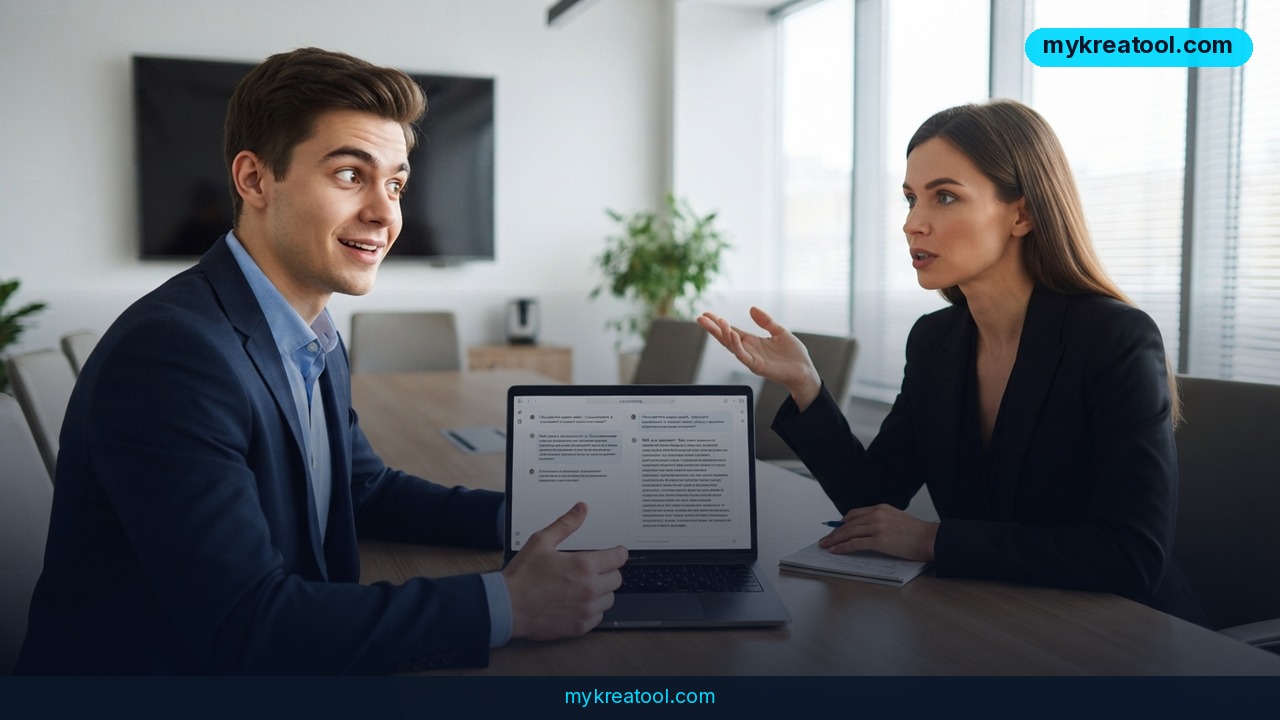
A Reddit user preparing for a job interview decided to rehearse with Claude, Anthropic's AI chatbot, instead of just googling "common interview questions." They fed Claude the actual job posting and their own resume details, then asked it to run a mock interview — one question at a time, playing a skeptical interviewer who pushes back on vague answers. A few days later, they sat down for the real interview. According to their account, the HR interviewer asked almost the same questions Claude had asked in the practice session. The candidate got the offer.
That's one Reddit post, not a scientific study — worth saying upfront. But it lines up with what several career-advice sources are now recommending: write-ups from tech and career sites describe the same two-chat method for using AI to prep for interviews, and it's become common enough that recruiters are starting to notice candidates showing up better prepared. See a similar breakdown in this video walkthrough, a general guide on using AI for interview prep without sounding like a robot, a prompt library for Claude interview prep, and a step-by-step interview-prep guide.
The method itself is simple, and it's worth spelling out in plain terms because most people use AI for interview prep the wrong way — asking for "top 10 questions for X role" and silently reading the list. That's not practice. That's reading.
The two-chat trick
The Reddit method uses two separate AI conversations, each doing one job:
Chat 1 — the interviewer. You paste in the job description and a summary of your background, then ask the AI to run a realistic mock interview: one question at a time, mixing behavioral questions ("tell me about a time you...") with technical ones. You tell it explicitly to act skeptical — to follow up on vague answers and probe for weak spots, the way a real hiring manager would, instead of just nodding along.
Chat 2 — the critic. This is the part most people skip, and it's the part that actually works. After each answer, you copy just the question and your answer into a brand-new chat with no other context, and ask it to grade the answer harshly: what's vague, what's missing numbers, where your role in the story is unclear. Because this chat doesn't know anything else about you, it can't be nice out of politeness — it only has the words in front of it, same as a real interviewer reading a resume for the first time.
One extra tip matters more than it sounds: answer out loud, using voice mode or a speech-to-text app, instead of typing. Typed answers come out more polished and rehearsed than what actually leaves your mouth under pressure — practicing by typing teaches you to write well, not to speak well.
What it means for you
You don't need to be a tech worker or a Reddit regular for this to matter. Here's how the same two-chat trick applies to ordinary situations:
Job hunting (work). The obvious case — before any interview, behavioral or technical, run the mock-then-critique loop two or three times on your weakest question (usually "tell me about a conflict" or "walk me through a project that failed").
Small business (business). The same trick works for sales calls and investor pitches. Paste in your pitch deck or product description, ask the AI to play a skeptical buyer or investor who pokes holes in your numbers, then critique your own responses in a second chat.
School and exams (study). Students preparing for oral exams, thesis defenses, or scholarship interviews can use the exact same structure: one chat asks hard follow-up questions on the material, a second chat grades the answers for vagueness and missing evidence.
Freelance and client work (income). Before a client call where you need to justify your rate or defend a proposal, run it as a mock negotiation — one chat playing the tough client, one chat checking whether your justification actually has numbers in it.
Public speaking and content (creativity). Podcast guests, YouTubers doing Q&A videos, and public speakers can use the interviewer chat to generate the hard questions an audience might ask, then rehearse answering them out loud before the real recording.
At home (home). Even outside work — a hard conversation with a landlord, a return dispute at a store, a school meeting about your kid — benefits from the same rehearsal-plus-harsh-feedback loop before you walk in.
The common thread: rehearsing alone in your head lets you believe your own vague answers. A second, context-blind AI chat won't let that slide.
How to try it right now
You don't need a paid plan to test this — Claude's free tier is enough for a full mock interview session.
1. Go to Claude and sign in (a free account works). This is the exact tool from the original post, not a generic stand-in.
2. Start Chat 1 and paste in the job posting plus a short paragraph on your background. Use a prompt like: "I'll give you a job description and my background. Run a realistic mock interview — behavioral and technical. Ask one question at a time. Be a skeptical interviewer: push back on vague answers and probe weak spots. Then move to the next question."
3. Turn on voice mode, or open a separate speech-to-text app, and answer out loud rather than typing — this is the detail that actually changes how useful the practice is.
4. Open Chat 2 in a new tab, with no other context loaded. After each answer, paste in only the question and your answer, and use: "Score my answer harshly and honestly. You don't know anything about me except this answer. Tell me what's weak, what's vague, where I'm missing numbers, and where my role isn't clear. Don't soften it."
5. Rewrite the weak answers based on the critique, then go back to Chat 1 for the next question. Repeat for every question you're unsure about — 20 to 30 minutes is usually enough for one full pass.
6. If you also want a free spot to clean up your resume bullet points or a cover letter while you're at it, mykreatool.com has free AI tools that handle that kind of quick text work without needing a subscription.
Do one full round the night before the interview, and a shorter round — your two or three weakest answers — the morning of.
Upsides and what changes
The real value here isn't that Claude has some secret list of what HR will ask — most interview questions for a given role are genuinely predictable once you've read the posting closely, which is exactly what Chat 1 is doing. The upside is structural: you get a low-stakes place to say your answer out loud and get told, immediately and without social softening, that it's too vague. Most people never get that kind of blunt feedback before a real interview, because friends and family are trying to be encouraging. A second AI chat with zero context has no reason to be nice, which is precisely why it's useful.
Limitations
None of this guarantees an interview goes well, and it's worth being direct about that: the evidence behind this story is one Reddit post plus a handful of write-ups describing the same method, not a controlled study, so treat "it predicted the questions" as one person's experience rather than a promise. An AI mock interview also can't replicate the nerves, body language, or unpredictable curveballs of a live conversation with an actual human — and if you paste in confidential details about a real employer or hiring process, that information leaves your hands and lands on a third-party AI company's servers, so don't include anything you wouldn't want stored somewhere else.
Conclusion
The technique is simple enough to try today: open two Claude chats, use one to mock-interview you out loud and the other to grade your answers with no mercy, and rewrite the weak spots before the real thing. One action for today — pick your next interview, presentation, or hard conversation, and run one full round of the two-chat drill before you do anything else on your to-do list.



Comments 0