What happened
AI video generation just did something quiet but massive: it replaced entire chunks of a film crew in an industry worth roughly $20 billion. That industry is microdrama — the bite-sized, vertical, addictive short-episode shows you've probably scrolled past on your phone without knowing the name for them. Think soap-opera plots delivered in 60-second episodes, built for a phone screen, not a theater.
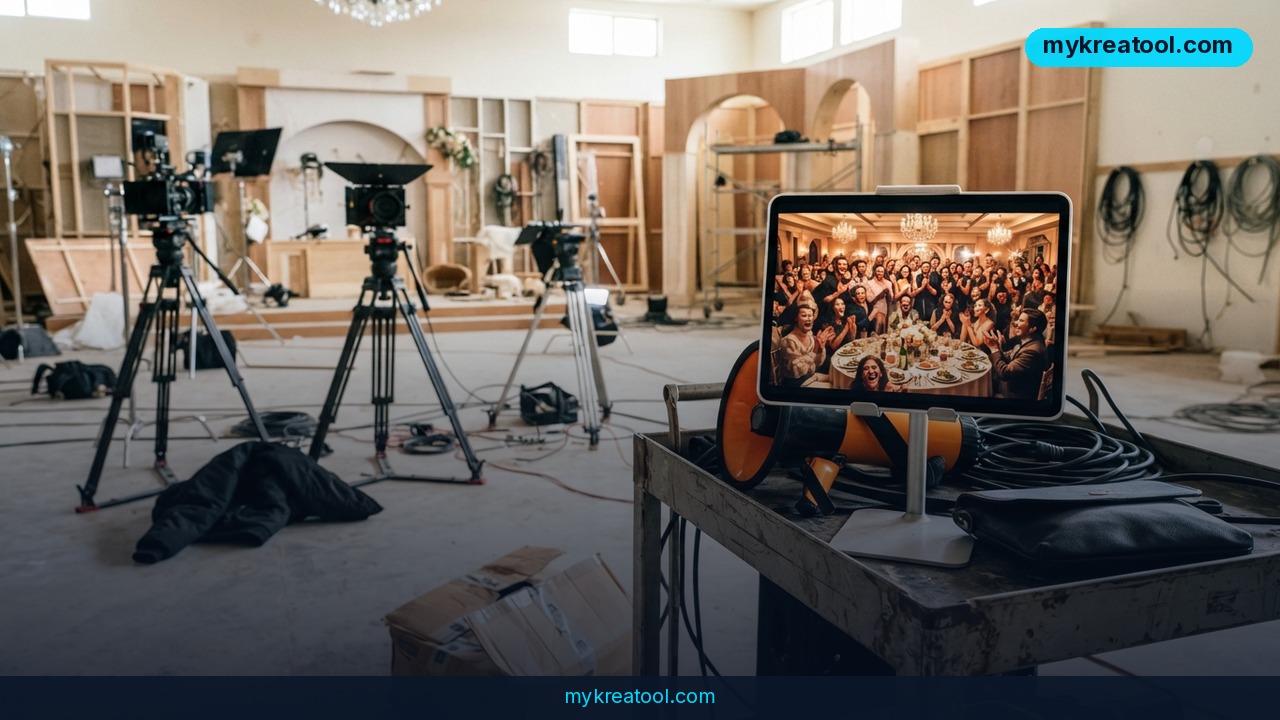
A producer named Sophia Xing, who runs a startup called Plot Party, recently laid out in plain terms what's happening on the production side of these shows. AI tools now generate the sets, the background extras, and a chunk of the crew work that used to require a location, a call sheet, and dozens of paid people showing up at 6 a.m. A banquet hall scene or a car chase through a valley — the kind of shot that used to need permits, actors, and a crew — can now be generated instead of filmed.
It's not a one-off experiment. In China, reporting from TechTimes this year put out a number that's hard to ignore: roughly 470 AI-generated microdramas are being produced every single day. That's not a pilot program. That's an assembly line, and it's already running at full speed while the rest of the industry is still figuring out what to call it.
Why this is different from past "AI hype"
Earlier AI video demos were short, glitchy, and clearly synthetic — fun to watch, not something you'd build a business on. What changed is consistency: AI can now hold a character's face, a location, and a scene's lighting steady across multiple shots, which is exactly what a drama needs. That technical jump is why a $20 billion content category can now be produced with a fraction of the crew it needed two years ago.
What it means for you
This isn't just a Hollywood story. The same tools driving the microdrama boom are available to regular people right now, and they change what's possible in ordinary situations.
At home
Want to turn old family photos into a short moving tribute for a birthday or a memorial? AI video tools can animate a still photo into a few seconds of natural movement — a smile, a turn of the head — without you touching editing software. What used to require a video editor friend now takes a text prompt.
At work
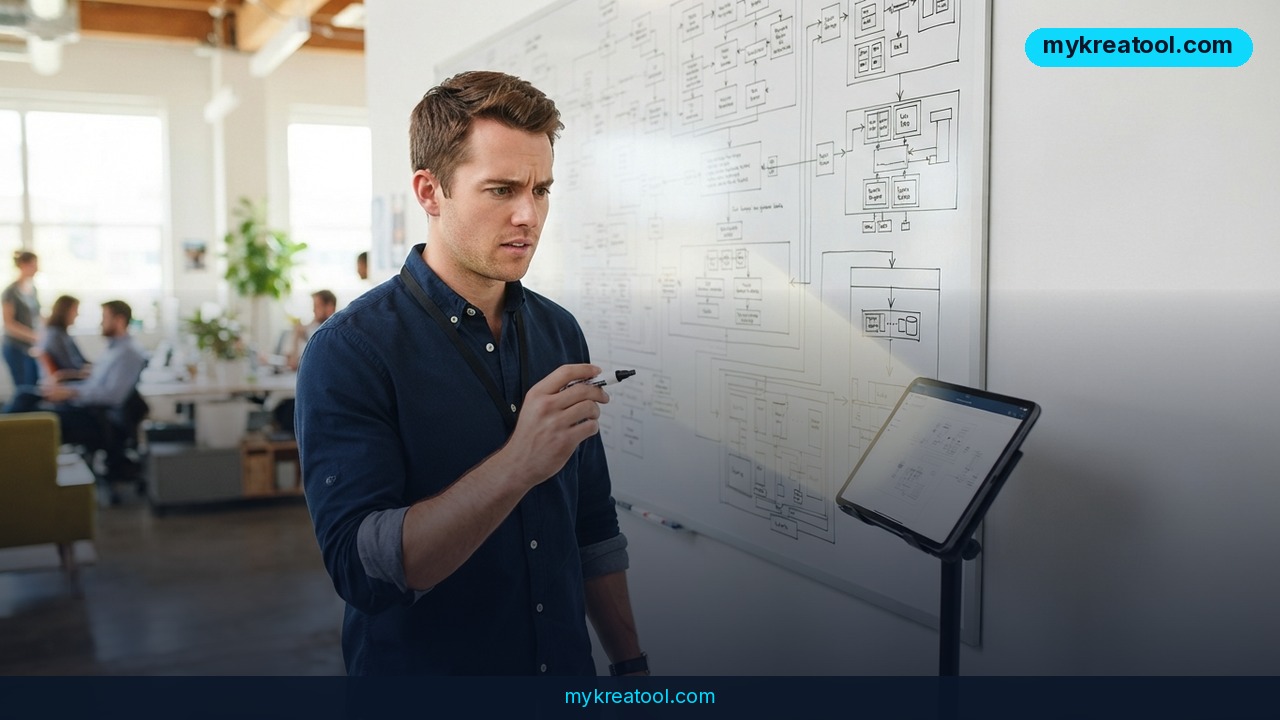
If your job involves any kind of internal communication — training videos, product walkthroughs, onboarding clips — you no longer need a camera crew or an actor on camera. You can generate a presenter, a background, and narration from a script, which is exactly the kind of "half the crew" replacement Xing described, just applied to a quarterly training video instead of a drama.
Running a small business
A local shop or service business can now produce ad-style video content — a product demo, a testimonial-style clip, a seasonal promo — without hiring a videographer or renting a studio. That's a direct cost that used to run into the hundreds or thousands of dollars per video, now collapsed into a subscription or a few free credits.
Studying
Students making a presentation, a thesis defense visual, or a language-learning practice video can generate illustrative scenes instead of hunting for stock footage that never quite fits. It also opens up simple explainer videos for group projects without needing a filming setup.
Creative projects
Independent filmmakers, comic artists, and writers can now storyboard or even fully produce a short scene to pitch an idea, without needing to convince a studio to fund it first. That's the same leverage Plot Party is selling to microdrama creators — just pointed at your own passion project.
Extra income
People are already selling short AI-generated video content — for social media accounts, for small brands that need quick clips, for microdrama platforms themselves that pay per episode. It's a real, if early and unregulated, income stream for anyone willing to learn the tools.
How to try it right now
You don't need a studio, a camera, or a crew to test this yourself. Here's the simplest path:
1. Start free. Go to MyKreaTool, which offers free AI tools including video and image generation, and try generating a short clip from a text description or a photo. No card, no install — a browser tab is enough to see what the technology can actually do.
2. Write a simple prompt. Describe a scene the way you'd describe it to a person: who's in it, where it is, what's happening, what mood it should have. Specific beats vague — "a woman walking through a rainy city street at night, neon signs reflected in puddles" works better than "a city scene."
3. Generate a few versions. AI video is still inconsistent shot to shot, so generate 2–3 takes and pick the one that holds together best.
4. Layer in your own footage or voice if you want it more personal. Most tools let you combine a generated clip with your own photo, logo, or voiceover.
5. Try a bigger platform once you know what you want. Tools like Runway, Pika, Kling, and OpenAI's Sora are the ones powering a lot of the professional microdrama work described above — worth a look once you've outgrown the free tier.
Upsides and what changes
The upside is real and immediate: cost. A scene that once required a location fee, a crew day rate, and camera equipment can now be produced for the price of a subscription, or free. That opens video production to people who were priced out of it entirely — a small business owner, a student, a solo creator with an idea but no budget. It also speeds things up dramatically: a scene that took a day to shoot can be generated in minutes, which means more experimentation and less risk in trying an idea before committing real money to it.
Limitations
This isn't a clean win for everyone, and it's worth being honest about that. The people whose jobs are disappearing — extras, crew members, location scouts — aren't getting a warning memo or a severance plan; work is just quietly drying up, one canceled call at a time. The legal ground under this is thin: in the U.S., SAG-AFTRA is still negotiating (not law) a royalty for AI-generated performers, while the EU has binding AI safety rules already in force — meaning protections vary sharply depending on where you live and work. And on the creator side, quality is still inconsistent: faces can drift between shots, physics can look off, and in some reported cases in China, people's likenesses have reportedly been used without clear consent. Treat AI video as a genuinely useful tool, not yet a fully trustworthy or fully regulated one.
Conclusion
AI video generation has moved from novelty to industrial-scale production in less than two years, and the $20 billion microdrama industry is the clearest proof of it. Whether you're running a business, studying, or just want to make something creative without a crew, the tools behind that shift are sitting in your browser right now. Your action for today: open a free AI video tool and generate one 10-second clip from a simple prompt — not to build a business yet, just to see with your own eyes what an entire production crew is now competing against.


Comments 0