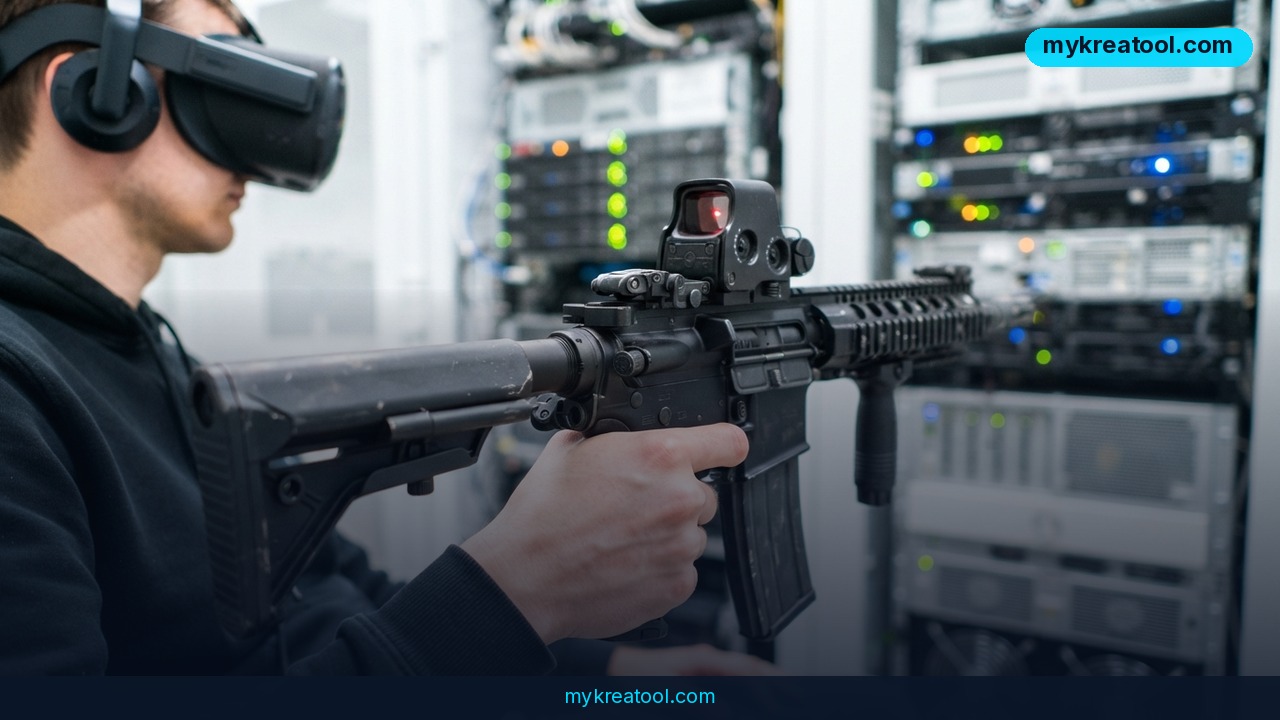
AI game development just moved from a party trick to something with a download button. A model called Claude Fable 5.2 reportedly built a working first-person shooter — 3D models, sound effects, textures and all the code holding it together — in about eight hours, for roughly $550 in API fees. The game is called Saltline, it runs in a browser, and you can go play it yourself.
What happened
According to VGTimes and TechPowerUp, Claude Fable 5.2 took one plain-English prompt and one-shotted a playable FPS in just eight hours. That build covers the whole stack: the level itself, weapon and environment models, sound effects, textures, and the game logic that ties it all together. CellCog put the bill at around $550 in API usage — that's the cost of renting the model, not of any human labor.
No artist sculpted a rifle. No sound designer recorded footsteps. No level designer blocked out a corridor. One person typed a request, waited a workday, and got something you can walk around in.
The prompt took ten seconds to write
Here's the entire brief:
> You know, you should also build me a FPS. Insanely detailed quality pls, something that looks visually like it can keep up with AAA. Make it small in scope (like a tiny level) but otherwise impressive photorealistic graphics
That's it. No asset list, no polygon budget, no engine choice, no folder structure. And notice the smart bit hiding in there: make it small in scope. Asking for one beautifully finished room instead of a whole house is what made this finishable in a single workday. Most people who get disappointing results from AI skip that instruction and then wonder why the model drowns.
What eight hours and $550 actually bought
An API is just a way to rent an AI model's brain per request instead of chatting with it in a browser tab. You pay for what it reads and writes, which is why the meter lands in the hundreds rather than the pennies once you're generating code and assets for hours. In this case that money bought a complete small game — environments, props, audio and the glue code between them.
The eye-catching part isn't that AI can write a shooting script. Programmers have been doing that for decades. It's that the same session produced the art and the sound too, which are usually the slow, expensive parts of any small game project.
Curious how far the free stuff gets you before you spend a cent? MyKreaTool collects free AI tools you can test-drive over a coffee break.
What it means for you
Strip away the gamer gloss and the lesson is pretty ordinary: one person with a narrow, clear brief can now ship something that used to need a team. Here's how that plays out in real life.
At home
Say you've got a birthday or a family reunion coming up and you want a tiny game the kids can poke at on a laptop. Instead of hunting for a template, you describe exactly what you want — one room, one goal, bright colors — and let a model draft it. The hard part stops being software and starts being your idea.
At work
Anyone who pitches ideas for a living knows the pain of describing a concept in a slide deck and watching eyes glaze over. A rough playable or interactive mockup does what twelve bullet points can't. Eight hours and a few hundred dollars is a rounding error next to a design sprint, and it gives stakeholders something to click instead of something to imagine.
Running a business
The pattern generalizes well beyond games. A landing page, an internal dashboard, a product configurator — the same approach works: tight scope, clear visual standard, one deliverable. The $550 number matters less than the ratio. Compare it to what a freelancer would quote you for the same tiny build, and the math often turns interesting for prototypes you'd otherwise never fund.
For students
If you're learning to code, this is a strange gift. You can ask for a working version of something and then read the code to see how it's done — like having a tutor who never gets tired of your questions. The trap, obviously, is shipping it without reading it. The people who benefit most treat the output as a textbook, not a finished homework assignment.
For creative people
Writers, illustrators and musicians have spent two years arguing about this. The practical takeaway here is narrower: the model generated assets to a specification. Someone still had to decide what the game should feel like, notice when something looked cheap, and push for better. Taste didn't get automated. It got promoted.
If you want extra income
Small, scoped, visual work is exactly the kind of thing that sells to small businesses — a promo mini-game, an interactive booth demo, a quirky thing for a product launch. The bottleneck has never been the tech; it's finding clients who want one. If you can write a sharp brief and judge quality, you're in a better spot today than you were last year.
How to try it right now
You don't need to spend $550 to get a feel for this. Start with the free option.
1. Play the finished thing first. Saltline runs in a browser with nothing to install. Give it five minutes. It's the fastest way to calibrate what current AI game generation actually looks and feels like, rather than what the hype says.
2. Write down one thing you'd change. Could be the lighting, the level layout, the sound. This is the muscle you'll use constantly — spotting what's wrong and describing it precisely.
3. Rebuild your idea on a free tool. Take that single change and try it with a free AI tool from the MyKreaTool lineup, where you can generate images, text and other assets without a credit card. One asset is enough for a first session.
4. If you want the full pipeline, rent the model. That means Claude Fable 5.2 through the Anthropic API — you pay per usage, and the reported all-in cost for a build like Saltline was about $550. Set a spending cap before you start.
5. Keep the scope brutally small. One level. One mechanic. Photorealistic polish on that one thing. That's the recipe that worked here, and it's the one that'll work for you.
6. Show somebody. A playable build in someone's hands beats any description of a game you haven't made yet.
Upsides and what changes
The obvious win is speed. Tasks that used to run for weeks now run for a workday, and the cost shows up as a metered bill rather than a payroll line. That changes who gets to make things: solo founders, teachers, hobbyists, one-person marketing teams.
Second, iteration gets cheap. When a rough build costs hours instead of weeks, you can throw away bad ideas early instead of defending them because you already sank a month into them.
Third, the floor rises for everyone. Studios will likely use this kind of generation for greyboxing, concept art and placeholder audio, cutting the boring middle of production. Meanwhile the ceiling — art direction, game feel, whether the thing is actually fun — stays exactly where it was: with people who have taste and the patience to use it.
Limitations
Let's be honest about what this is. It's one tiny level built from one prompt, and there's no evidence yet that the same approach scales to a real commercial game with multiplayer, live updates or months of playtesting. The $550 price is cheap next to a team, but it's not nothing, and you'll burn through it again every time you iterate on a big change. Generated assets also tend to drift in style, which is why a human still has to police consistency — and nobody has published a rigorous, independent teardown of how much of the build was hand-fixed afterward. Most importantly, eight hours doesn't mean a finished product. It means a strong first draft. The gap between a playable demo and something people pay for is still measured in months of taste, testing and polish.
Conclusion
A model built a small, good-looking, playable shooter in the time it takes to binge a season of TV, for roughly $550. Whether that excites you or worries you, the practical move is the same: learn to write the brief. Scope small, describe the visual standard, then judge the result honestly.
One action for today: open Saltline in a browser tab and play it for five minutes. Then jot down one sentence describing something you'd want built — a tiny game, a demo, an interactive page. You'll know within an hour whether this is a toy for you or a tool.
Comments 0