What happened
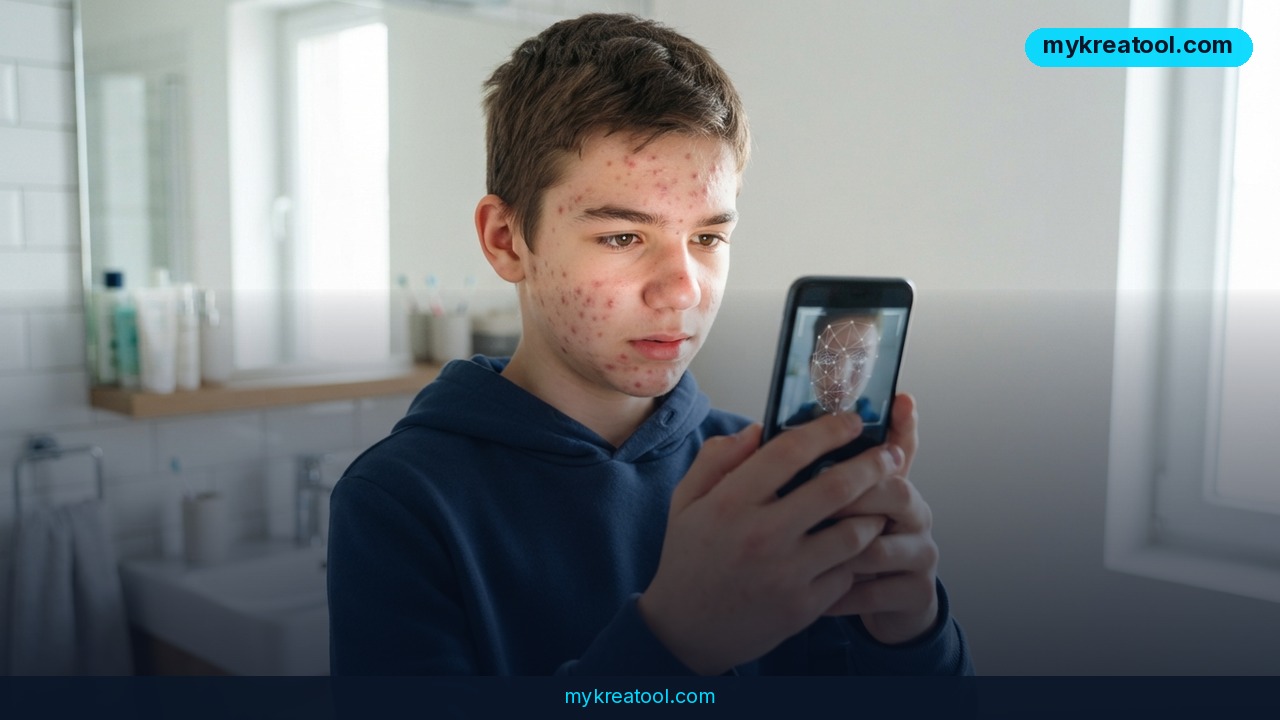
Utah just became the first state in America where software can hand you a brand-new prescription — not a refill, an actual first-time prescription — without a physician signing off first. The treatment is acne, and the company behind it is a healthcare startup called Nolla Health. On Monday, it announced that Utah residents can scan their faces inside its app, let the AI measure how severe their acne is, and get an AI acne prescription handed straight to them.
In plain English: you open the app, point your phone at your face, and the system plays dermatologist. It grades your skin, picks a treatment, and writes the prescription. Bloomberg reported the story first, and The Verge's Emma Roth covered it the same day.
The oversight starts strict, then loosens on a schedule
Here's the detail most headlines skipped. Nolla Health is running a pilot program — tech-speak for "we're testing this on a small group before rolling it out wide" — and the amount of human supervision drops in three stages:
• First 100 patients: two physicians approve every AI-generated prescription before it's issued.
• Up to 500 patients: physicians stop reviewing beforehand and instead check prescriptions after they've already gone out.
• From then on: physicians review a sample of at least 10% of prescriptions every month, plus every single case involving an escalation or a side effect.
So doctors go from checking 100% of prescriptions to checking roughly one in ten. That's a real shift, not a rounding error.
It's a first-time prescription, not a renewal
Utah started letting AI systems renew certain medications earlier this year, and several other healthcare companies are already testing AI-generated prescriptions there. Nolla says it's the first in the country to write initial prescriptions rather than renewals — a bigger deal than it sounds, because starting someone on a new drug from scratch is where most of the risk lives. The pilot covers eight different skin treatments, costs $4.99 a month, and is limited to Utah residents who are 18 or older with mild-to-moderate acne. If the AI can't confidently select a treatment, the company says it sends the user to a physician instead.
What it means for you
You might not live in Utah, and your skin might be perfectly fine. It still matters, because this is a preview of how a lot of everyday services are about to work. Here's what that looks like in real life.
At home: a dermatologist that lives in your phone
Acne care has always been a slog. You wait weeks for an appointment, take time off to drive across town, sit in a waiting room, and pay a specialist's rate — often for a routine call. Now it's a two-minute face scan in your bathroom for $4.99 a month. The honest catch: severe or cystic acne is out of scope, and this only works if you're in Utah.
At work: the "AI handles the easy stuff" pattern
The split Nolla describes is the model your boss is about to copy. Routine, low-acuity cases — industry jargon for "boring, low-risk work" — go to software. Complex, high-risk cases stay with humans. Nolla puts it plainly: the pilot is designed to complement, not replace, physicians, and by handling routine cases it frees dermatologists to focus on complex, high-risk patients. Expect a version of that sentence in your company's next all-hands meeting.
For business owners: routine approvals just got cheap
Think about any approval bottleneck in your business — intake forms, first-pass screening, triage, basic compliance checks. That work used to eat a specialist's calendar. Now it happens at software prices, with a human checking a sample afterward. If your product involves a repetitive, low-risk decision, that's exactly where your margin is about to move.
For students and self-learners: a live case study
If you're studying healthcare, law or AI ethics, this pilot is homework that writes itself. The interesting question isn't whether an AI can spot a pimple. It's whether a monthly 10% sample catches the rare bad call — and who's accountable when it doesn't.
For creators and side income: a niche just opened
Every new AI rule creates demand for plain-English explainers: what changed, who qualifies, what it costs. Nolla Health just handed content creators a topic that people actually search for, and it will keep generating news as the oversight rules loosen.
How to try it right now
Start with the free option, then decide whether the paid one is worth your money.
Step 0 — free: Before you spend a cent, get your questions straight. Fire up a free AI tool such as the ones at MyKreatool and ask it to explain what an AI prescription actually is, what acne treatments exist, and what questions you should ask a clinician. Ten minutes there saves you guesswork later.
Step 1 — check you qualify. You need to be a Utah resident, 18 or older, with mild-to-moderate acne. Miss any of those and the service isn't for you yet.
Step 2 — get the Nolla Health app and scan your face. Natural light, clean skin, no filters. The AI reads your acne severity from the image.
Step 3 — answer the intake questions honestly. The system only knows what you tell it. Downplaying a medication you're already on is how bad decisions happen.
Step 4 — let it pick a treatment. It can currently prescribe eight different skin treatments.
Step 5 — read the prescription properly. Note what to apply, how often, and what side effects to watch for.
Step 6 — escalate if the AI isn't sure. If it can't confidently select a treatment, Nolla says it points you to a physician.
Step 7 — budget for it. The program costs $4.99 a month.
Upsides and what changes
Speed is the headline. A routine skin problem that used to mean a weeks-long wait now gets answered in minutes, at a price that's less than most people's coffee habit. Dermatologists get their time back for complex, high-risk patients — the cases where a human really is irreplaceable. And transparency improves: the oversight schedule is published, with 100% physician approval for the first 100 patients and at least a 10% monthly review afterward.
The bigger shift is the template. Once a state approves AI-written first prescriptions for one low-risk condition, other conditions and other states will follow. Expect this same launch pattern — strict human review, then sampling, then light-touch monitoring — to show up in insurance claims, hiring screens, loan pre-approvals and customer support.
Limitations
Let's be honest about what this pilot doesn't do. The final stage relies on physicians reviewing at least 10% of prescriptions each month, which means nine out of ten go out without a second set of eyes — fine for mild acne, less reassuring as a general standard. The scope is narrow: one condition, mild-to-moderate severity only, eight treatments, one state, adults 18 and up, and no prescription renewals. An AI reading a photo can't feel your skin, ask about your history in the moment, notice that you're pregnant or on an interacting drug unless you type it in, or catch the thing a seasoned clinician senses from across the room. Nolla Health itself says the pilot complements rather than replaces physicians, and that's the right framing — treat it as a fast lane for routine cases, not a replacement for medical judgment. It's also early. There's no long track record yet, and the interesting test comes later, when the oversight thins out.
Conclusion: One Action for Today
AI prescriptions are no longer a thought experiment — they're live in Utah at $4.99 a month, with a physician oversight schedule that shrinks from every case to a 10% sample. You don't have to live there to learn from it.
Your one action today: open a free AI tool like the ones at MyKreatool and ask it to explain, in plain English, one routine decision in your life or business that could be handled by software with a human checking a sample afterward. Write down the first step. That's the same playbook Nolla just ran in a regulated industry — and it's coming to yours.

Comments 0