What happened
In the span of a few weeks, three Chinese AI labs released open-source models that closed-source AI competitors in Silicon Valley can no longer ignore. Z.ai shipped GLM 5.2 in June, Moonshot AI followed with Kimi K3, and Alibaba released Qwen 3.8 days later. Independent, third-party benchmarks show all three performing nearly as well as the leading Western systems, particularly on agentic coding tasks — the single most in-demand AI capability of the year.
The reaction in Washington was immediate. Venture capitalist and White House AI adviser David Sacks called Kimi K3's performance "concerning." Commerce Secretary Scott Bessent floated the idea of sanctions against Chinese AI firms. Michael Kratsios, director of the White House Office of Science and Technology Policy, went further, alleging Moonshot AI had distilled a proprietary Anthropic model during K3's development — a claim he described as "stealing proprietary US technology." Moonshot AI has not responded publicly.
Meanwhile, two of the most anticipated American releases — Anthropic's flagship model and OpenAI's next-generation system — were both delayed or restricted after direct requests from the White House, tied to concerns about their offensive cybersecurity capabilities. The contrast is stark: as US labs pull their most capable models further behind closed doors, Chinese labs are pushing theirs into the open, free for anyone to download and run.
Why it matters
This isn't just a rerun of the DeepSeek moment from January 2025, though the parallels are obvious. What's different now is that the gap between open and closed models has nearly disappeared on practical, revenue-generating tasks like coding — while the gap between US and Chinese AI policy has widened. American frontier labs are increasingly treating their best models as controlled technology, restricting access even to paying customers over safety and export-control concerns.
Chinese labs, positioned as the smaller, newer players in the global AI race, have made openness their competitive strategy. Releasing free, open-weight models attracts developers, researchers, and enterprise users who might otherwise never touch a Chinese AI product. It also sidesteps direct competition with the compute-heavy, capital-intensive approach used by OpenAI, Anthropic, and Google. Alibaba reinforced this bet on Monday: despite earlier signs it might pivot to a closed-source model, it doubled down on its open Qwen line instead.
For businesses and developers, the practical upshot is that state-of-the-art AI capability is no longer locked behind a handful of US-controlled APIs. A model you can download, fine-tune, and run on your own infrastructure is now a real alternative to a subscription-gated closed system — a shift with real consequences for cost, data privacy, and vendor lock-in.
How to use it today
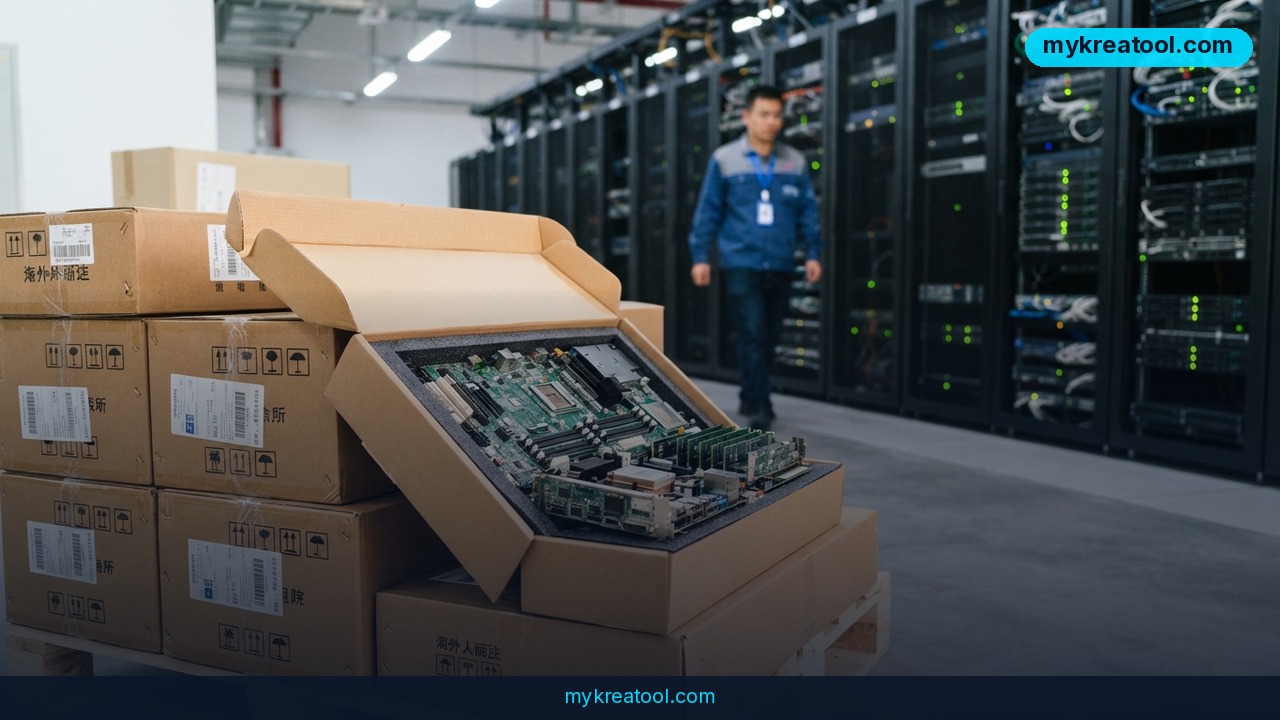
Open-weight models like Kimi K3, GLM 5.2, and Qwen 3.8 can be downloaded directly from repositories like Hugging Face and run locally or on rented cloud GPUs, provided you have adequate hardware — typically a multi-GPU setup for the largest variants, though smaller distilled versions run on a single high-end consumer GPU. Once downloaded, teams can fine-tune the model on proprietary data, strip out unwanted behaviors, or integrate it directly into internal tools without sending sensitive data to a third-party API.
For smaller teams without the infrastructure to self-host, many of these models are also available through low-cost inference providers at a fraction of the per-token price of comparable closed models, since there's no licensing premium built in. That price gap is already reshaping how startups budget for AI-powered products.
Not every workflow requires a self-hosted, multi-billion-parameter model, though. If you just need quick access to AI-powered utilities — writing assistants, image generators, converters — without spinning up any infrastructure, a lighter-weight option is worth trying first. Tools like the free AI utilities on mykreatool.com let you test AI capabilities immediately in the browser before deciding whether a full open-source deployment is worth the investment.
Who benefits
Developers and startups building AI-powered coding assistants stand to gain the most immediately, since agentic coding is exactly what these new open models were optimized for. Companies in regions with limited access to top-tier US AI subscriptions, or those wary of sending proprietary code to a foreign closed API, now have a credible, self-hostable alternative.
Researchers benefit too: open weights mean the model's internals can be studied, audited, and modified, something impossible with closed systems like the restricted releases coming out of Anthropic and OpenAI. Enterprises with strict data-residency requirements can run these models entirely on-premises, avoiding the compliance headaches of routing sensitive data through a third-party API.
Chinese AI labs benefit strategically — open models generate goodwill, developer mindshare, and global usage numbers that a closed, subscription-only product could never achieve as quickly. It's a fundamentally different growth playbook than the one Silicon Valley has relied on since 2023.
Risks
The openness cuts both ways. Open-weight models can be modified to remove safety guardrails entirely, and once a model is downloaded, its behavior is out of the original developer's control. That's precisely the concern driving US export-control threats and sanctions talk — regulators worry these models could be repurposed for offensive cybersecurity tasks or other misuse with no way to revoke access after the fact.
There's also a geopolitical risk for any business adopting these tools: sanctions or export restrictions could arrive with little warning, and US allegations of technology theft — like the distillation claim against Moonshot AI — could escalate into formal legal or trade action that affects which models remain legally usable in certain markets.
Finally, running large open-weight models locally requires real technical investment. Without in-house ML infrastructure expertise, the promised cost savings can evaporate quickly into GPU rental bills and maintenance overhead.
Conclusion
The latest wave of Chinese open-source AI models — Kimi K3, GLM 5.2, and Qwen 3.8 — has narrowed the performance gap with closed US systems just as Washington tightens restrictions on its own frontier labs. For businesses and developers, that means real, usable alternatives to closed AI subscriptions are now just a download away, alongside new questions about safety, sanctions, and where the AI industry's balance of power is headed next.


Comments 0