What happened
OpenAI has published a new report card for the AI personal assistant you'd actually want in your life — and the subjects are kindergarten waiting lists, diabetes meal plans and flood prep, not code.
On November 2, 2026, OpenAI released a research paper called LifeVal. In plain English, LifeVal is a benchmark: a fixed set of test tasks with scores attached, so you can compare how good a model is this year against how good it was last year. Think of it as a driving test for chores. If the model can't parallel-park your grocery order, the score says so out loud.
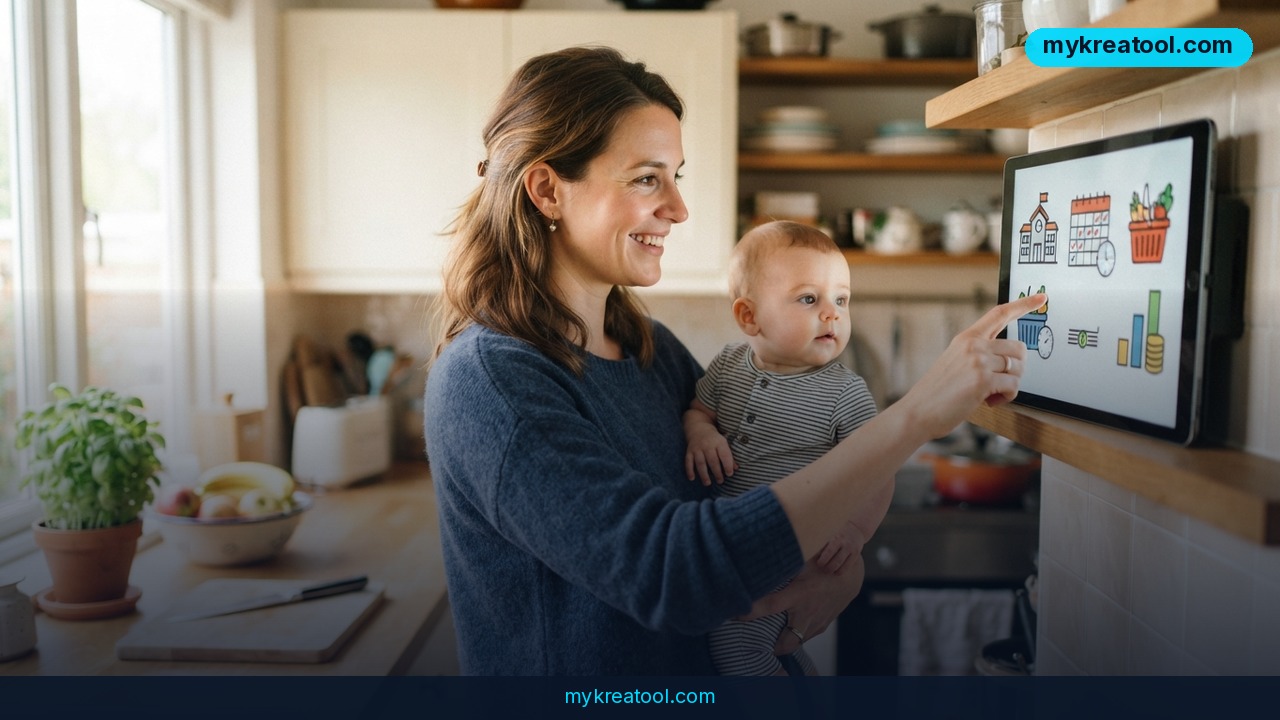
Why bother? Because ChatGPT isn't just an essay machine anymore. OpenAI says more than one billion people use it every week, and plenty of them aren't asking for paragraphs. They're asking for help finding childcare, accessing government services, building a budget, getting a kid ready for school, tweaking a recipe, ordering groceries and designing a workout plan.
Where the task list came from
OpenAI didn't invent the chores. It started with two large datasets that log how people actually spend their time — the American Time Use Survey and the Multinational Time Use Study — which together map daily life across ages, times of day and seasons.
Then it ran a new demographically representative survey of 3,995 respondents to find out where people most wanted help. "Demographically representative" just means the group roughly matches the real population by age, income and region, so you're not only hearing from tech workers in San Francisco. The resulting task list covers caregiving, health, education, household administration, personal finances, shopping and government services. In other words: the boring, high-stakes stuff.
The five scores OpenAI is showing off
OpenAI published a handful of sample workflows. The percentages are the model's scores on those tasks:
• Enrolling a child in kindergarten after a move — 93.1%. The model compared nearby kindergartens, shortlisted three, organized the enrollment details and flagged two preferences that still needed a human decision.
• Organizing flood-prep volunteers for four neighbors — 98.0%. It put together a simple action plan so volunteers could assess the sites and get ready for severe weather.
• Finding a family home in Luzerne County — 100%. Budget limit, a separate living unit, a short commute after school drop-off. It found one match, calculated the transfer tax and added the deed to a cart for review.
• Setting up remote game-watching with grandma — 96.3%. A main setup plus a backup in case the stream fails.
• Meal prep for a parent adjusting to a new diabetes diagnosis — 90.4%. A first-week plan with meals, reminders and questions to bring to the care team.
Notice the pattern? None of these end with a wall of text. They end with a shortlist, a plan, a cart, a checklist — something already half finished.
The real shift: from chatting to doing
OpenAI's paper is blunt about the goal: advice isn't enough. To be a genuinely useful AI personal assistant, the model has to take actions that actually get things done.
That's the idea behind the word you'll keep hearing — "agentic." It just means the AI does things instead of only talking about them. Over the past year, OpenAI says it trained its models to be faster and more capable on browser use (clicking through websites), computer use (operating software) and connectors (plugging the model into other apps so it can read your data and act on it). Turn those on, and the range of tasks ChatGPT can help with widens a lot.
What it means for you
At home
The kindergarten and diabetes examples are the clearest signal here. These are the jobs that eat a Saturday — comparing options, cross-checking requirements, writing the plan down. You don't need the AI to make the final call (the kindergarten example literally hands two decisions back to the human). You need it to do the legwork up front so the decision takes one short sitting instead of two evenings.
At work
Think of every task where you're the middleman between three tabs and an email. Chasing vendor quotes, booking travel that fits a policy, reconciling a spreadsheet against an invoice. The flood-volunteer example shows the shape of it: a plan, ready to hand to people who'll act on it. That's a project manager's morning routine, compressed.
Running a small business
The home-buying example is quietly the most interesting one for owners. It shows the model handling a multi-constraint search — budget, layout, commute — and then pushing through to a concrete next step with a cost attached (the transfer tax). Swap "home" for "commercial lease" or "supplier" and you've got a sourcing assistant that doesn't stop at a list of links.
Studying
"Education" is one of the seven categories in the eval. The practical version: a student who struggles to start gets a study plan with dates, resources and checkpoints, instead of a definition of the topic. The value is in the structure, not the answer.
Creative work
Recipe modification is on OpenAI's own list of everyday asks, and it's the same muscle as any creative brief: keep these constraints, drop that ingredient, don't lose the point. Creative people don't need ideas handed to them — they need the tedious versioning done so they can spend their energy on the part only they can do.
Income
"Personal finances" is another category. We're talking budgeting, comparisons and paperwork — not investing advice and not a robot moving your money. The realistic win is that the boring financial admin that people avoid for months (a budget, a benefits application, a form with a deadline) becomes a 20-minute job.
How to try it right now
You don't need a research paper to test this. You need a task you've been putting off.
1. Start free. Before you touch anything with a signup wall, run a real task through a free AI tool. MyKreaTool collects free AI tools in one place, which is handy for a first pass on summarizing, drafting and planning. Zero cost, zero commitment.
2. Open ChatGPT and pick a chore, not a question. Not "what's a good budget?" — but "here's my income, rent, and two debts; build me a monthly budget and tell me what I'm missing."
3. Give it the constraints like a brief. Budget, location, deadlines, deal-breakers. The Luzerne County example scored 100% because the request was specific: budget, separate living unit, short commute.
4. Ask for a deliverable. "Give me a shortlist of three," "put it in a table," "write the email I'll send." Vague asks get vague answers.
5. Check the output before you act. Especially anything with a number attached — taxes, fees, dates. Treat it like a smart intern's first draft: useful, not gospel.
6. Keep the good ones. Save the prompts that work. That's your personal benchmark, and it's worth more than any leaderboard.
Upsides and what changes
Here's the honest upside. The gap between "AI that talks" and "AI that finishes" is where most of the frustration lived. You could get a great answer and still spend an hour acting on it. Move the action inside the tool — filling a cart, drafting the plan, shortlisting options — and the time saved is real, not theoretical.
A second upside is accountability. A published benchmark with a named set of tasks, a survey of 3,995 people and two government time-use datasets behind it gives everyone a shared yardstick. When OpenAI says its models got better over the past year on browser use, computer use and connectors, you can at least see what it's measuring.
And a third: these tasks look like ordinary life, not demos. Kindergarten enrollment, caregiver meal plans, flood prep. That's a far more useful signal for a small business owner than a leaderboard of math puzzles.
Limitations
The honest caveats matter here. These are self-reported scores on OpenAI's own evaluation, using sample tasks it chose to publish — five cherry-picked workflows out of a much larger set, chosen to show the range. High numbers on a benchmark don't guarantee the same result when your town has three kindergartens, not thirty, or when a website changes its checkout flow on a Tuesday. Anything that touches money, taxes, legal documents or health still needs a human review step; the diabetes meal plan in the example is explicitly a plan to bring to a care team, not a treatment. And agentic tools that can click around websites and read your connected apps carry a real privacy trade-off — you're handing over access, so it's worth deciding task by task what you're comfortable with.
Conclusion
OpenAI's LifeVal paper is a signal about direction more than a scoreboard. The goal it describes — an AI personal assistant that handles childcare searches, budgets, grocery orders and government forms, then hands you something finished — is a different product from the chatbot of two years ago. The scores (93.1%, 98.0%, 100%, 96.3%, 90.4%) are OpenAI's own, so treat them as a promising sign, not a promise.
One action for today: pick the one chore you've been avoiding for weeks — the budget, the enrollment form, the meal plan — and hand it to ChatGPT as a brief with real constraints. Judge the output yourself. You'll learn more from one real task than from any benchmark.

Comments 0