What happened
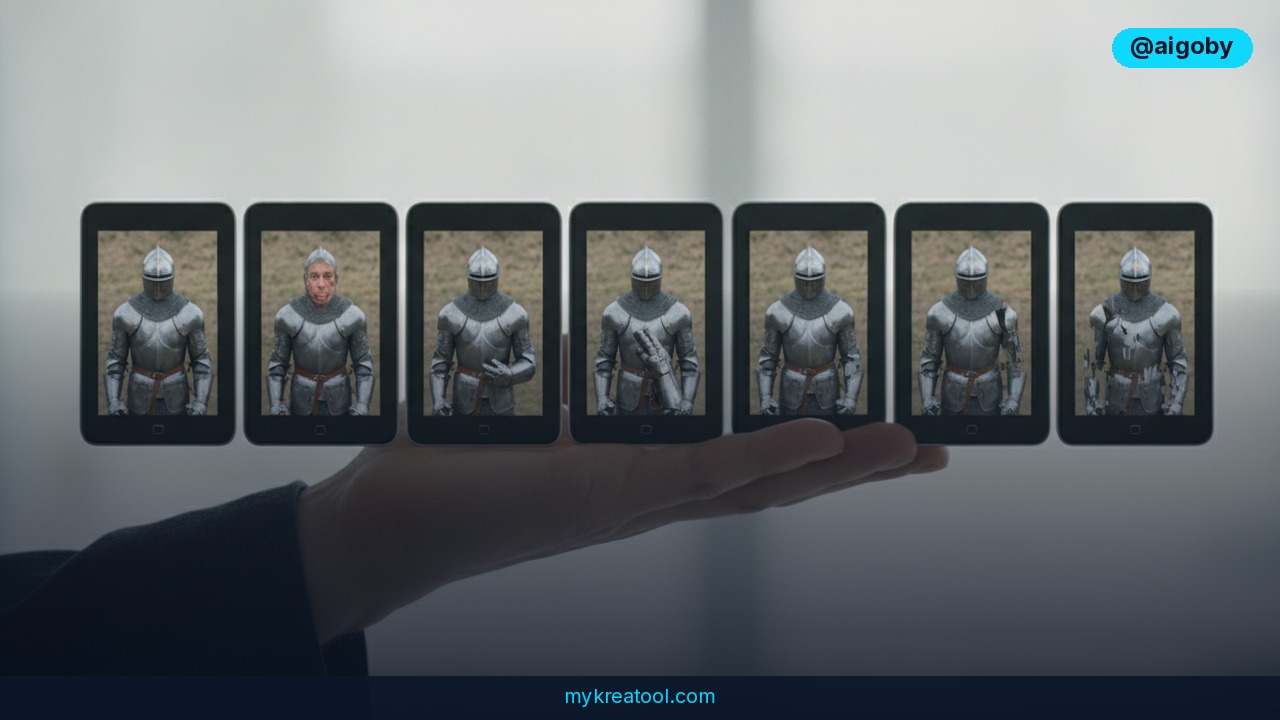
A new round of testing has answered the question every marketer and creator has been asking: which is the best AI video generator in 2026? A Habr-based benchmark ran five leading text-to-video models — Google's Veo 3.1, Kling v3 Omni, OpenAI's Sora 2 Pro, Lightricks' LTX-2.3 Pro, and xAI's Grok Imagine Video 1.5 — through seven identical prompts, from a medieval knight to a panicking cat, under equal settings and equal conditions. The headline finding: the telltale glitches of early AI video — melting faces, extra fingers, jittery motion — have largely disappeared from the top tier of models by mid-2026.
Each model was scored on the same scenarios, no cherry-picking, no custom prompt engineering per tool. That matters because most "best AI tool" roundups quietly tilt the test toward one vendor. Here, the constraint was identical inputs across all five systems, which makes the pricing and capability gaps far more informative than the visual quality alone.
The five contenders
Veo 3.1 (Google) is the flagship, with native audio, strong physics and lighting, and access through the Gemini Developer API or Google Flow. Kling v3 Omni pairs strong motion coherence with reference-image support. Sora 2 Pro remains the most talked-about model online, but OpenAI shut down the consumer sora.com app in April 2026, and the API itself is scheduled for retirement on September 24, 2026 — a real constraint for anyone building on it long term. LTX-2.3 Pro leans into cinematic camera control and storyboard tooling. Grok Imagine Video 1.5 is the fastest of the group, with a distinct, often humorous rendering style.
Why it matters
Pricing, not raw quality, is now the deciding factor for most production use. Veo 3.1 Standard costs $0.40 per second at 720p/1080p with audio, while Veo 3.1 Fast drops to $0.10–$0.12 per second and Veo 3.1 Lite to $0.05 per second at 720p — a tenfold spread inside a single model family. Kling v3 Omni sits at $0.084/sec for 720p and $0.112/sec for 1080p, with native audio adding roughly 25–33% on top. Sora 2 Pro is priced per resolution tier: $0.30/sec at 720p, $0.50 at 1024p, and $0.70 at 1080p, with a 50% batch discount for non-interactive jobs. LTX-2.3 Pro starts at just $0.08/sec for 1080p (its fast tier is $0.06/sec), rising to $0.16/sec at 1440p and up to $0.32/sec at 4K — notably, it doesn't offer 720p at all, since 1080p is its floor.
Duration limits vary just as much. Sora 2 Pro allows up to 20 seconds per generation (in fixed steps of 4, 8, 12, 16, 20), Kling v3 Omni caps at 15 seconds, Veo 3.1 caps a single generation at 4–8 seconds but supports extension chains up to 148 seconds, and LTX-2.3 Pro tops out at 10 seconds in its Pro tier (20 seconds on the fast tier). For a 30-second ad or explainer, that means very different numbers of stitched clips — and very different final bills.
Resolution and quality ceilings
Only LTX-2.3 Pro and Veo 3.1 Standard/Fast reach true 4K output; Kling v3 Omni and Sora 2 Pro cap at 1080p. If a project needs 4K delivery for broadcast or large-format display, that immediately narrows the shortlist to two vendors, regardless of how good the other three look on a laptop screen.
How to use it today
For most short-form social content — Reels, Shorts, TikTok-style clips under 10 seconds — Veo 3.1 Fast or LTX-2.3's fast tier offer the best cost-to-quality ratio, both landing near $0.06–$0.10 per second. For longer narrative shots needing up to 20 seconds in one take, Sora 2 Pro is currently unmatched on duration, but its looming API shutdown in September 2026 makes it a poor choice for anything meant to run in production past this year. Teams building a full pipeline — script, voiceover, video, thumbnail — don't need five separate paid subscriptions to prototype ideas first; a free toolset like the one at mykreatool.com covers scripting, image and basic AI generation steps before committing budget to per-second video API costs on the five vendors above.
Matching model to scenario
A quick creator decision tree: choose Kling v3 Omni when reference-image consistency across shots matters more than raw speed; choose Grok Imagine Video 1.5 when turnaround speed and a distinct stylized look fit the brand voice; choose LTX-2.3 Pro when the deliverable needs 4K and camera-move control for a client pitch.
Who benefits
Agencies producing short paid social ads benefit most from the Fast/Lite tiers, where a 6-second clip now costs well under a dollar in raw generation fees. Indie creators and solo marketers benefit from the falling floor price — LTX-2.3's $0.06–$0.08/sec tier makes iterating on five or six variants of a concept affordable before picking a winner to promote. Enterprises with compliance or continuity requirements benefit from knowing upfront which vendors (Sora 2 Pro, in this case) carry a scheduled end-of-life date on their API.
Risks
The biggest risk isn't visual quality — it's platform stability. Sora 2 Pro's confirmed API shutdown on September 24, 2026 means any workflow built around it needs a migration plan now, not later. Pricing across all five vendors is also usage-based per second, which can scale unpredictably for teams generating dozens of variants per campcampaign without a hard budget cap. And because all five models were tested only on short, controlled scenarios, real-world prompts — brand-specific characters, exact product shots, complex multi-subject scenes — may expose gaps the benchmark didn't catch.
Conclusion
By mid-2026, the AI video generator race is no longer about who can render a face without it melting — all five leading models clear that bar. The real differentiators are price per second, maximum clip duration, resolution ceiling, and platform longevity. Veo 3.1 and LTX-2.3 Pro currently offer the best value-to-quality mix for most creators, Kling v3 Omni wins on reference consistency, and Sora 2 Pro's raw capability comes with a genuine expiration date worth planning around before adopting it for anything long-term.


Comments 0