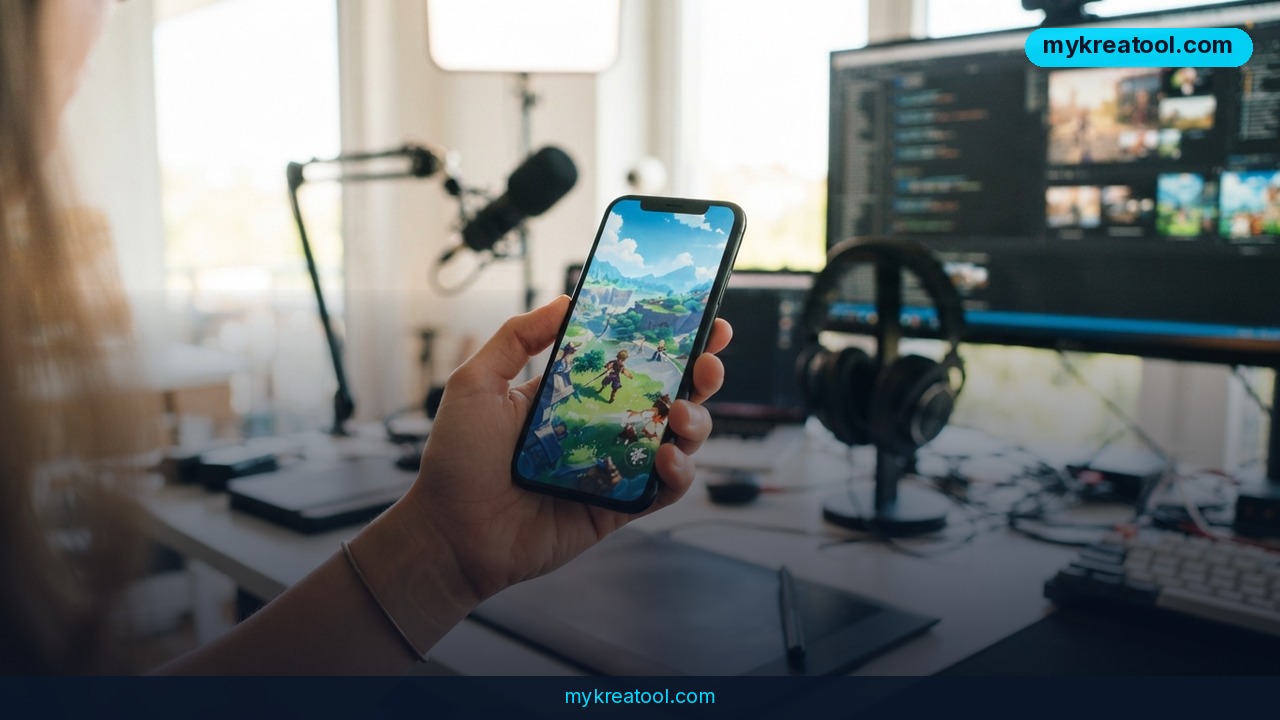
Meta has just launched an AI game maker that turns a plain-English description into a playable game. The tools are called Horizon Create and Horizon Studio. You type what you want, the AI builds it, and you can publish the result to Facebook and Instagram. You don't need to know how to code.
What happened
Meta announced two new tools, Horizon Create and Horizon Studio. Both let people build complete 2D and 3D games from AI prompts. A prompt is just a written instruction, like 'a neon racing game where you dodge falling asteroids.' Both tools run on a phone or in a web browser, so you don't need a gaming PC or a heavy download.
The announcement was covered by GamesIndustry.biz, eWeek, TechPowerUp and daily.dev. One of those reports says Meta also announced VR glasses with day-one Unity support. Unity is a popular engine that professional studios use to build games.
What the AI actually builds
The AI doesn't just paint a pretty picture. It can generate gameplay systems (the rules of how the game works), difficulty levels, art direction (the overall look and mood) and multiplayer features. Think of it as hiring a very fast junior game designer who drafts everything in minutes. You're the creative director who says, 'Nice, but make the hero faster and the world darker.'
You stay in control
Nothing is locked. Creators can still tweak every part by hand. If the AI's first draft is 80% right, you fix the last 20% yourself instead of starting over.
What it means for you
The big shift is that making a game is starting to look more like writing a message than learning a programming language. Here's how that could play out in real life.
At home: a game made for your family
Picture a rainy Saturday. Your kid says they want a game about a dragon who collects socks. Instead of searching app stores, you describe it, get a rough version in a few minutes, and adjust the difficulty so a seven-year-old can win. It's a small thing, but it turns kids from players into makers.
At work: training that people finish
Companies struggle to get staff to sit through safety or onboarding slides. A short game where new hires spot hazards in a warehouse or handle a tricky customer is far more memorable. Because the tools run in a browser, a team lead could draft one without waiting for a developer.
In business: marketing people actually play
Meta lets creators publish across Facebook and Instagram, and players can jump from a clip straight into a multiplayer session without installing another app. That's a real advantage for brands. A cafe could launch a quick trivia game. A shoe brand could build a mini obstacle course. Your ad becomes something people play, not something they scroll past.
For study and creativity
Teachers can build a history quiz set inside an ancient city. Students can turn a short story into an explorable world. Artists and writers who've always had game ideas but no coding skills finally have a way in.
For income
Indie creators may find a fast way to test ideas. If a simple game catches on with friends, you've validated it in an afternoon rather than after six months of development. Sources haven't detailed any payout or monetization program, so treat income as a possibility, not a promise. If you want to sharpen your game concept, pitch or store description while you wait, the free AI tools at MyKreaTool are a handy place to draft and polish text and ideas.
How to try it right now
The tools you're looking for are called exactly Horizon Create and Horizon Studio. Meta says they work on mobile and in a browser. The sources I checked don't spell out pricing, waitlists or which countries get access first, so don't assume you'll see them today. Here's the sensible order to go in.
Step by step
1. Start free. Sketch your idea in plain words before you touch any tool: genre, goal, how you win, how you lose, and the mood. A clear description is what gets you a good result from any AI game maker.
2. Check access. Open the announcement coverage linked above, such as the GamesIndustry.biz report, for the latest on rollout. Then look for Horizon Create or Horizon Studio through your Meta account, on your phone or in your browser.
3. Write your first prompt. Keep it short and concrete: 'A 2D platformer where a fox collects lanterns in a forest at night. Easy difficulty. Two-player mode.'
4. Play the draft, then tweak. Test what the AI made, then change one thing at a time: speed, art style, number of levels.
5. Publish and share. Post it to Facebook or Instagram and invite a friend to jump into a multiplayer round.
Upsides and what changes
The biggest upside is speed. What once took a team weeks can now produce a playable first draft in the time it takes to make coffee. The second is reach. Because games live inside Facebook and Instagram, players don't have to find your game in an app store or wait for a download.
The bigger change is who gets to make games. Meta is also pushing Horizon beyond VR (virtual reality headsets) and turning it into a mobile-first gaming platform. That matters, because far more people own a phone than a headset. Expect a wave of small, quirky, personal games, some brilliant and many forgettable, just as short video did for filmmaking.
Limitations
It's early, and a few things are still unclear. Meta hasn't publicly detailed pricing, regional availability or how creators will earn money in the sources reviewed here. AI-generated games can also feel samey, since the AI leans on common patterns, and a first draft may have rough balance or odd bugs that need manual fixing. You'll still need taste and patience to turn a draft into something people want to play twice. And if you're building a business on a platform you don't own, remember Meta sets the rules.
Conclusion and one action for today
Meta's Horizon Create and Horizon Studio make one idea very concrete: describe a game, get a playable version, publish it where your audience already hangs out. Whether it becomes a real creative outlet or a passing novelty will depend on how good the results are once more people get their hands on it.
One action for today: write a three-sentence description of a simple game, covering the goal, the setting and how you win. When Horizon Create or Horizon Studio reaches you, you'll have your first prompt ready.



Comments 0