What happened
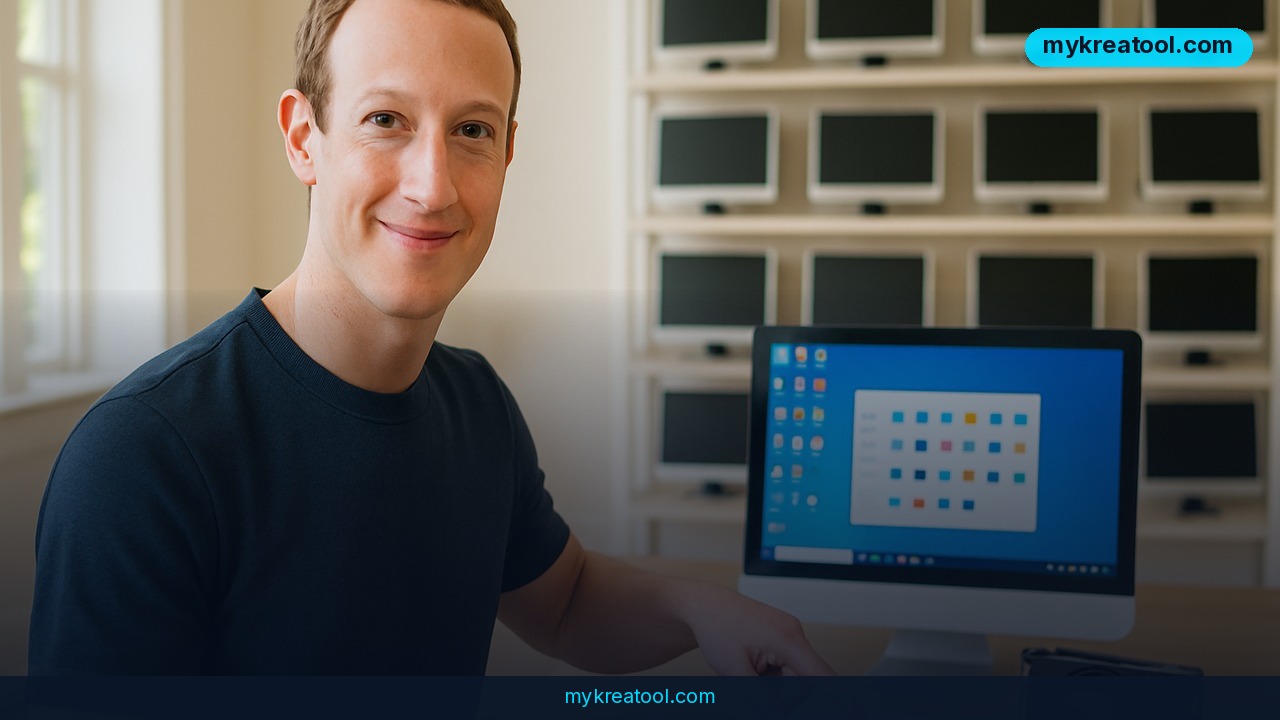
A local AI model that fits on a single consumer GPU just became a real option for entrepreneurs and creators, not just researchers. On the same day, Meta released Muse Glimmer, a 30-billion-parameter model that runs entirely on one 24GB GPU with a download under 20GB, and OpenAI expanded its Daybreak cybersecurity program into two access tiers. The timing wasn't coordinated, but the contrast says a lot about where AI is heading in 2026.
Muse Glimmer ships under an Apache 2.0 license, meaning anyone can use it commercially, modify it, and redistribute it without restriction. It handles planning, tool calls, failure recovery, and coding tasks entirely on local hardware — no cloud connection, no subscription fee, no third-party server touching your data. Mark Zuckerberg paired the release with a 14-page essay arguing that no single company or AI system should control the future of humanity, positioning open-source models as a counterweight to centralized AI power.
Meanwhile, OpenAI moved in the opposite direction for its most capable models. Daybreak Blue strips standard guardrails from GPT-5.6 Sol for verified security researchers, while Daybreak Red pairs a purpose-built offensive security model, GPT-5.6-Cyber, with much stronger access controls. In internal testing, that model answered 95% of advanced threat queries versus just 1.5% for the standard version. Starting September 1, hardware security keys become mandatory for every Daybreak account.
Why it matters
These two announcements represent two different bets on how AI power should be distributed. Local AI models like Muse Glimmer push capability outward, onto individual laptops and workstations, putting control directly in the hands of the person running the model. High-risk specialized models like GPT-5.6-Cyber push capability inward, behind stricter verification, because the downside of misuse scales with what the model can do.
For small business owners, marketers, and independent creators, the local model shift is the more immediately relevant one. Running a capable model on your own hardware means your prompts, drafts, customer data, and proprietary workflows never leave your machine. That matters for anyone handling client information, unreleased product details, or anything covered by an NDA. It also removes the recurring subscription cost that comes with cloud-based AI tools, which adds up fast for teams running high query volumes.
The practical requirement is a GPU with at least 24GB of memory — that's within reach of a well-equipped gaming or workstation laptop, not exotic data center hardware. That's a meaningful drop from what full-scale frontier models require, and it's the detail that makes this release different from prior "open" model drops that were technically available but practically unusable outside a server rack.
How to use it today
Getting started with a local model like Muse Glimmer requires a GPU with 24GB or more of VRAM, enough disk space for the sub-20GB download, and a local inference setup (most open models like this work with standard runners such as llama.cpp-style tooling or vendor-provided scripts). Because it's Apache 2.0 licensed, you can integrate it into a commercial product, fine-tune it for a specific workflow, or bundle it into an internal tool without licensing headaches.
If your hardware doesn't meet that bar, or you want to prototype before committing to local infrastructure, browser-based tools remain the faster on-ramp. You can test prompt workflows, drafting, and automation ideas with free AI tools at mykreatool.com before deciding whether a local deployment is worth the hardware investment. That middle step matters — not every workflow needs to run locally, and testing the logic first saves wasted setup time.
For coding and agentic tasks specifically, Muse Glimmer's design — planning, tool calls, and failure recovery — suggests it's built for developers who want an AI coding assistant that doesn't send every keystroke to an external API. Teams building internal tools or handling sensitive codebases are the most likely early adopters.
Who benefits
Solo developers and small dev shops gain the most obvious win: commercial-use rights under Apache 2.0 without per-seat cloud fees. A freelance developer building client tools can now offer "your data never leaves your machine" as a genuine selling point, not marketing copy.
Agencies and consultancies handling regulated or sensitive client data — legal, healthcare-adjacent, financial — benefit from keeping AI processing entirely in-house. Security researchers get the opposite benefit from the Daybreak expansion: legitimate access to a model tuned specifically for offensive security testing, gated behind verification rather than open to anyone.
Creators and marketers running high-volume content workflows can offset ongoing API costs by shifting repetitive tasks to a local model, reserving cloud tools for the highest-stakes, highest-quality output where a frontier model's extra capability actually shows up in the result.
Risks
Local models still trail top-tier cloud models on raw benchmark performance, so treat Muse Glimmer as a capable generalist, not a frontier replacement for your hardest tasks. Running it well also means owning the GPU, the electricity draw, and the maintenance — costs that don't show up on a subscription invoice but are real over a year of use.
The open-license angle cuts both ways. The same permissive terms that let a small business build a product also let bad actors fine-tune the model for harmful uses with no platform-level oversight, which is part of why OpenAI is tightening access to its own high-risk models rather than opening them up. And on the Daybreak side, the shift to mandatory hardware security keys on September 1 means anyone relying on that program needs to plan for the transition now, not after access gets cut off.
Conclusion
The two announcements aren't contradictory so much as they're addressing different problems. Local AI models solve for privacy, cost, and control at the individual or small-business level. Tightly gated specialist models solve for containing genuinely dangerous capability. For most entrepreneurs and creators reading this, the practical takeaway is simpler: a serious, commercially usable AI model now fits on hardware you can buy off the shelf, and that changes the cost-benefit math for any workflow currently paying per API call.
Comments 0