What happened
The MiniMax H3 AI video model, also known as Hailuo 3.0 or Hailuo 03, launched as an API product on July 31, 2026, and immediately climbed independent video-generation leaderboards. Just three days later, on August 2-3, 2026, MiniMax released open weights on Hugging Face, letting anyone download and run the model on their own hardware. That gap between paid API access and a free, downloadable checkpoint is unusually short for the industry, and it's part of why the release is getting so much attention right now.
What makes H3 different isn't just video quality. It merges four jobs that used to require separate tools: generating a scene, editing it, syncing sound, and upscaling resolution. Feed it up to nine reference images, three sample videos, and three audio clips (12 files total) alongside a text prompt, and it outputs a finished 4-15 second clip at 24fps with native stereo audio at 32kHz baked in from the start, not layered on afterward.
Core specs at a glance
• Duration: 4-15 seconds at 24fps
• Resolution: up to 2K via API, 768p when self-hosted
• Aspect ratios: 21:9, 16:9, 4:3, 1:1, 3:4, 9:16, and more
• Languages: 11 stable, including English, Chinese, Arabic, German, Spanish, Japanese, French, Korean, Portuguese, and Italian
• Audio: synchronized stereo, generated alongside the picture, not as a separate pass
Why it matters
Most video generators still follow a strict pipeline: draft the video, then hand it to a separate audio model, then hope lip-sync and Foley line up. MiniMax built H3 to treat text, images, video, and audio as one shared context inside a single transformer, rather than stitching together specialized sub-models. The company calls that approach "a step toward more general multimodal intelligence" and frames the old multi-model pipeline as needless complexity.
Technically, this works through four design choices: compressing any input source into a compact language description (roughly 100,000 tokens of source material shrinks to about 4,000), a rebuilt VAE tokenizer that quadruples effective sequence length (this is what makes genuine 2K output possible), splitting "understanding" and "generation" into separate computation paths, and re-generating its own draft in context instead of running a bolt-on upscaler, which is how it recovers small text and logos cleanly.
Because the weights are open, this isn't just a marketing claim to take on faith. Anyone can pull the model and test whether it actually holds up on real footage, and early community testing has largely backed up the core claims around sync quality and edit fidelity.
How to use it today
Getting hands-on with H3 takes two forms right now. If you want managed access, MiniMax runs it as an API product, and third-party dashboards already offer it as a hosted endpoint. If you'd rather self-host, the open weights are live on Hugging Face, though expect 768p output locally versus the full 2K available through the paid API.
A practical workflow looks like this: gather your reference images (product shots, a character, a location), optionally add a sample video purely to dictate editing rhythm and cut timing, then write one clear sentence describing the desired scene. H3 uses the sample video only for pacing and structure, not content, which is a genuinely different mental model from typical text-to-video prompting.
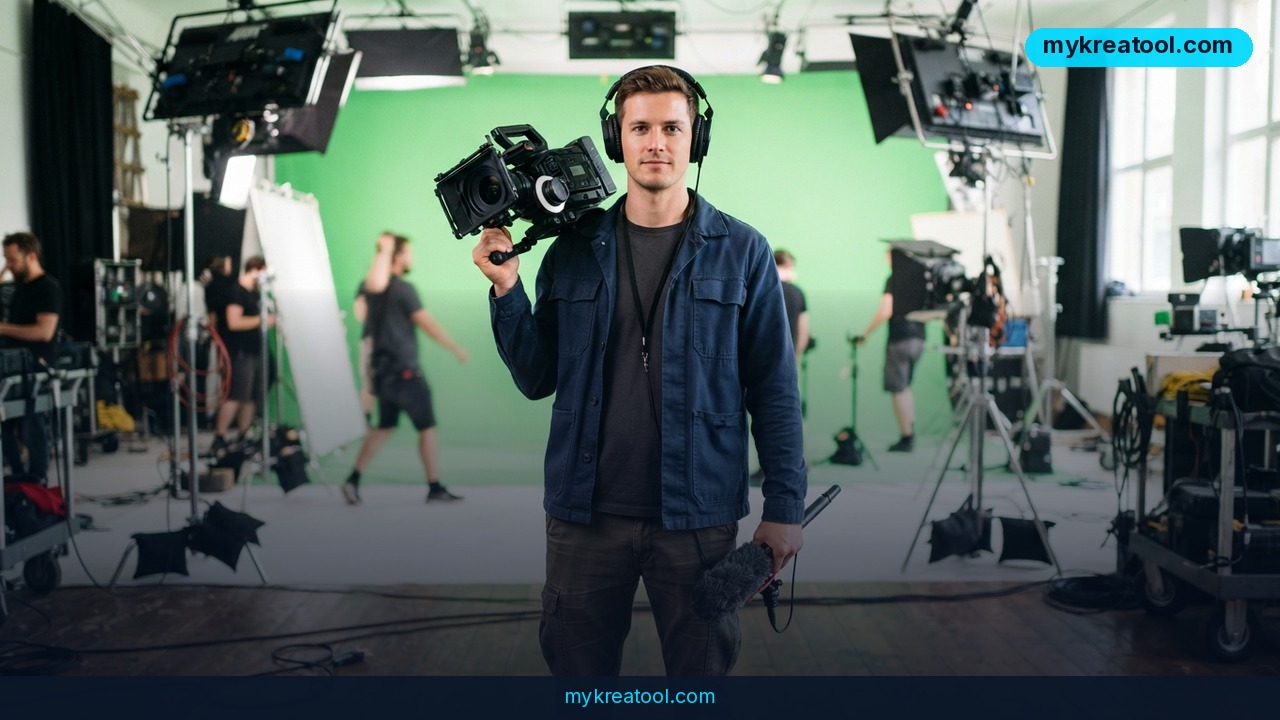
One real example from early testing: a green-screen actor clip was fed in, and the model removed the chroma key, replaced the background with a forest scene, and re-lit the actor to match, all while keeping audio in sync. For marketers and creators who want to prototype similar workflows without committing to a paid API first, browsing free AI tools at mykreatool.com is a reasonable way to test adjacent generation and editing features before scaling up.
Prompting tips that actually matter
Because H3 reads composite instructions ("camera movement from video 1, character from image 2, vocals from audio 3"), prompt specificity is the whole game. Vague prompts return generic results; detailed, multi-source prompts are where the model's fusion architecture actually pays off.
Who benefits
Small content teams and solo creators stand to gain the most immediately. A single 15-second product ad with synced voiceover, background music, and matched sound effects used to require a video editor, a sound designer, and separate rendering passes. H3 collapses that into one generation call.
Marketing teams producing localized ad variants benefit from the 11 supported languages and six-plus aspect ratios, since one source asset can be reformatted for YouTube, TikTok, and square social feeds without re-shooting. Agencies handling client revisions benefit from the editing behavior specifically: swapping a background, adjusting lighting, or fixing a shot's pacing no longer means starting from scratch.
Developers and technical teams benefit from the open weights, since self-hosting removes per-generation API costs for high-volume use cases, at the tradeoff of lower resolution.
Risks
A few caveats are worth flagging before betting production workflows on H3. First, clip length tops out at 15 seconds, so it's not a fit for longer-form content without stitching multiple generations together, which reintroduces the editing complexity the model is supposed to remove. Second, self-hosted output caps at 768p, well below the 2K available through the paid API, so cost and quality are directly linked.
Third, because the model was only fully open-sourced in early August 2026, independent, large-scale testing of edge cases, like copyright-sensitive reference material, non-Latin script rendering, or adversarial prompts, is still thin. Teams using it for commercial output should verify licensing terms for generated content and run their own quality checks rather than relying solely on vendor claims.
Finally, native audio generation means voice and music are model output, not licensed stock assets, which raises questions worth resolving internally before using generated audio in paid campaigns.
Conclusion
MiniMax H3 is a meaningful shift in AI video generation because it treats video, audio, and editing as one unified task instead of a chain of specialized tools. With open weights available since August 2026, 2K resolution via API, native synced audio, and support for 11 languages, it's already practical for short-form ads, localized content, and rapid prototyping. The main tradeoffs are clip length, resolution limits when self-hosting, and the need for teams to verify licensing and quality on their own footage before scaling production use.


Comments 0