What happened
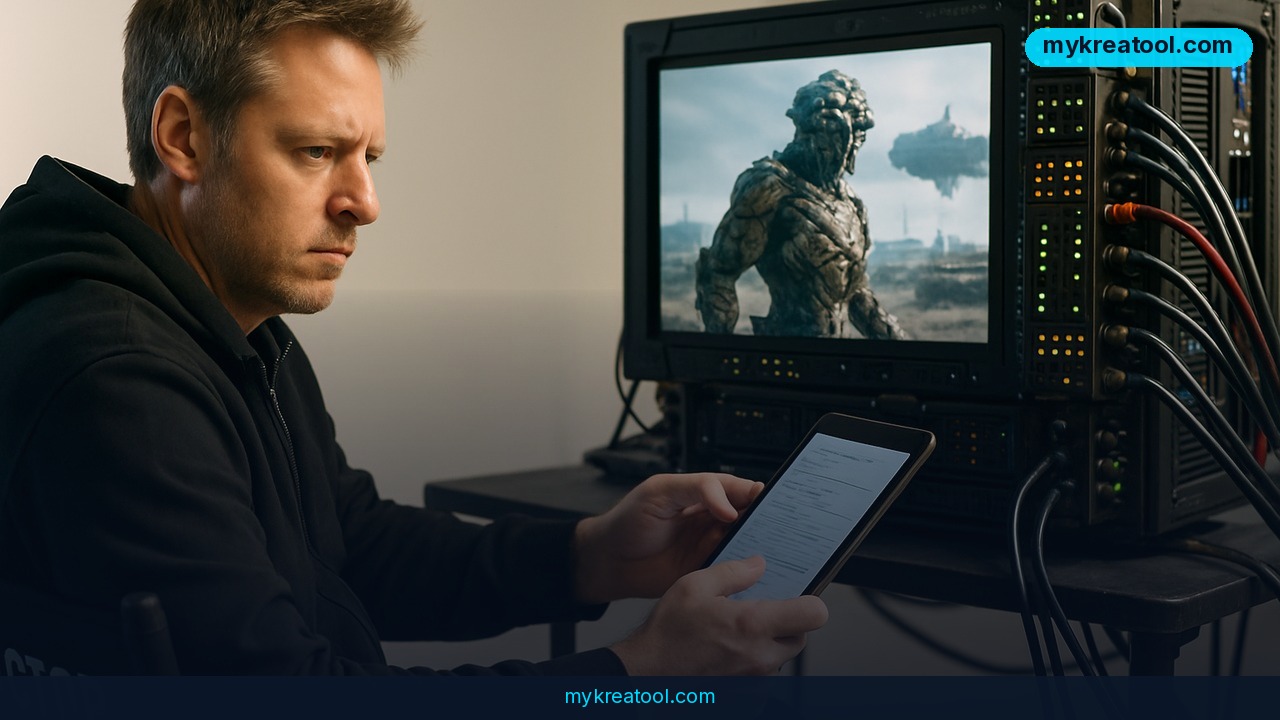
Neill Blomkamp, the director behind "District 9," just released an AI-generated short film called "Nightborne" — and it's already reshaping the conversation about AI video generation in Hollywood. The 13-minute sci-fi horror piece was built entirely with Seedance 2.0, an AI video generation model, with Blomkamp directing the project frame by frame using text prompts instead of a camera crew.
Shot in a mockumentary style, "Nightborne" follows a U.S. pilot presumed dead and a secretive military program that resurrects fallen soldiers and sends them back into combat. Despite the fully synthetic production pipeline, the film isn't entirely machine-made: the faces and voices of 32 real people were licensed for use, and human concept artists designed the visual world before AI generation took over.
Blomkamp announced the project on X and said he now plans to direct a full-length feature film using the same AI-first workflow. To support that ambition, he founded Barley Studios, a new AI-focused film studio that effectively succeeds Oats Studios, his earlier venture built around traditional production methods. The move signals a personal pivot from a filmmaker with real industry credibility — not a tech demo from a startup, but a working director betting his next projects on generative video.
Why it matters
This isn't the first AI short film, but it's arguably the most credible one to date. Blomkamp has directed a Hollywood blockbuster, so his endorsement carries weight that indie experiments haven't. When a director with "District 9" on his résumé says AI video generation is ready for a 13-minute narrative film — and that a feature is next — it forces studios, agencies, and investors to take the technology seriously as a production method, not just a novelty.
The licensing detail matters too. By paying 32 real people for their faces and voices, Blomkamp sidesteps one of the biggest criticisms of AI content: that it's built on stolen likenesses and unconsented data. This hybrid model — human concept art, licensed performers, AI-driven generation — could become the template other studios follow to avoid the backlash that's hit AI-generated content elsewhere.
It also reframes the economics of filmmaking. A 13-minute film with visual effects, consistent characters, and a documentary aesthetic normally requires a substantial budget, a full crew, and months of post-production. Generating it through prompts compresses that timeline dramatically, which is exactly why studios are watching this closely.
How to use it today
You don't need a Hollywood budget or a director's résumé to start experimenting with AI video generation. Independent filmmakers, marketers, and content creators can already use AI video tools to storyboard scenes, generate B-roll, or produce short-form content for social platforms — the same underlying workflow Blomkamp used, just at a smaller scale.
For creators and small teams who want to test AI video and image generation without committing to expensive subscriptions, free platforms like mykreatool.com offer accessible AI tools to prototype visuals, generate concept art, and explore what's possible before investing in premium models like Seedance 2.0. Starting with free tools is a practical way to learn prompt-based direction — the core skill Blomkamp used to steer 13 minutes of footage — before scaling up to paid, production-grade platforms.
Marketers can apply the same logic to ad creative and product demos, while solo creators can use it to produce short narrative pieces that would otherwise require a full production team.
Who benefits
Independent filmmakers stand to gain the most immediately. AI video generation removes the traditional barriers of cameras, locations, and large crews, letting a single director-writer produce polished, narrative-driven content on a fraction of the usual budget and timeline.
Marketing and creative agencies also benefit, since AI-generated video shortens the path from concept to finished ad or campaign asset. Studios exploring new IP can use the format to test concepts cheaply before greenlighting a traditional production. And actors and artists willing to license their likeness — as the 32 people in "Nightborne" did — open up a new revenue stream that didn't exist a few years ago.
Even established studios benefit indirectly: Blomkamp's Barley Studios becomes a real-world case study they can study before deciding whether to build in-house AI production pipelines of their own.
Risks
The skepticism around AI in creative industries hasn't gone away, and "Nightborne" doesn't resolve it. Training data sourced from creative work without consent remains a central concern across the industry, even though Blomkamp licensed his performers directly. Not every AI video model operates with the same transparency, and audiences may struggle to tell the difference.
Job displacement is another real risk. A 13-minute film that once required camera operators, editors, VFX artists, and location crews was instead produced largely by one director and a generative model. If this workflow scales to feature-length films, as Blomkamp intends, the ripple effects on below-the-line film jobs could be significant.
Copyright and quality concerns round out the list. Legal frameworks around AI-generated content are still catching up, and critics worry that mass adoption of AI filmmaking could flood platforms with lower-quality, formulaic content. Whether "Nightborne" proves AI can meet a genuinely high creative bar — or simply that it can approximate one — is still an open question audiences and critics will need to weigh in on.
Conclusion
"Nightborne" is a milestone less because of what's on screen and more because of who made it: a proven Hollywood director betting his next projects on AI video generation. With Barley Studios and a full-length feature already planned, Blomkamp is signaling that AI-driven filmmaking is moving from experimental to viable. For creators, marketers, and studios alike, the message is clear — it's time to start learning this workflow, not waiting to see if it sticks.

Comments 1