What happened
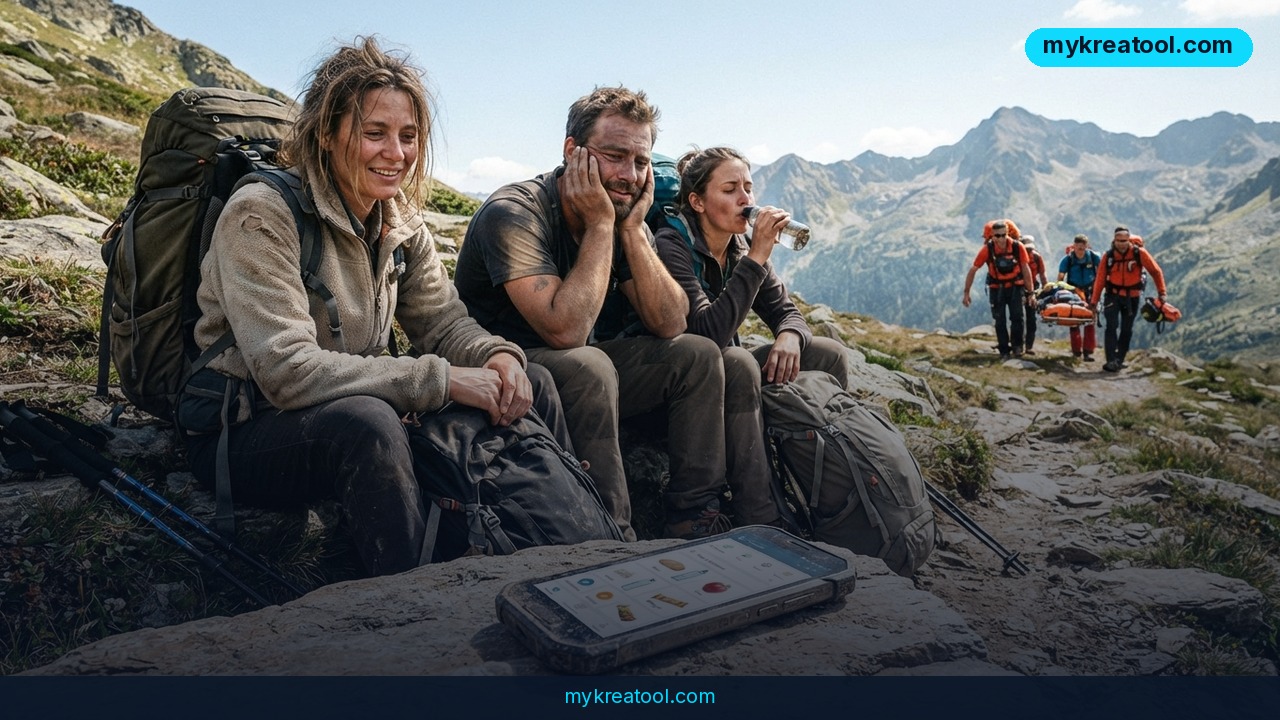
AI trip planning made headlines this week after three hikers had to be rescued from Mount Shasta, a 14,179-foot volcano in Northern California, following a climb they had planned with help from Google's chatbot Gemini. According to a report from the Siskiyou County sheriff's office, cited by the Chicago Tribune, the group set off at 3 a.m., expecting an 8-hour round trip. Hikers are told to turn back if they haven't reached the summit by noon. This group reached the top at 7 p.m. — seven hours behind that safety cutoff.
With darkness falling, the three men tried to descend anyway, got disoriented, called the sheriff's office for directions, and ended up spending the night in Mud Creek Canyon, a rugged, glacier-carved ravine on the mountain's flank. Forest Service rangers and volunteer search teams found and rescued them the next morning.
The sheriff's office said the hikers "were advised by Gemini to bring far less food and water than their group required, especially when their planned 8-hour ascent became a multiday ordeal." Their official advice afterward: always call the local U.S. Forest Service ranger station before a trip, and never rely solely on AI for trip planning.
This isn't a story about Gemini being uniquely broken. It's a story about what happens when people treat a chatbot's confident-sounding answer as if it came from a park ranger who has actually walked the trail this season.
What it means for you
You don't need to be a mountaineer for this to matter. The same failure pattern — an AI tool sounding certain about something it can't actually verify — shows up anywhere you're using AI to plan for the real world.
At home: Ask an AI chatbot how much water, food, or fuel you need for a weekend project (camping, a road trip, a power outage), and it will give you a plausible-sounding number based on generic averages — not your family's actual needs, the current weather, or local conditions.
At work: A project timeline or budget generated by AI can look polished and specific while being built on outdated or made-up assumptions. Presenting it to a client without checking real data is the office version of trusting Gemini on trail conditions.
Running a business: If you use AI to plan inventory levels, staffing for a big event, or logistics for a shipment, an overly optimistic AI estimate can leave you short — same failure, higher stakes, more zeros.
Studying: Students increasingly ask AI to plan revision schedules or summarize how long a topic "should" take to learn. If the AI underestimates the real workload, you show up to the exam under-prepared, the same way the hikers showed up under-supplied.
Creative projects: Asking AI to plan a shoot day, a trip itinerary for a video series, or a multi-day event schedule carries the same risk: it will guess durations and logistics with confidence, not accuracy.
Income and side gigs: If you're selling adventure tours, planning client itineraries, or offering any service where AI helps you draft logistics, an unverified AI plan handed to a paying customer is now a liability, not just an inconvenience.
The common thread: AI is good at producing something that looks like a real plan. It has no way of knowing you'll be four hours behind schedule, that the trail is longer than mapped, or that the store you're counting on closes early on Sundays.
How to try it right now
You can test this exact failure mode yourself in five minutes, for free, before you ever plan a real trip or project with AI.
1. Start free. Try the same planning prompt in two or three different tools and compare the answers. You can experiment with prompt variations and compare outputs using the free AI tools at MyKreaTool before committing to any single AI-generated plan.
2. Ask Gemini or ChatGPT for a real plan you can check. For example: "Plan a day hike up [a specific real trail], including food, water, and time needed." Note the exact numbers it gives you.
3. Cross-check against a real source. Search the official park or forest service website, or call the local ranger station, ranger line, or trailhead office, and compare their current numbers to the AI's answer. In the Mount Shasta case, that's the Mount Shasta Ranger Station, which the sheriff's office specifically recommended calling.
4. Look for the gaps. Does the AI's estimate account for your actual fitness level, the current season, weather, or crowding? If not, adjust manually — don't just accept the first number.
5. Use AI for drafting, not for final judgment. Let it build the skeleton of a plan (packing list, rough schedule, checklist categories), then verify every hard number — time, quantity, cost — against a live, current, human-verified source.
This same five-step habit — draft with AI, verify with a real source — works whether you're planning a hike, a product launch, or a study schedule.
Upsides and what changes
None of this means AI planning tools are useless — Gemini can genuinely save time by drafting packing lists, suggesting routes, and organizing logistics that would otherwise take an hour of manual research. Used as a first draft, it compresses planning time from hours to minutes. What changes is the role it should play: AI becomes the intern who writes a fast first draft, not the expert who signs off on it. The moment an AI-generated plan involves safety, money, or a hard deadline, a human needs to verify the specific, current, real-world numbers before anyone relies on them.
Limitations
AI chatbots like Gemini don't have live access to trail conditions, current weather, your physical fitness, or how much your specific group actually eats and drinks — they generate statistically plausible answers based on patterns in training data and general web information, not verified, real-time facts, and they will state incorrect information with the same confident tone as correct information, giving no built-in warning when they're guessing.
Conclusion
Three hikers spent a cold night in a canyon because a chatbot's confident-sounding numbers stood in for a phone call to a ranger station. The fix costs nothing and takes five minutes: before you act on any AI-generated plan that involves safety, money, or a deadline, verify the specific numbers against one real, current, human source. Do that today with whatever AI-assisted plan you're currently relying on, before you find out the hard way where it was wrong.

Comments 0