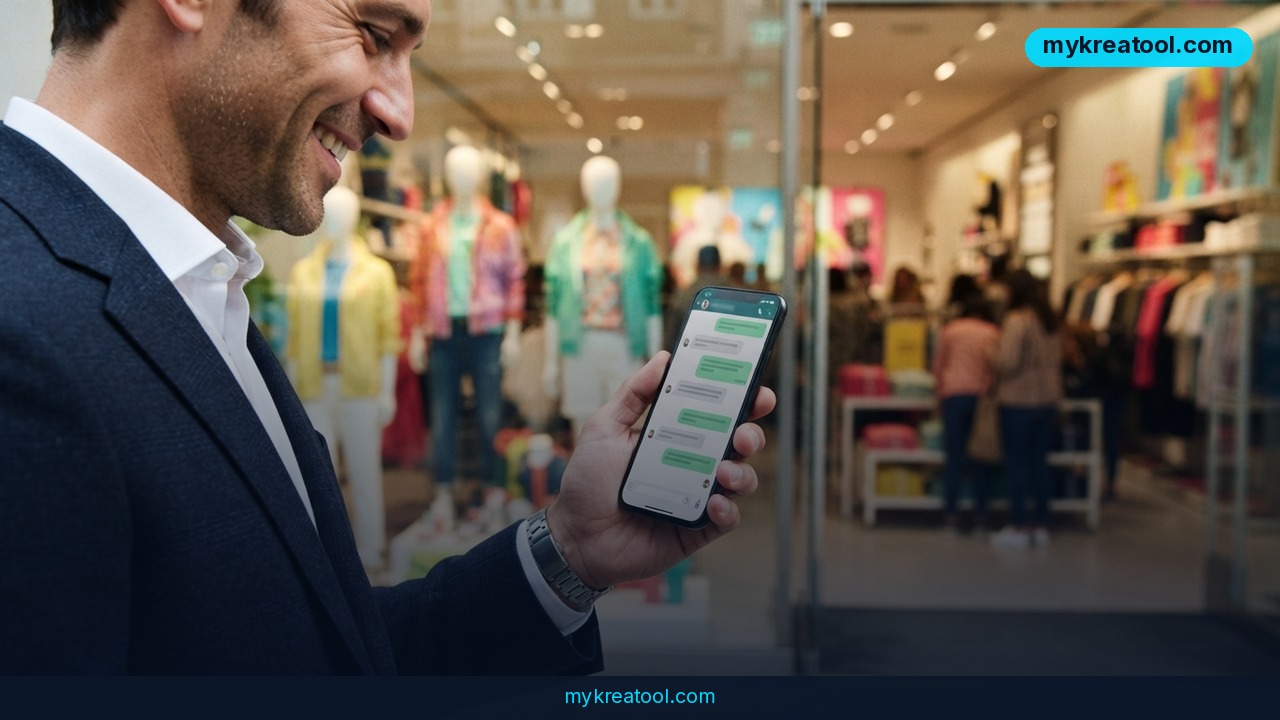
Businesses in ChatGPT just became something you can actually sign up for. On November 10, OpenAI opened a beta that lets companies claim a profile inside ChatGPT, keep their details current, and see how people engage with them there. The hook is the audience — OpenAI says 1.2 billion people use ChatGPT every week — and this is the company's first serious push to help businesses get found inside those conversations.
Two products ship together, and they do different jobs.
Business Hub: your profile, in plain terms
Business Hub is a dashboard. You claim your organization, get verified, then update key details and add self-service product feeds with pricing and availability. Think of it as a Google Business Profile for the chat window — same idea, different front door. The whole point is accuracy: the more current your feed, the better ChatGPT can describe what you sell and what it costs.
Shopify merchants get a shortcut. They can connect their store from Business Hub or straight from the Shopify admin to streamline verification, and eligible Shopify products are already wired into ChatGPT through Shopify Catalog. Existing OpenAI Enterprise customers and advertisers can work with their OpenAI rep. Everyone else: any eligible business located where ChatGPT is available can claim through Business Hub.
Business Agents: a chat window that belongs to you
The second piece is Business Agents. Eligible ecommerce and online service businesses in the U.S. can build, test, and launch one. When your business turns up in a model response, people can click through to your ChatGPT profile and, if you've launched an agent, start a conversation with it — asking how two options differ, or which features fit what they need.
Two details matter. The agent chat is clearly labeled, kept separate from the person's original conversation, and marked as yours rather than as ChatGPT's answer. And you can sponsor the agent, using it as the destination for ChatGPT Ads. Sponsored placements are labeled too, and kept apart from ChatGPT's own responses.
The numbers you'll actually see
Business Hub gives you aggregated insights: mentions, website clicks, and "discovery topics" — the recurring themes in conversations where your site got cited. That last one is quietly the most useful. It's a rough sketch of what people are asking right before your name comes up, which is the kind of brief agencies charge for.
OpenAI says it doesn't hand businesses users' conversations or agent chats. Insights are aggregated and only appear once enough conversations clear certain thresholds.
What it means for you
At home: less guessing before you buy
Say you're comparing two espresso machines. You ask ChatGPT, it mentions a brand, and now there's a profile with a live price and stock feed sitting right there. You click, ask the Business Agent how the steam wand compares, and get an answer built from the seller's own information instead of a random forum thread from 2022. No email form, no chat queue. It's the difference between "somebody online said" and "the seller says."
At work: a new dashboard someone has to own
If you're in marketing, treat this like the day Google Business Profile showed up — unglamorous, then suddenly everyone's checking it. Put one person in charge of Business Hub: verify the profile, upload a feed with real prices, check mentions, clicks, and discovery topics. Those topics are the sleeper feature, because they tell you what language customers use before they find you. Bring the list to your next content meeting.
For a small business: a listing that can answer back
A bike shop, a bookkeeping firm, a two-person SaaS — they all get the same profile. Before, a listing just sat there. Now, if you're an eligible U.S. ecommerce or online service business, that listing can hold a conversation. Someone weighing two service tiers can ask your agent a follow-up at 11pm and get a straight answer. It's the closest thing to a salesperson who never sleeps, without the payroll.
For students and researchers: fewer dead ends
When you're researching a product category for a project, the quality of the source matters. A claimed profile with an up-to-date feed is far likelier to give you accurate specs than a page scraped in 2023. And you can push back — ask the agent a follow-up instead of decoding a marketing page full of adjectives.
For creators: content angles and a storefront
If you sell courses, templates, or a paid newsletter, claim the business and fill in your feed. Then mine discovery topics: they show the themes people were already exploring when your site got cited. That's a content calendar handed to you at no cost.
The income angle
Sponsoring a Business Agent is where the money comes in. A sponsored agent becomes the destination for ChatGPT Ads, so you can pay to reach people who are already mid-decision rather than interrupting them cold. No pricing was published in the announcement, but the model is clear: a free organic profile, with paid placement layered on top when you want more reach.
How to try it right now
Free first. Claiming your profile and using the insights don't require you to spend a thing.
1. Open Business Hub. Go to Business Hub (linked from OpenAI's announcement) and sign in with your OpenAI account.
2. Claim and verify. Enter your organization, prove you run it, and confirm your website. Shopify merchants can connect the store from Business Hub or the Shopify admin instead — that streamlines the whole check.
3. Fill in the details, then add a product feed with real prices and availability. Vague prices are worse than no prices, because the model will quote whatever you give it.
4. Sanity-check your copy before it goes live. Run your product descriptions through the free AI tools at MyKreaTool — it's a lot easier to fix a paragraph now than to explain a garbled answer to a customer later.
5. Wait a week or two, then read your insights. Look at mentions, clicks, and discovery topics. If the topics surprise you, that's your next piece of content.
6. Build a Business Agent, if you qualify. Eligible U.S. ecommerce and online service businesses can build, test, and launch one from Business Hub. Test it with three awkward questions a real customer would ask before you flip it on.
7. Sponsor it later, once it works. Sponsored placements are labeled, so keep the experience honest — a pushy agent with a paid label is a fast way to burn trust.
Upsides and what changes
Discovery shifts from a list of blue links to a conversation, and the business with clean, current data wins by default. You get first-party numbers — mentions, clicks, topics — instead of guessing whether AI answers send anyone your way. A Business Agent also removes the worst part of being a small company online: having to staff a chat widget around the clock just to answer "do you ship to Canada?"
There's a second-order effect too. Once profiles and agents are widespread, "is this business accurate in ChatGPT?" becomes a routine question at marketing standups, the same way "is our Google listing right?" did a decade ago. Getting in now is cheaper than catching up in six months.
Limitations
Be honest about the fine print. Business Agents start with eligible ecommerce and online service companies in the U.S., so plenty of businesses can claim a profile but can't launch an agent yet. Insights are aggregated and gated behind conversation thresholds, which means a small local shop may see almost nothing for a while — that's privacy working as designed, and it also means you shouldn't expect a dashboard full of data on day one. You can't read the actual conversations, so you'll learn themes, not wording. Claims need verification, Shopify is the only store connection called out, sponsored placements mix paid and organic results in one interface, and this is a beta from a company that ships fast and changes things — so treat your profile as something to maintain, not a set-and-forget listing.
Conclusion and one action for today
The news isn't that ChatGPT has a business directory. It's that the moment someone asks ChatGPT what to buy, a claimed, accurate business can now show up, answer back, and get clicked. That's a new front door to 1.2 billion weekly users, and the businesses that fill it in properly will be the ones that get recommended.
Your one action: open Business Hub, claim your business, and paste in three live prices before you close the tab. Verification and a real feed are the whole game — everything else builds on top of that.
Comments 0