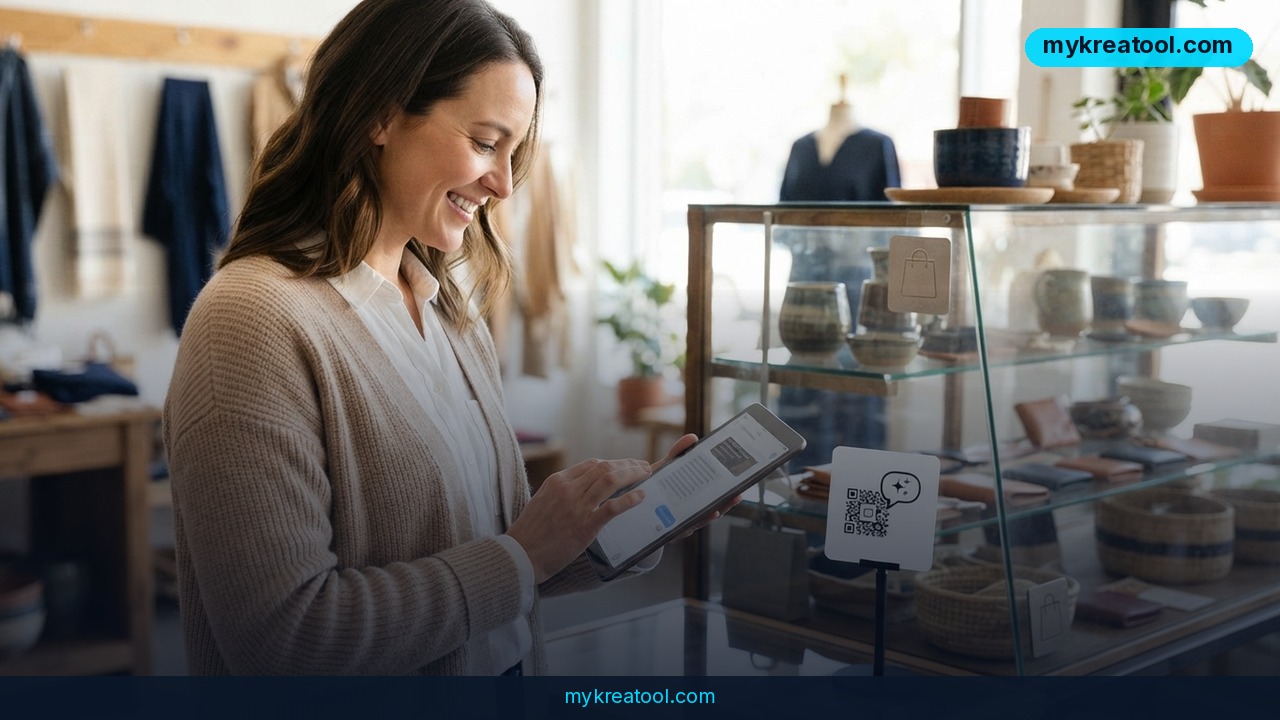
Ask ChatGPT about a local bakery and, until recently, you'd get a polite shrug or a list stitched together from somewhere else on the web. That's changing. OpenAI has quietly opened a beta that lets companies take control of their own ChatGPT business visibility — which means the answer people get about your company might soon be the one you wrote yourself.
What OpenAI Actually Launched
The product is called Businesses in ChatGPT, and the control panel inside it is the Business Hub. In OpenAI's own words, it's there to "shape how you show up in ChatGPT" — you update your key business details, upload product feeds with pricing and availability, and ChatGPT "may use this information to answer customer questions."
That single word, may, is doing a lot of work. More on that later. (Emergent has a clean summary of what shipped.)
Business Hub, in plain English
Think of it as a Google Business Profile for a world where people ask questions instead of typing keywords. You fill in the basics — who you are, what you sell, where you are, what's in stock — and you can also spin up a business agent, which is basically a front desk that talks to customers on your behalf instead of a human answering the same five questions all day.
Retailers get the extra layer: upload a product feed with prices and availability, or connect a Shopify store and let the catalog sync. (Location3 walks through the retail side in more detail.)
And yes, it's a swipe at Google
OpenAI executives have spent months talking up ChatGPT's query volume next to Google's. A profile system like this only matters if that claim holds — and once businesses can manage their presence, the next logical step is paid placement. Imagine an auction where several bakeries all want to be the answer. Nobody at OpenAI has announced one, but the shape of the road is pretty obvious.
What It Means for You
You don't have to run a business to feel this. Here's where it lands in ordinary life.
At home: no more "is that place still open?"
You ask an assistant whether a restaurant takes walk-ins on a Tuesday. Today you get a guess. If the owner has filled in the Business Hub, you get the owner's answer. Multiply that by every plumber, dentist and hardware store you've ever called on a Saturday morning and you can see why this matters more than it sounds.
At work: your B2B profile becomes a search result
If you sell services to other companies, the buying conversation increasingly starts in a chat window. A well-filled profile — what you do, who you do it for, what it costs — is the difference between being mentioned and being skipped. Same idea as a LinkedIn page, except this one gets read out loud in an answer.
Your small store finally gets a shelf in the answer
The product feed is the interesting bit. Until now, an AI answer about the best budget running shoes pulled from whatever it happened to read — often a blog post you'd long forgotten, quoting a price from last season. With pricing and availability on file, your pair can show up in the reply with the right number attached.
Freelancers and side hustles: this is income
If you tutor, design logos or fix bikes on weekends, the cheap version of marketing has always been "be findable." A Business Hub entry is a free-ish storefront where the search box is a conversation. You're not competing for a blue link anymore; you're competing to be the thing the assistant says out loud.
For students: a reality check on AI answers
Here's the flip side worth teaching. If businesses can now push their own version of the facts into ChatGPT, a student citing an AI answer needs to know who wrote the source. The profile tells you: this came from the company. That's useful context, not proof.
For creators: your catalog is now creative fuel
Designers, illustrators and small brands can treat the feed as a living portfolio. Prices and availability update, the agent handles the "do you ship to Canada" questions, and you keep making things instead of answering DMs.
How to Try It Right Now
Start with the free route before you spend a cent on anything.
1. Open the beta page. Go to Businesses in ChatGPT and follow the sign-up flow for the Business Hub. It's a beta, so expect a waitlist and expect rough edges.
2. Fill in the basics. Name, what you sell, where you are, hours, website. Write it like a human talking to a customer, not like a legal disclaimer.
3. Upload a product feed if you sell physical goods — prices and availability. Skip this step if you're a service business; it won't help you.
4. Connect Shopify if that's where your store lives, and let the catalog do the syncing.
5. Set up your business agent and give it honest boundaries. Tell it what it doesn't know, so it doesn't invent things about your refund policy.
6. Test it like a customer. Ask ChatGPT three real questions about your business and see what comes back.
Step 2 is where most people stall, so cheat a little: mykreatool.com has free AI tools that'll turn your messy notes into a clean two-paragraph profile in about five minutes.
Upsides and What Changes
This shifts a slice of control back to the business owner. For years, your reputation online was something other people wrote about you — reviews, directories, forum threads. Now there's a place where you set the record straight on the boring stuff that actually drives sales: hours, prices, stock.
It also lowers the barrier. You don't need an SEO agency to update a profile. (Extrapolator notes how much of the workflow is self-serve.)
And for small retailers, the product feed is a genuinely new channel — a way to get accurate pricing in front of people at the exact moment they're deciding. (AIN covers the launch angle too.)
What changes underneath is less cheerful: visibility becomes a product. The moment auctions arrive, being the answer costs money, and the businesses with budgets pull ahead. That's the Google playbook, and there's no reason to think this one gets written differently.
Limitations
Be clear-eyed about two things. First, this is a beta with no guarantees — OpenAI says ChatGPT may use your information, which means filling in a profile is not the same as buying placement in every answer. Second, nobody outside OpenAI knows how it weighs a company's own data against reviews, news or forum chatter when the two disagree, and there's no public ranking system you can optimize against yet. Add the usual beta caveats (limited availability, features that move around) and the honest summary is this: claim your spot now because it's cheap to do, but don't rebuild your marketing plan around it until you've watched what actually shows up in answers.
Conclusion
OpenAI just turned "what does ChatGPT say about my business?" from a scary question into a form you can fill in. The tooling is early, the auction hasn't arrived, and the whole thing is still in beta — but the direction is set, and being an early, accurate entry costs you almost nothing.
One thing to do today: open the beta page and write the three sentences that describe your business the way you'd want ChatGPT to say them out loud. Save them in a note. You'll need them the minute you get access.
Comments 0